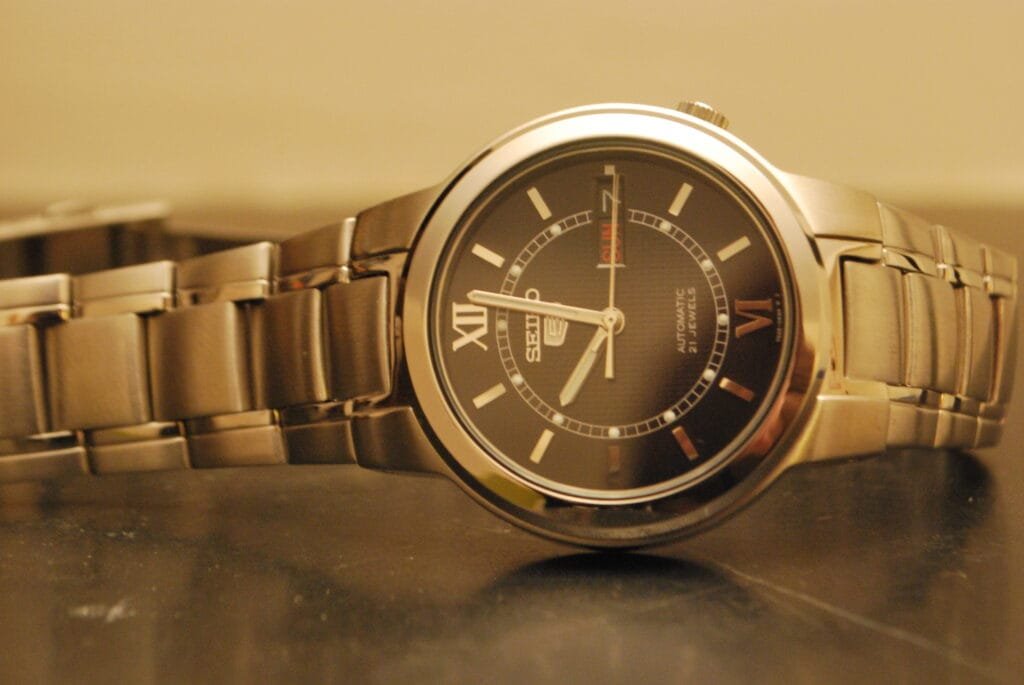
A Seiko 5 that’s stuttering or jumping on the seconds hand almost always comes down to one of a few specific, identifiable causes, not a serious defect. Here’s how to tell which one applies to yours.
This post contains affiliate links. We may earn a small commission if you purchase through them, at no extra cost to you.
First, Rule Out the Quartz Confusion
If you’ve read that a “2-second skip” means low battery, that applies to quartz watches, not the Seiko 5. The Seiko 5 line is automatic (mechanical, wound by wrist motion, no battery), so that particular explanation doesn’t apply here. What you’re seeing has a different, mechanical cause.
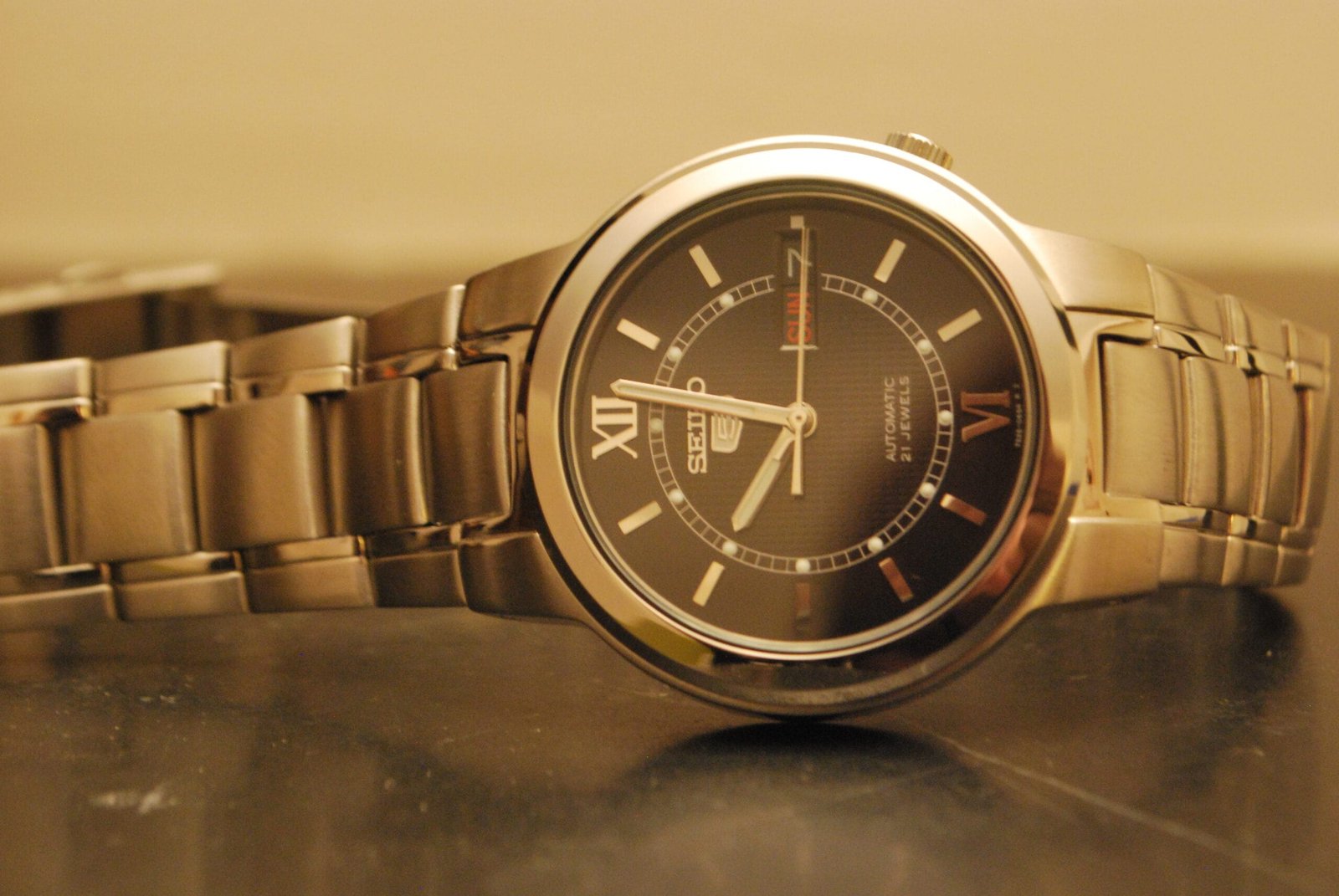
Low Power Reserve
As an automatic movement winds down toward the end of its power reserve, typically 40 to 50 hours on most Seiko 5 calibers, the mainspring’s remaining torque can become uneven. This shows up as a hesitating or stuttering seconds hand rather than a smooth sweep, right before the watch stops entirely.
Fix: Wind the watch by hand (around 20 to 30 crown turns) or wear it for a full 8-hour stretch to bring it back to a useful reserve. If the stutter disappears once it’s fully wound, this was the cause.
Magnetization
Everyday magnets, phone cases, laptop speakers, bag clasps, can magnetize a watch’s hairspring. This most commonly makes a watch run fast rather than stutter, but a partially magnetized spring can also cause an irregular, inconsistent beat that looks like stuttering rather than a clean fast gain. You can get a rough sense of this at home by holding a compass near the watch, a magnetized movement will visibly deflect the needle.
Fix: If the compass test suggests magnetism, a watchmaker can demagnetize the movement in a few minutes, it’s inexpensive and immediate. A handheld watch demagnetizer also lets you check and fix mild cases yourself in seconds.
A Hand Touching Another Hand or the Crystal
If the seconds hand was bent slightly, from a knock or during a battery or strap service, it can lightly drag against the minute hand or the inside of the crystal at certain points in its rotation, causing a visible stutter at the same spot every rotation.
Fix: Watch closely across a full rotation. If the stutter happens at the same position every time rather than randomly, a watchmaker can straighten the hand in a few minutes.
Dirty or Gummed Lubrication
Over years of use, the oil on the escapement and gear train thickens and gathers debris. This adds friction unevenly through the movement, and an irregular seconds hand is often the first visible sign, well before the watch stops running entirely.
Fix: If winding doesn’t resolve it, magnetism tests negative, and the hand isn’t physically touching anything, the movement is likely due for a clean and service. Seiko doesn’t publish a strict interval, but every 5 to 7 years of regular wear is a reasonable guideline.
Quick Reference: Which Cause Fits What You’re Seeing
- Stutter appears only when the watch hasn’t been worn in a while: power reserve
- Watch also seems to be gaining time noticeably: check for magnetism first
- Stutter happens at the exact same point every rotation: hand contact
- Stutter is random, watch is fully wound, and it’s several years old: likely needs a service
If your Seiko 5 is behaving fine but consistently gaining or losing time rather than stuttering, that’s a different issue, see our guide on why Seiko automatics lose time. And if it’s the chronograph sub-dials rather than the running seconds hand acting up, check our chronograph pusher reset guide instead.
Conclusion
Start by fully winding the watch, low power reserve is the most common and easiest to rule out. If that doesn’t fix it, a quick compass check for magnetism takes seconds. If the stutter happens at a consistent point in rotation, check for hand contact. If none of those apply and the watch is several years old, it’s likely time for a routine service rather than anything more serious.