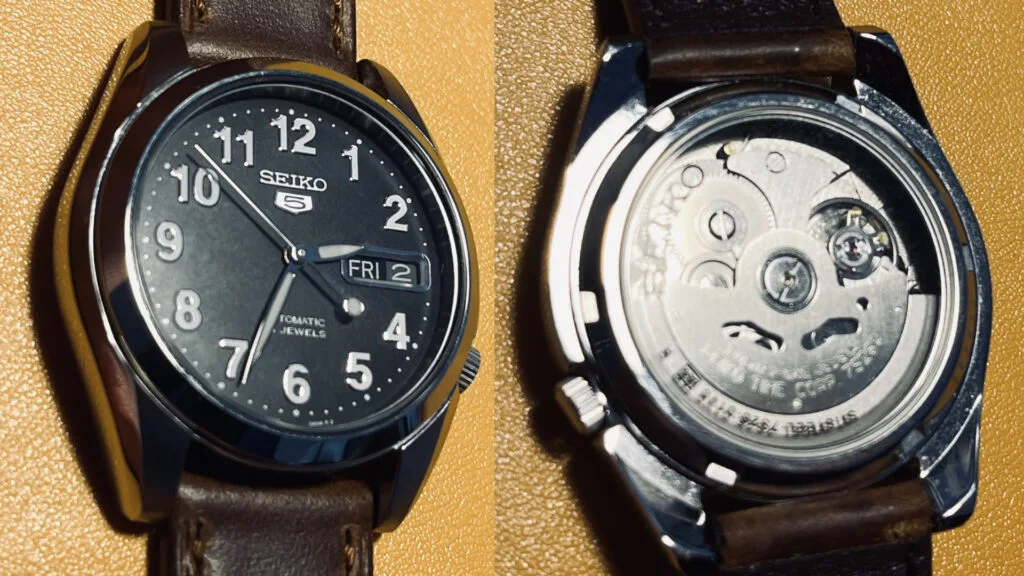
Regulating a Seiko automatic is one of the few genuine home jobs in watch repair. The movement is cheap, the adjustment is reversible, and a 7S26 running 25 seconds fast can usually be brought under 10. It is also the job where beginners most often destroy a hairspring, so the second half of this guide matters more than the first.
This post contains affiliate links. We may earn a small commission if you purchase through them, at no extra cost to you.
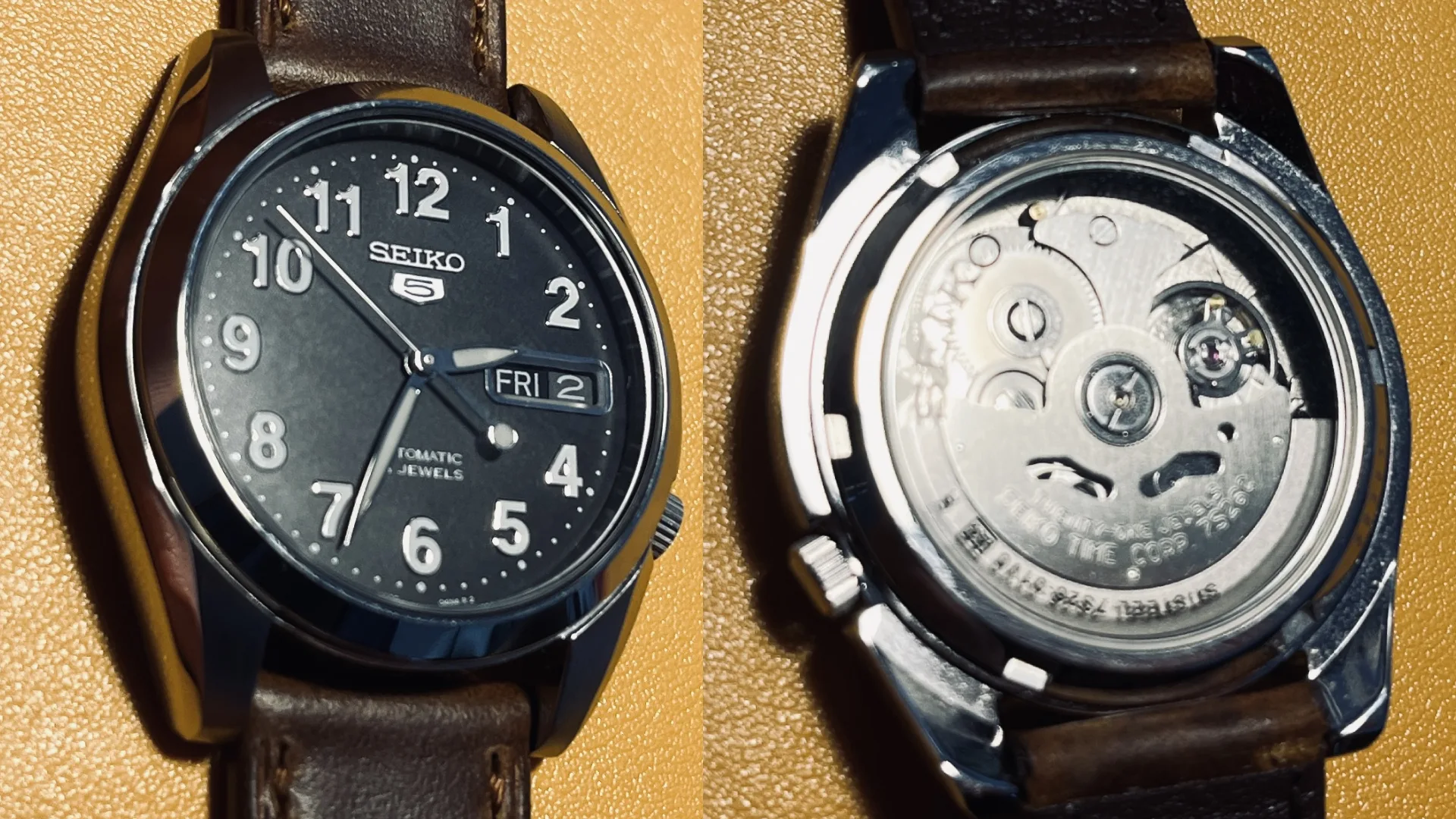
Do These Two Things First
Demagnetise it. A magnetised watch gains wildly, and regulating one is pointless because the rate will change again the moment the magnetism is dealt with. Rule this out before opening anything.
Check the drift is consistent. Regulation fixes a steady error. It does not fix an erratic one. If the watch is +5 one day and -20 the next, the movement needs servicing and no amount of regulator nudging will help.
The Lift Angle Most Guides Get Wrong
If you use a timegrapher, the one setting you must change is lift angle. Almost every guide online says 53 degrees for Seiko. That is right for the 4R35 and 4R36, but Seiko’s own technical manuals give 52 degrees for the 7S26C and 7S36C.
In fairness, being one degree out only shifts your amplitude reading by roughly 4 to 6 degrees, so it will not ruin the job. But if you are going to set a number, set the right one. The published caliber data is worth checking against your specific movement variant.
What You Need
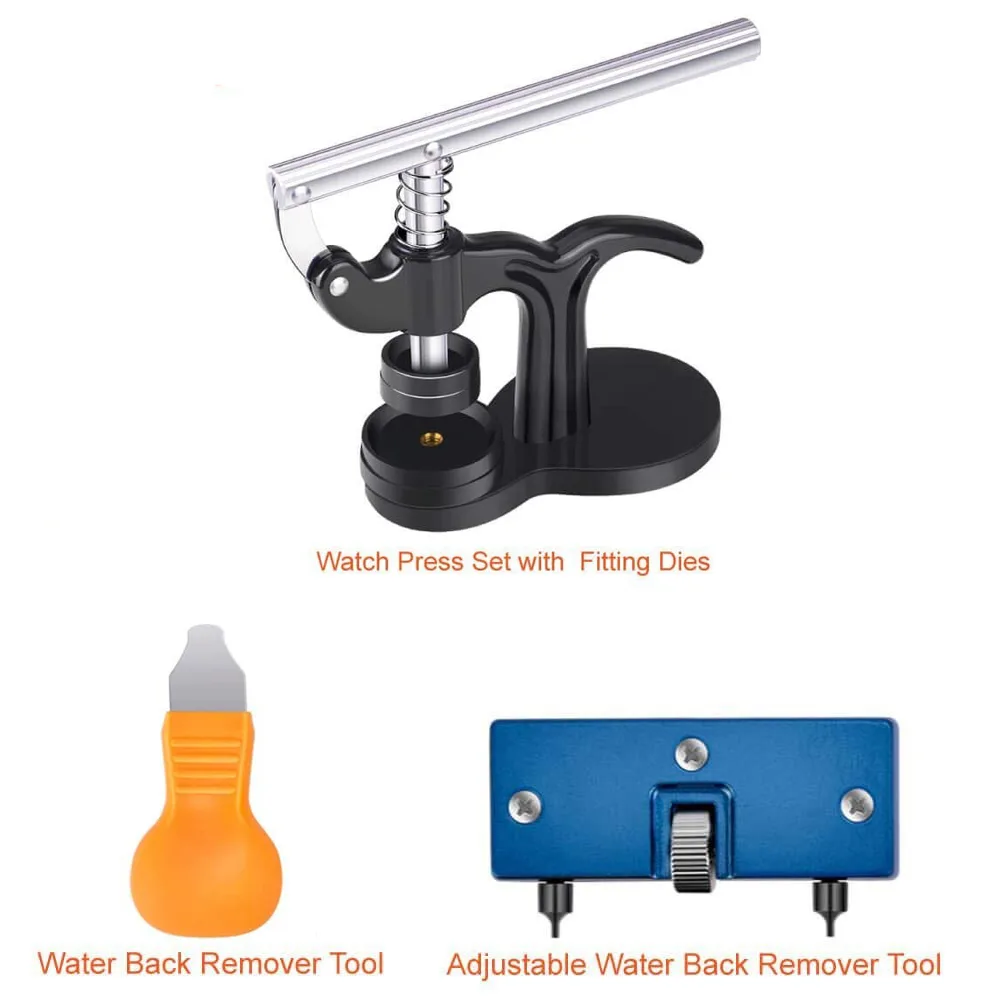
- A case opener suited to your caseback style. Most Seiko 5s are screw-down and need a wrench type rather than a knife. A back case remover set covers the common Seiko caseback patterns.
- A timegrapher if you want to do this properly. A phone timing app plus a reference clock will handle coarse adjustment, but only a timegrapher shows amplitude and beat error.
- Wooden toothpicks. Not tweezers, not a screwdriver. A toothpick cannot scratch or short anything.
- A clean, well-lit surface and no moving air.
The Process
- Wind the watch fully and take a baseline reading in at least three positions: dial up, crown up, crown down. Write them down.
- Check amplitude before you touch anything. Healthy is 280 to 320 degrees, and anything above 230 is workable. Below that, the movement wants a service, not a regulator adjustment.
- Open the caseback with the crystal resting on a soft cloth. Avoid touching the rotor as it comes off.
- Find the regulator arm over the balance wheel. It will be marked with something like plus and minus, or F and S.
- Nudge it with a toothpick. Roughly half a hair’s width. That is not an exaggeration.
- Re-read, and repeat. Expect several rounds.
The Part That Goes Wrong
There are two arms near the balance, not one. The regulator changes the rate. The stud carrier changes beat error, and it is far more delicate. Owners regularly reach for the wrong one, catch the hairspring, and turn a 20 dollar problem into a movement replacement.
Beat error under 0.6ms is fine and needs no attention at all. Above about 1.0ms it does want correcting, but that is advanced work and a reasonable place to stop and hand it to a watchmaker.
Never touch the hairspring itself. It is the one component in there that cannot be nudged back.
When Not to Do This at All
- The watch is under warranty. Opening it ends that.
- It is vintage, inherited or valuable. The downside is not worth the 15 seconds a day.
- It is a diver you actually dive with. Opening the caseback breaks the water resistance seal, and it needs a gasket check and pressure test afterwards.
- Amplitude is low or the rate is erratic. Both mean service, not regulation.
Conclusion
Demagnetise first, confirm the error is consistent, set 52 degrees for a 7S26 or 53 for a 4R36, and move the regulator in genuinely tiny increments. Leave the stud carrier alone. Done patiently this brings most Seiko automatics well inside 10 seconds a day, which is better than the factory ever promised.
Related Guides
- Seiko 5 accuracy: what spec to actually expect: check your rate against the published tolerance before deciding it needs adjusting.
- Seiko automatic running fast: what’s normal and what isn’t: why demagnetising has to come before any regulation.
- Why is my Seiko automatic watch losing time?: the seven causes to rule out first.
Image credits: Seiko 7S26 movement by Racomi, CC BY-SA 4.0, via Wikimedia Commons. Case opener product image via Parts for Watch.