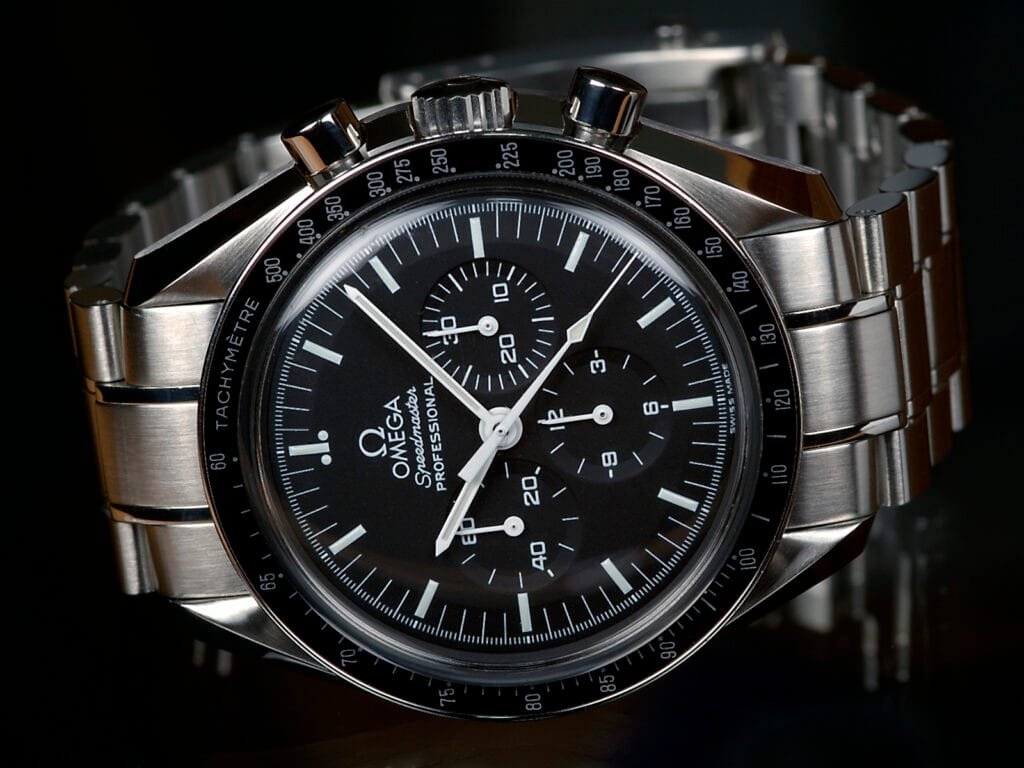
Knowing how to clean an Omega Speedmaster comes down to two details that set it apart from a Seamaster. Its chronograph pushers do not screw down, and on most Moonwatches the crystal is Hesalite, an acrylic that reacts badly to the solvents people reach for first. Get those two right and the rest is soap, water and a soft brush.
This post contains affiliate links. We may earn a small commission if you purchase through them, at no extra cost to you.
Check What You Have First
- Water resistance. The current Moonwatch is rated to 50 metres. That is splash-proof for cleaning, not a licence to hold it under a running tap for minutes.
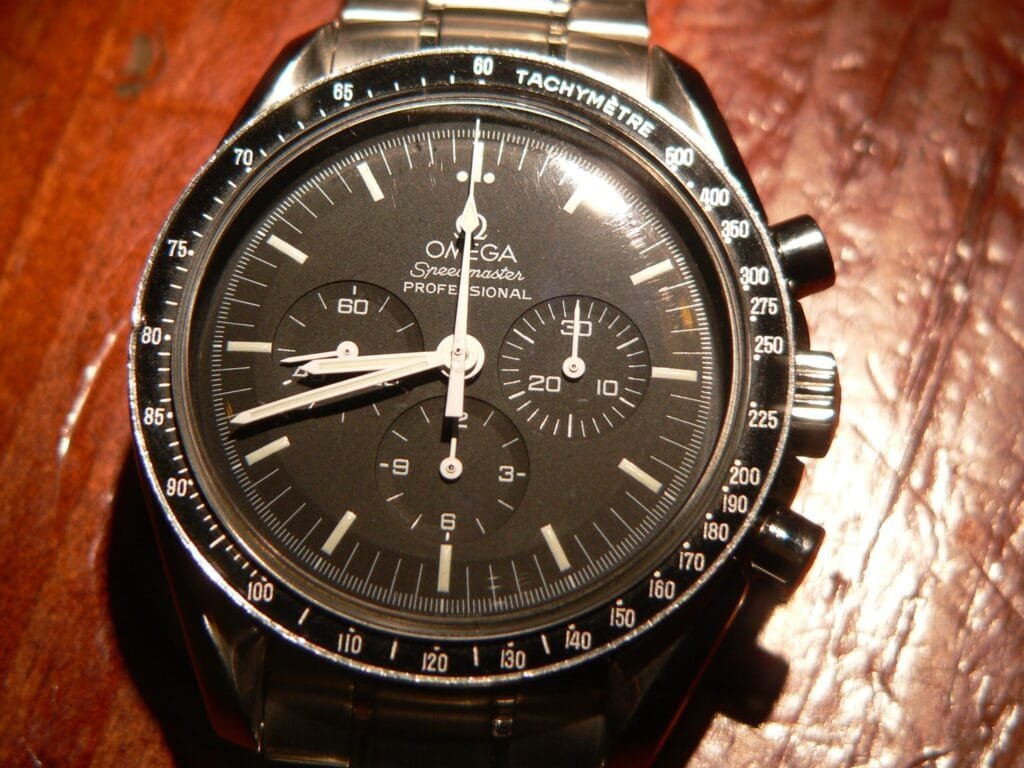
- Crystal. Hesalite models have a faint domed, slightly warm look and scratch easily. Sapphire models are flatter and usually carry a display caseback. The cleaning differs, as covered below.
- Strap. Steel bracelet, leather, fabric or rubber. Leather never gets wet.
The Rule That Protects the Movement
Never press the chronograph pushers while the watch is wet, and make sure the crown is pushed fully home before any water touches it. The pushers are sealed by gaskets, but pressing one opens a path past them. The stiff pusher guide explains why those gaskets harden with age, which makes this matter more on an older watch.
Cleaning the Case and Bracelet
Omega’s own advice is simple: for metal bracelets and water-resistant cases, use a toothbrush with soapy tap water and a soft cloth to dry. That is all the Speedmaster needs.
- Mix a few drops of mild dish soap into a bowl of lukewarm water.
- Dip a soft toothbrush and work it around the lugs, the case sides and between the bracelet links, where grime packs in.
- Pay attention to the gap where the tachymeter bezel meets the case. Grit collects there and shows as a dark ring.
- Rinse briefly with lukewarm water, keeping the pushers untouched.
- Pat dry with a microfibre cloth, then let the bracelet air-dry fully before wearing.
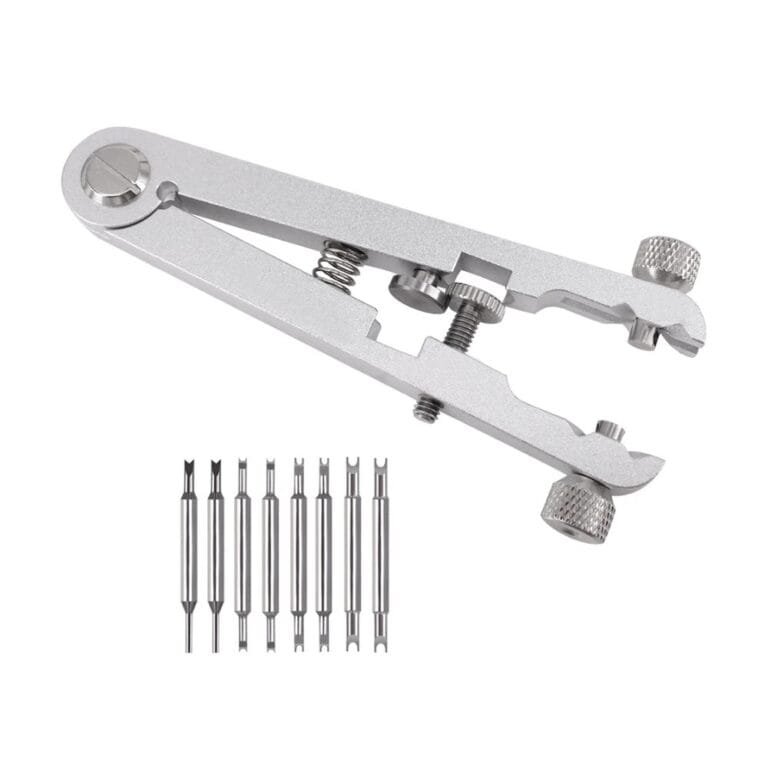
For a deep clean, take the bracelet off the case first. On its own it can soak in soapy water or go in an ultrasonic cleaner without any risk to the watch. The Seamaster bracelet cleaning guide covers that process step by step, and it applies to the Speedmaster bracelet too.
Cleaning the Hesalite Crystal
Hesalite is a form of acrylic, and that changes the rules.
- Do wipe it with a damp microfibre cloth and a drop of mild soap.
- Do not use alcohol, acetone, glass cleaner or household sprays. Solvents can leave acrylic cloudy or covered in fine cracks.
- Do not wipe it dry with a paper towel. Paper is abrasive enough to haze acrylic over time.
The upside of Hesalite is that light scratches polish out at home. A small amount of Polywatch on a soft cloth, rubbed in small circles for a minute or two, removes most fine scuffs. Deep gouges will not polish out, and that is a crystal replacement. Sapphire models are the opposite: they shrug off scratches and can be cleaned with anything gentle, but they cannot be polished. The crystal types guide explains that trade-off.
Leather and Fabric Straps
Omega advises keeping leather away from water and damp, out of direct sunlight, and away from cosmetics, and it advises against leather cleaners. Wipe leather with a dry cloth only. If you want to wash the case properly, take the leather strap off first. Fabric and rubber straps can be washed with soapy water once removed from the watch.
After Salt Water or Sweat
Omega says to always rinse the watch with warm tap water after sea swimming. Salt dries into crystals around the pushers and bezel, which is exactly where you do not want it. The same short rinse after a sweaty day stops grime building up between the links. The saltwater rinsing guide has the full routine.
What Cleaning Cannot Fix
- Dust or fog under the crystal. That is inside the case. It needs opening by a watchmaker, and fog means a seal has failed.
- Water resistance. Omega recommends a water resistance check every year, because gaskets age whether you clean the watch or not.
- The movement. Omega’s recommended full service interval is every 5 to 8 years.
All of the Omega guidance quoted here comes from Omega’s official watch care page.
Conclusion
Crown in, pushers untouched, then soapy water and a soft toothbrush for the case and bracelet. Keep solvents off the Hesalite, polish its scratches with Polywatch, and keep leather dry. Anything under the crystal is a job for a watchmaker, not a cloth.
Related Guides
- Omega Speedmaster pushers feel stiff: when a firm pusher is normal and when it is a gasket.
- How to clean an Omega Seamaster bracelet: the deep-clean method for a removed bracelet.
- Omega Co-Axial running slow: if the watch is clean but keeping poor time.
Image credits: Omega Speedmaster photographs via Wikimedia Commons, used under their respective licences.