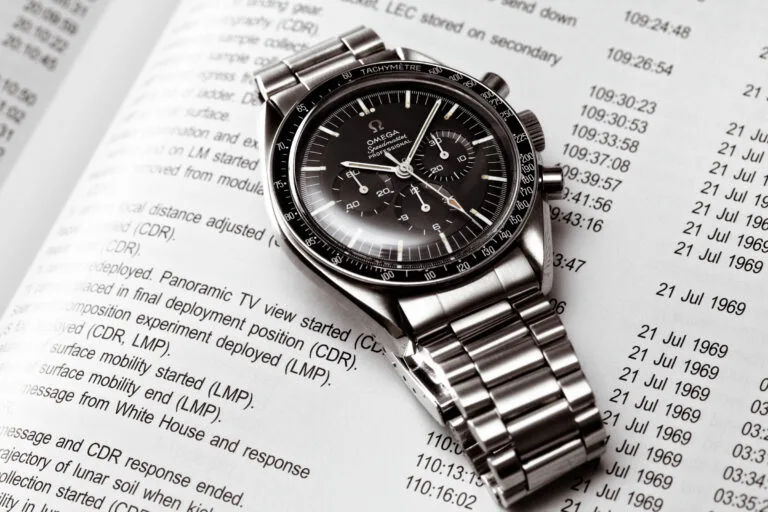
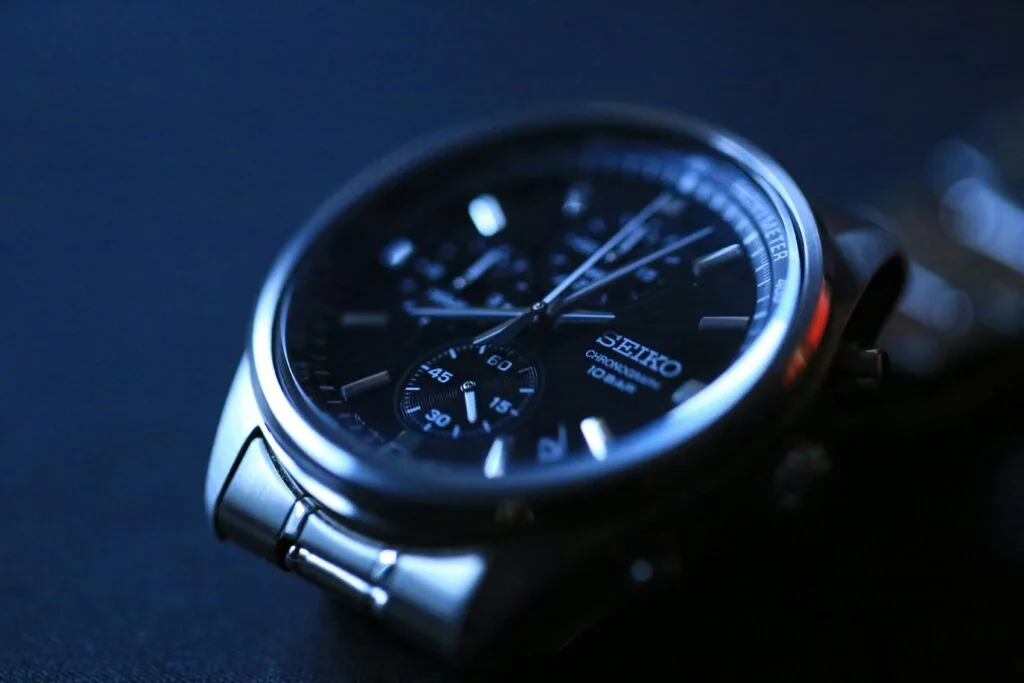
Seiko is widely regarded as the gateway into the world of mechanical horology. Whether you own a classic Seiko 5, a rugged Prospex, or an elegant Presage, these watches are known for their reliability. However, mechanical movements are intricate machines, and it is common for owners to notice their timepiece losing thirty seconds or even several minutes a day. While some variance is normal, significant time loss usually points to a specific mechanical or environmental issue.
1. The Power Reserve is Not Fully Charged
The most common reason an automatic watch loses time is simply a lack of kinetic energy. If you have a sedentary job or do not wear the watch for more than eight hours a day, the mainspring may never reach its full tension. When the power reserve is low, the torque delivered to the balance wheel drops, causing the watch to “beat” more slowly. Try hand-winding the crown thirty times or wearing the watch during more active movement to see if the accuracy improves.
2. Magnetization from Modern Electronics
We live in a world surrounded by magnets. From laptop speakers to magnetic iPad covers and even smartphone chargers, invisible magnetic fields are everywhere. If your Seiko’s hairspring becomes magnetized, the coils can stick together. While this usually causes a watch to run fast, in some cases, it can cause erratic behavior and significant time loss. You can check this easily with a physical compass or a “Lepsi” app on your phone.
3. Positional Error and Gravity
Mechanical watches are affected by gravity. Depending on whether you leave your watch “dial up,” “crown down,” or “dial down” on your nightstand, the friction on the balance staff pivots changes. If your watch loses time overnight, try resting it in a different orientation. Many Seiko movements are regulated to perform best when worn, so stationary positions can lead to slight deviations.
4. Shock and Incidental Impact
While Seiko divers are built to be tough, a sudden drop or a hard knock against a doorframe can shift the regulator arm. This small metal lever controls the effective length of the hairspring. If it moves even a fraction of a millimeter, your watch’s timing will be thrown off. If the time loss started immediately after an impact, this is likely the cause.
5. Dried Lubricants and Old Oil
Inside a Seiko movement, there are dozens of tiny jeweled bearings that require microscopic amounts of specialized synthetic oil. Over five to seven years, this oil can dry up or turn into a sticky paste. This increases friction within the gear train, forcing the movement to work harder and ultimately slowing it down. If your watch is over five years old and losing time, it is likely crying out for a professional service.
6. Temperature Extremes
Metal expands and contracts. If you move from a very cold outdoor environment to a heated room, the hairspring’s elasticity changes momentarily. While modern Seiko alloys are designed to resist this, extreme temperature fluctuations can still result in a noticeable loss of seconds over a twenty-four-hour period.
7. The Need for Regulation
Sometimes, a watch simply leaves the factory with a regulation that doesn’t suit your lifestyle. Seiko’s entry-level movements often have a wide “acceptable” range (e.g., -20 to +40 seconds per day). If your watch is consistently losing the same amount of time every day, a watchmaker can “regulate” it in ten minutes by adjusting the tension on the balance spring.
Concluding Remarks
A Seiko losing time is rarely a sign of a “broken” watch, but rather a sign of a movement that needs adjustment or more activity. By ruling out magnetization and power reserve issues first, you can save yourself a trip to the repair shop. If the problem persists, a simple regulation or a full service will restore that legendary Japanese precision. Check our guide on Rolex!
Tools Mentioned in This Guide
- For culprit 2: a handheld watch demagnetizer removes magnetism in seconds, and pays for itself if you own more than one mechanical watch.
- For culprit 1: a watch winder keeps the power reserve topped up on days you are not wearing the watch.
- For culprit 7: a timegrapher measures your exact daily rate, and a back case remover set opens most Seiko screw-down casebacks if you decide to regulate it yourself.
This section contains affiliate links. We may earn a small commission if you purchase through them, at no extra cost to you.
If Your Watch Is Drifting: Next Steps
- Seiko 5 accuracy: what spec to actually expect: check your rate against Seiko’s published tolerance before deciding anything is wrong.
- Seiko automatic running fast: what’s normal and what isn’t: the mirror image of this problem, and why magnetism is almost always behind a sudden gain.
- How to regulate a Seiko automatic at home: the fix for culprit 7, including the lift angle setting most guides get wrong.
- Why your automatic watch stops overnight: the power reserve problem in culprit 1, explained in full, including a static reserve test you can run at home.
- Signs your movement needs a full service: the dried lubricant symptoms described in culprit 5, and the other signals worth watching for.
Understanding Your Seiko Movement
- Seiko 4R36 vs NH35: what owners should know: which calibre you actually have, and why two identical movements carry different published tolerances.
- Hand-winding an automatic watch: how many turns is safe?: how to wind a Seiko properly, and why you cannot overwind a modern automatic.
- Is automatic watch rotor noise normal?: which sounds are simply the winding mechanism at work and which point to a fault.
- Why is my Seiko 5 second hand skipping?: what a stuttering seconds hand means when the watch is otherwise keeping time.