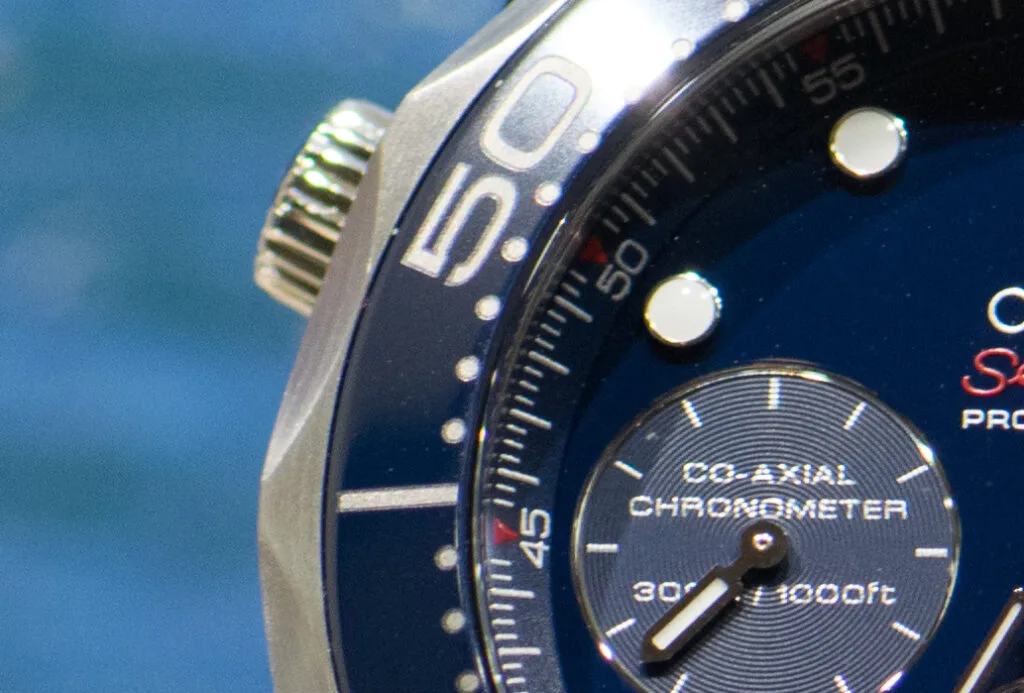
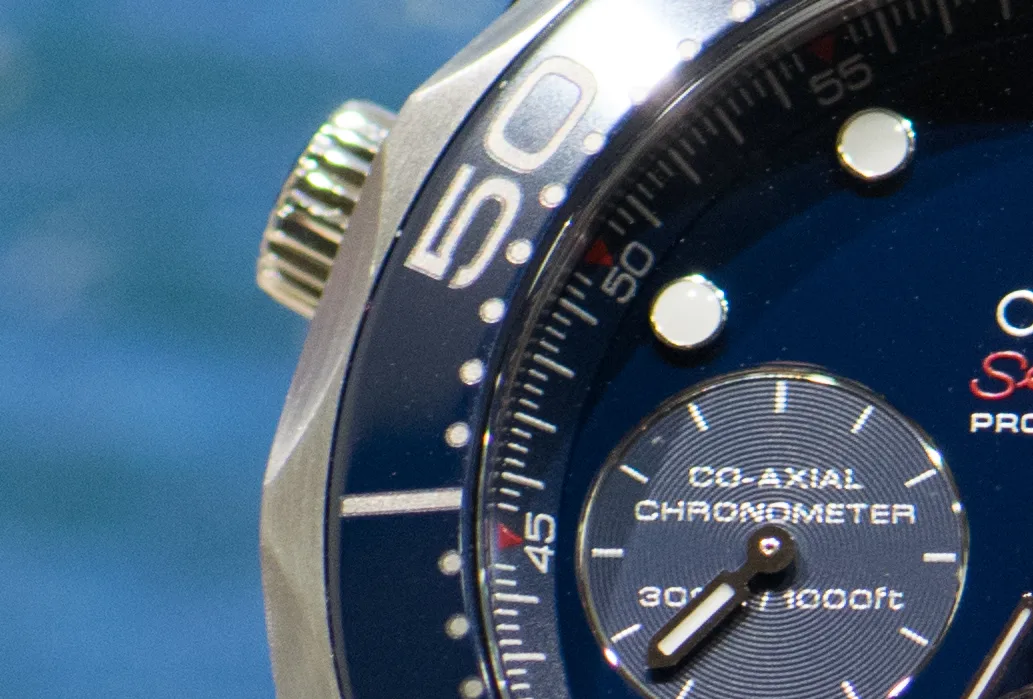
The small extra crown at 10 o’clock on your Seamaster is a helium escape valve, and here’s the honest truth about it: unless you are a commercial saturation diver, it will never once perform its intended function. That doesn’t mean it’s useless to understand, especially when it starts feeling stiff or you’re wondering whether to touch it at all.
What the Valve Actually Does
Saturation divers live for days or weeks inside pressurised chambers breathing a helium-rich gas mixture. Helium atoms are small enough to work their way through a watch’s gaskets and into the case, even a well-sealed one. On the way back up, as external pressure drops, that trapped helium expands faster than it can escape, and the pressure can pop the crystal clean off the case.
The valve is a one-way pressure relief system that lets that helium out in a controlled way. Rolex patented the original design in 1967 for the Sea-Dweller, and Omega later developed its own version for the Seamaster and Planet Ocean lines.
Manual vs Automatic Valves
This distinction matters for how you treat it. Omega’s Seamaster Diver 300M and Planet Ocean use a manual valve, the visible screw-down crown at 10 o’clock. It must be deliberately unscrewed to work, and left open through the entire decompression. Rolex’s Sea-Dweller, by contrast, uses an automatic valve that triggers itself and needs no user input.
The practical consequence: on an Omega, the valve is something you can physically open. On most other dive watches, there’s nothing to touch.
Should You Ever Unscrew It?
No, not in normal use. Leave it screwed down. Omega’s own documentation notes that water resistance is significantly reduced while the valve is unscrewed, on some models dropping to a fraction of the sealed rating. There is no benefit to opening it for swimming, showering, or recreational scuba diving, because none of those expose the watch to a helium atmosphere in the first place.
When the Valve Feels Stiff or Sticks
Because it’s a screw-down crown that most owners never touch, the valve can accumulate dried salt, soap residue, or grime around its threads over years of wear. This shows up as stiffness when you do try to turn it, or a gritty feel.
Fix: Rinse the case with warm fresh water and work a soft brush gently around the valve’s base, the same routine that keeps the main crown moving freely. Don’t force it. If it’s genuinely seized, that’s a watchmaker job, forcing a stuck screw-down component is how threads get stripped.
One Extra Gasket Is One Extra Failure Point
Worth knowing: every valve is another sealed opening in the case, with its own gasket that ages like any other. Plenty of professional (non-saturation) divers actively prefer watches without one for exactly this reason. If your Seamaster ever shows condensation under the crystal, the valve gasket is one of the places worth checking alongside the crown and case back, as covered in our guide on dive watch fogging and gasket failure signs.
Conclusion
Treat the helium escape valve as a sealed part of the case, not a feature to operate. Keep it clean with the same rinse you’d give the crown, keep it screwed down, and don’t worry that you’re missing out by never using it. For general Seamaster upkeep, see our guide on cleaning an Omega Seamaster bracelet.