The Co-Axial escapement was designed specifically to reduce the friction that makes traditional movements drift over time, so a Co-Axial Omega losing time can feel like a contradiction. It usually isn’t the escapement’s fault. Here’s what’s actually going on.
First: What Counts as “Slow”
Omega’s Master Chronometer certification allows 0 to +5 seconds per day, deliberately biased toward running slightly fast rather than slow. So a Master Chronometer losing several seconds a day is genuinely outside its intended spec, unlike a standard mechanical watch where a few seconds either way is normal. Older, non-Master-Chronometer Co-Axial calibres have wider tolerances, so check what your specific model was certified to before assuming something’s wrong.
Low Power Reserve
The simplest explanation first. As the mainspring approaches the end of its reserve, delivered torque drops and the balance amplitude falls with it, and a watch running on low amplitude loses time. If your Omega only runs slow after sitting unworn for a day or two, or you have a desk job with little wrist motion, this is the likely cause rather than any fault.
Fix: Hand-wind it fully and wear it consistently for a few days, then reassess the daily rate from a full wind.
Magnetism
Magnetism classically makes watches run fast, because magnetised hairspring coils cling together and effectively shorten the spring. But heavy magnetisation can also disrupt the balance enough to cause erratic or slow running. Modern Master Chronometer Omegas are resistant to 15,000 gauss thanks to their silicon Si14 hairsprings, which makes this an unlikely culprit on newer models, but far more plausible on an older Co-Axial calibre without that protection.
Degraded Lubricant, Even on a Co-Axial
This is the most common real cause. The Co-Axial escapement reduces sliding friction at the pallets, which is why Omega recommends 5 to 8 year service intervals versus the 3 to 5 year industry standard. But that only applies to the escapement itself. The rest of the movement, the gear train pivots, the barrel, the winding mechanism, still runs on conventional lubricants that thicken and degrade on a normal timetable.
A common misconception is that a Co-Axial doesn’t need servicing. It does. Longer intervals, not no intervals, and gaskets age regardless of what escapement sits inside.
Which Calibre Do You Have?
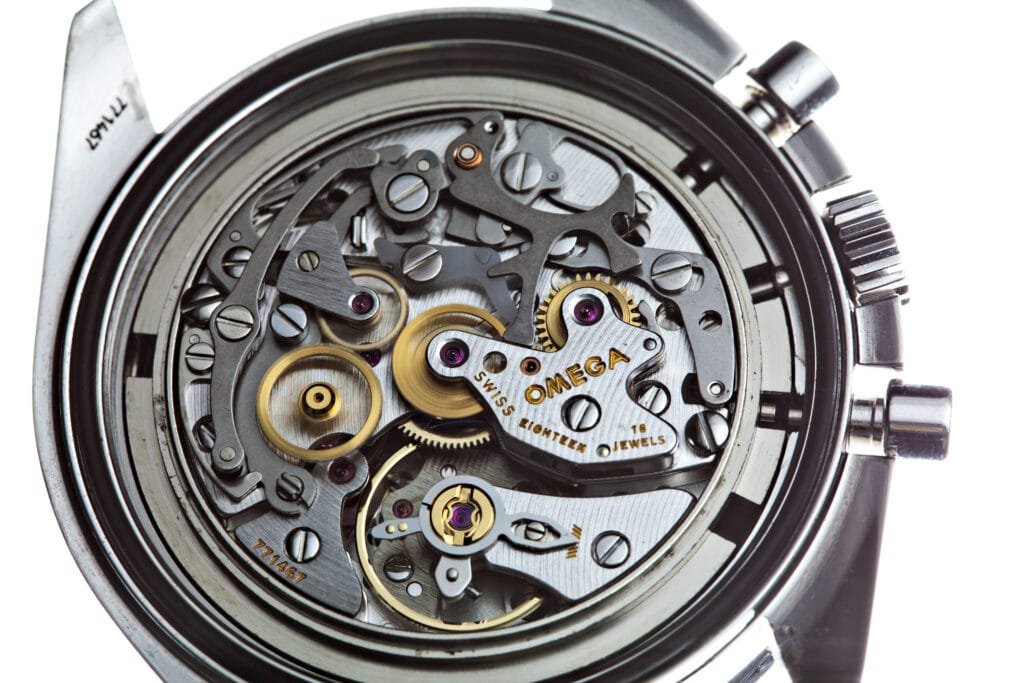
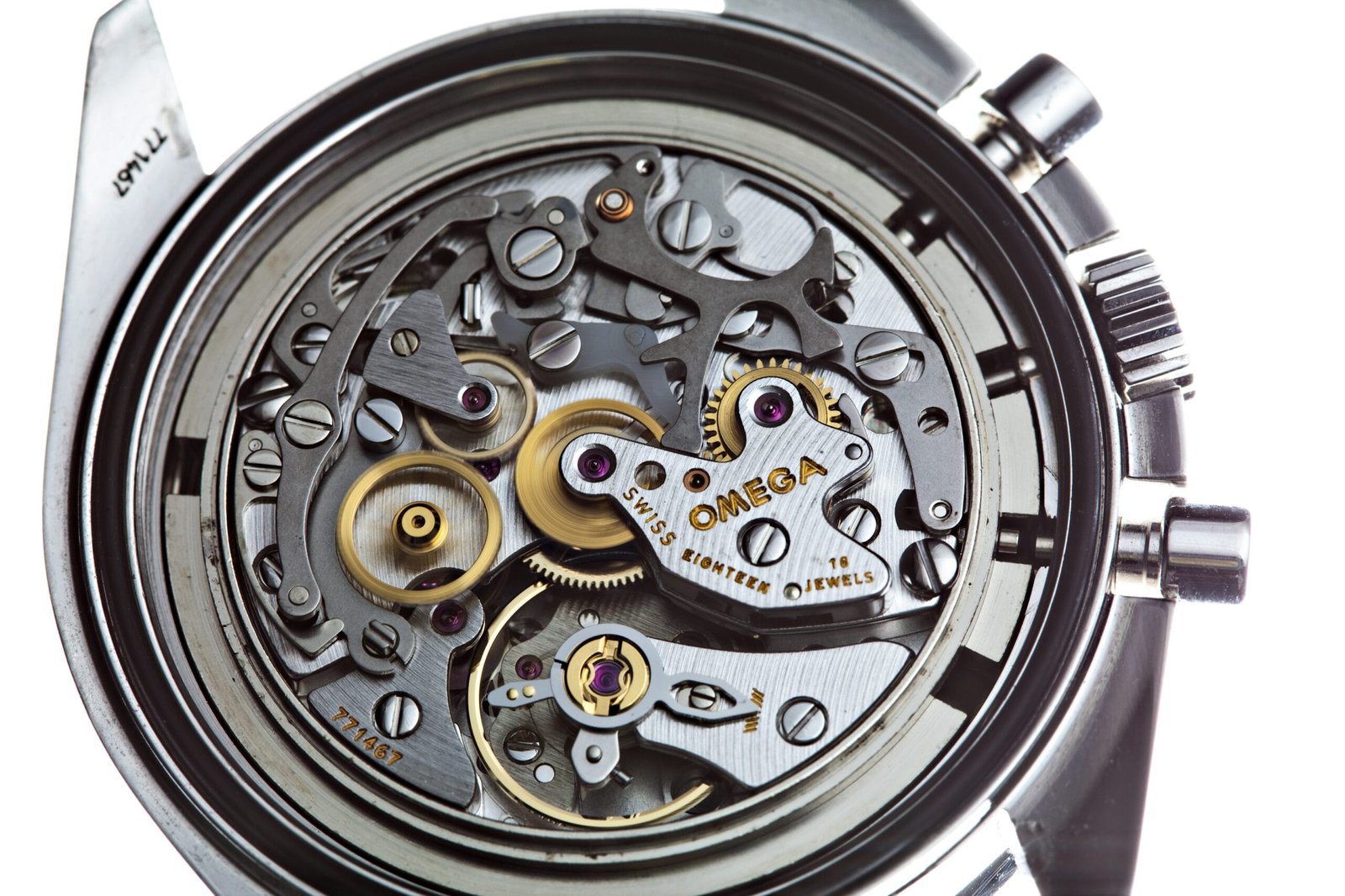
This changes the answer. Modern Co-Axial Master Chronometer calibres (the 8000 and 9000 series) comfortably reach the 8-year end of Omega’s window. Older non-Co-Axial Omega movements, like the 1120 or the classic 861 Speedmaster calibre, use a traditional lever escapement with higher friction and benefit from servicing closer to every 4 to 5 years. Owners with both in their collection often mistakenly treat them on the same schedule.
Conclusion
Rule out low power reserve first, it costs nothing to test. Consider magnetism if the watch is an older Co-Axial without a silicon hairspring. If the watch is fully wound, unmagnetised, and still consistently slow, degraded lubricant in the wider movement is the likely answer and it’s due for a service. For stiff chronograph controls on a Speedmaster, see our guide on chronograph pushers that feel stiff, and for general Seamaster care, our guide on cleaning an Omega Seamaster bracelet.