
The Citizen Eco-Drive has earned a global reputation as the gold standard for “set it and forget it” timepieces. By utilizing a highly efficient solar cell hidden behind the dial, these watches convert any light source either natural or artificial into electrical energy stored in a specialized lithium-titanium power cell. In ideal conditions, an Eco-Drive can run for decades without ever needing a traditional battery change. However, many owners experience a moment of panic when they pull a long-forgotten watch out of a dark drawer and find the hands frozen at twelve o’clock. This state of “death” is almost always a reversible hibernation mode designed to protect the internal electronics from total power depletion.
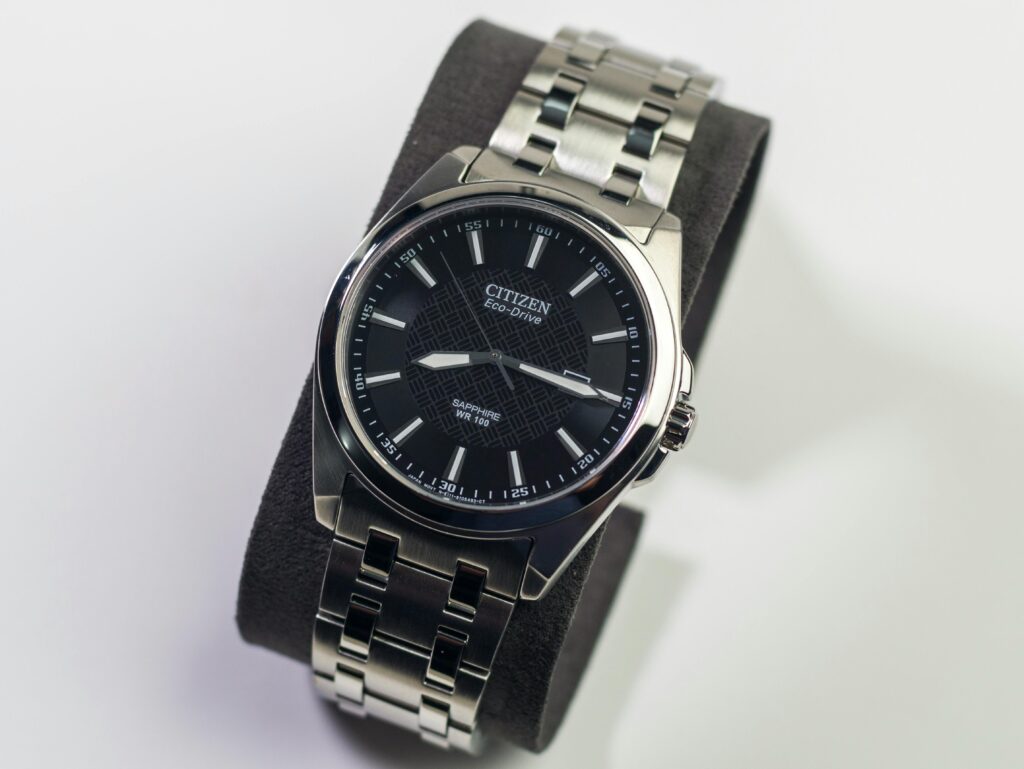
Identifying the Low Power Warning and Hibernation Stages in Citizen Eco-Drive
Before an Eco-Drive stops entirely, it enters a protective state known as the insufficient charge warning. The most obvious sign of this is the two-second jump. The second hand will pause for two seconds and then leap forward two positions. During this phase, the watch still maintains the correct time, but it is effectively shouting for light. If the watch remains in the dark, it will eventually enter a secondary power-save mode. In this stage, the hands stop moving to conserve every millivolt of energy for the internal quartz crystal and calendar logic. Understanding that this is a deliberate safety feature, rather than a mechanical breakdown, is the first step toward a successful recovery.
The Physics of Light Absorption and the Window Sill Trap
The most common reason these watches fail to “revive” is that owners underestimate the intensity of light required to bridge the gap from a dead state to a functional state. There is a massive difference between ambient indoor light and direct sunlight. While a standard office lamp provides about 500 lux, direct sunlight can provide over 100,000 lux. To move a watch from a completely dead state to a full charge using indoor fluorescent light could take over 130 hours of continuous exposure.
Conversely, direct sunlight can achieve the same result in about 11 to 12 hours. The “windowsill trap” occurs when owners place the watch behind a window with UV-filtering glass or in a spot that only gets an hour of sun per day. For a successful revival, the watch must be placed in a spot that receives intense, direct light for at least two consecutive days.
Mastering the All-Reset Procedure
A common frustration occurs when a watch has been sitting in the sun for days, yet the hands remain frozen or continue to jump in two-second increments. This happens because the internal integrated circuit (IC) is “stuck” in its low-voltage error state. It does not automatically realize that the power cell is now full. To fix this, you must perform an All-Reset.
For most basic three-hand models, you simply pull the crown out to the time-setting position, leave it for thirty seconds, and push it back in. However, for Perpetual Calendar or Skyhawk models, the process involves pulling the crown and holding all side buttons simultaneously for several seconds. This “reboots” the watch’s brain and tells it to start fresh with the new power levels. Without this reset, many owners mistakenly believe the watch is broken and spend money on unnecessary repairs.
The Chemistry of Deep Discharge and Cell Failure
While the Eco-Drive power cell is designed to be recharged thousands of times, it is not immortal. It is a secondary lithium-ion cell that relies on chemical reactions. If a watch is left in total darkness for several years, the voltage can drop below a “critical floor.” When this happens, a chemical process called sulfation or copper shunting can occur inside the cell, making it impossible for the cell to hold a charge.
If your watch starts ticking when placed under a bright lamp but stops the very second you take it away from the light, the cell has lost its capacity. In this specific case, the “battery” (the MT920 or TS920 capacitor) must be physically replaced. Fortunately, these cells are widely available and can be swapped out much like a standard battery to give the watch another twenty years of life.
Protecting the Gaskets During High-Heat Charging
A final caution for those reviving a dead Eco-Drive: beware of heat. While direct sunlight is the best medicine for a dead solar watch, placing a watch in a “sun-trap” like a car dashboard or directly against a high-heat halogen bulb can be dangerous. Excessive heat can cause the lubricants inside the movement to evaporate or migrate onto the dial. It can also cause the rubber gaskets to dry out and crack, compromising the watch’s water resistance. Always ensure there is a bit of airflow around the watch during its two-day sunbath. If the watch feels hot to the touch, move it slightly further away from the light source.
Concluding Remarks
A stopped Citizen Eco-Drive is rarely a sign of a mechanical failure; it is usually a cry for help from a masterpiece of engineering that has been starved of its primary fuel. By understanding the intensity of light required for a deep charge and the necessity of the “All-Reset” logic, you can revive nearly any solar watch from the brink of the trash can. These watches are built to be sustainable and long-lasting. Treat your Eco-Drive to a regular dose of light, and it will reward you with unparalleled accuracy and reliability for a lifetime. Check out why your Rolex Watch keeps stopping