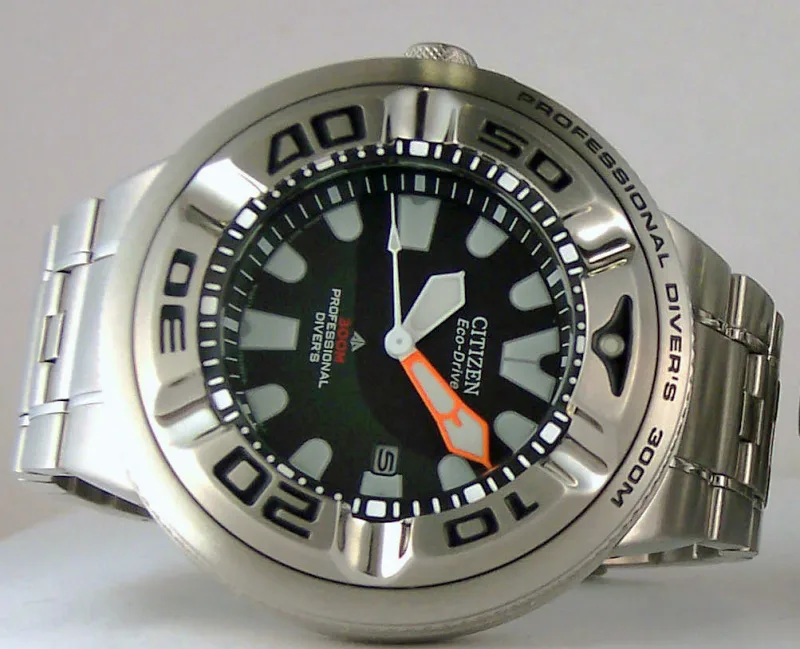
An Eco-Drive doesn’t use a disposable battery, it has a rechargeable cell, and that distinction matters for how long it actually lasts. Citizen’s own accelerated lab testing found the cell still holding around 80% of its original capacity after roughly 20 to 22 years of use.
This post contains affiliate links. We may earn a small commission if you purchase through them, at no extra cost to you.
The Realistic Range: 10 to 20 Years
While the lab figures point toward two decades or more, most watchmakers who service Eco-Drives regularly put the practical replacement window at 10 to 20 years, depending on the specific caliber and how the watch has actually been treated. The cell doesn’t fail suddenly, it gradually holds less charge, so a much older Eco-Drive isn’t broken, it just won’t run as long in the dark as it used to.
Signs the Cell Is Actually Wearing Out
A dying cell shows up as a gradually shrinking power reserve rather than a sudden failure. If the watch used to run for months after being set aside but now stops within days or weeks of leaving it in a drawer, that’s the clearest sign. This is different from the blinking-hand charge warnings covered in our Eco-Drive blinking hand guide, those are a signal about current charge level, not a sign the cell itself is failing, and they’ll happen on a perfectly healthy cell too if it’s been kept in the dark.
What Actually Shortens the Cell’s Life
The single biggest factor isn’t age on its own, it’s how often the watch has been allowed to run fully flat. Letting an Eco-Drive discharge completely and sit that way for extended periods stresses the rechargeable cell far more than years of normal light exposure does.
To get the longest life out of the cell: keep the watch exposed to reasonably regular light, even if you’re not wearing it daily, and avoid letting it sit somewhere dark for months at a stretch. Citizen specifically recommends at least 5 to 6 hours of direct sunlight per month as a maintenance minimum. If your watch spends most of its time in a drawer, a small solar watch charging lamp is an easy way to keep it topped up without relying on catching enough daylight.
How Long a Full Charge Actually Lasts
This varies a lot by model. Many everyday Eco-Drive calibers run for roughly 6 months on a full charge with no further light exposure, while some specialty models are rated for several years, and a few high-end calibers are rated up to 5 years. Your specific watch’s manual, searchable by caliber number, will list the exact figure.
What Cell Replacement Actually Involves
When the time comes, replacing the rechargeable cell is a standard watchmaker service, not a full movement overhaul. It’s comparable in scope to a regular battery replacement on a quartz watch, the case is opened, the old cell is swapped for a new one matched to the caliber, and the case is resealed. It doesn’t mean anything else is wrong with the watch.
Is It Worth Replacing an Older Watch’s Cell?
Cell replacement is generally inexpensive relative to the cost of the watch itself, and it fully restores the original charge capacity, it’s not a temporary patch. For a watch you actually wear and intend to keep, there’s rarely a reason not to have it done once the power reserve has noticeably shrunk, rather than living with a watch that needs constant sunlight just to keep running.
If your watch has stopped completely rather than just showing a shrinking reserve, our guide on reviving a dead Eco-Drive covers the recovery steps.
How Much Does Cell Replacement Typically Cost?
Expect roughly $60 to $150, depending on where you go. Authorized Citizen service centers tend to sit at the higher end of that range but guarantee genuine parts, while independent watchmakers are often less. Citizen’s own guidance confirms this is a charged service even during the warranty period, and specifically advises against opening the case yourself, since it risks letting dust or moisture in and can affect water resistance if not resealed properly.
Conclusion
Expect a genuinely useful lifespan of 10 to 20 years from the rechargeable cell, sometimes longer with good habits, and watch for a shrinking power reserve over time rather than a sudden stop as the real warning sign. The most effective thing you can do to extend it is simple: don’t let the watch sit completely dark and discharged for long stretches. When it does eventually need replacing, it’s a standard watchmaker service, not a sign anything else is wrong with the watch.