The short answer: 20 to 40 clockwise turns will fully wake a stopped automatic, and you cannot overwind a modern one. The longer answer explains why that’s true, and what the genuine risks actually are, because they aren’t the ones most owners worry about.

Why You Can’t Overwind a Modern Automatic
An automatic’s mainspring isn’t rigidly fixed to the barrel wall. It attaches through a slipping clutch, sometimes called a bridle. Once the spring reaches full tension, that bridle simply slips inside the barrel and any further winding energy dissipates harmlessly as friction rather than building more tension.
This is a deliberate design necessity: the rotor winds the watch constantly all day on your wrist, so without a slip clutch every automatic would destroy its own mainspring within days. The overwinding myth genuinely applies to vintage manual-wind watches, where forcing past the hard stop can shear the arbor or snap the spring, but not to automatics.
How Many Turns You Actually Need
For a watch that has stopped completely, 20 to 40 clockwise turns of the crown builds enough power to get it running reliably. Most sources converge on around 30 as a sensible target. You won’t feel a definitive hard stop the way you would on a manual watch, since the clutch prevents one, but you will feel the resistance firm up as the spring approaches full tension.
You don’t need to wind to a theoretical maximum. The point of hand-winding is to get the watch started; wrist motion handles the rest through the day. Roughly 8 hours of normal daily wear keeps most automatics adequately wound.
The Risks That Are Real
- Winding while wearing it. This is the most common genuine mistake. Winding on the wrist applies sideways force to the crown stem, and lateral pressure is what bends or snaps stems. Take the watch off first.
- Clutch wear over many years. You can’t damage the mainspring by winding past the slip point, but repeatedly cranking well beyond it adds needless wear to the clutch over a long timeframe. Wind until resistance firms up, then stop.
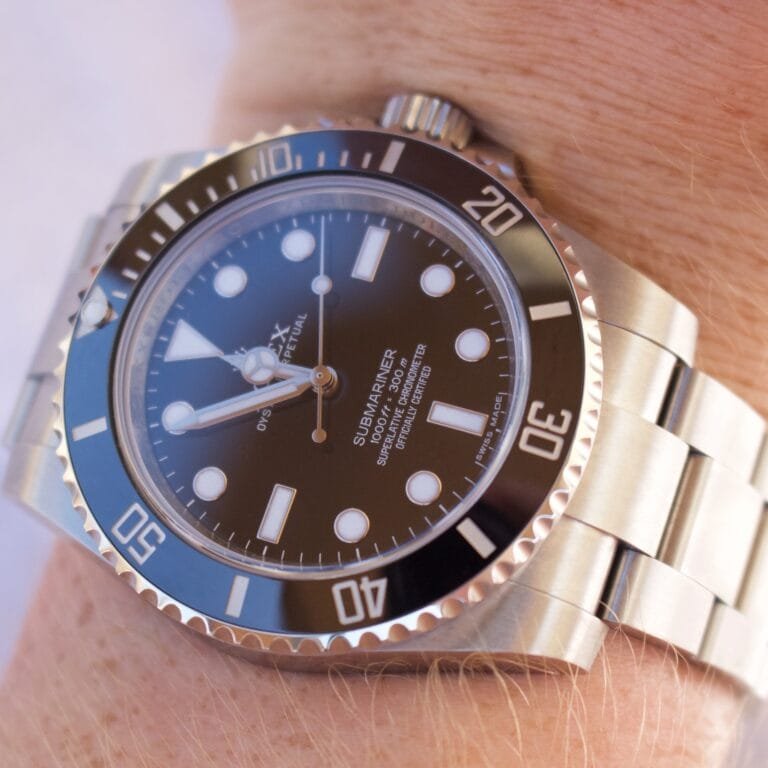
- Cross-threading a screw-down crown. On dive watches especially, forcing the crown back down at an angle is a far more expensive mistake than anything winding-related.
Watches That Can’t Be Hand-Wound at All
Worth knowing before you try: several popular movements, including many older Seiko and Orient calibres, have no manual winding function whatsoever. Turning the crown does nothing. On those, you start a stopped watch by gently swinging or rocking it for 30 seconds to spin the rotor, then putting it on. If your crown spins with no resistance and no effect, this is likely why rather than a fault.
Conclusion
Take the watch off, wind clockwise about 30 turns, stop when resistance firms up, and put it on. The slip clutch handles the rest. Worry about lateral stem pressure and cross-threaded crowns, not about overwinding. If your watch keeps stopping despite regular wear, see our guide on why an automatic watch stops overnight, and if you’re hearing sounds while winding, our guide on whether rotor noise is normal.
Related Guides
- Why is my Seiko automatic watch losing time?: if winding it properly still leaves it drifting, these are the seven things to rule out.