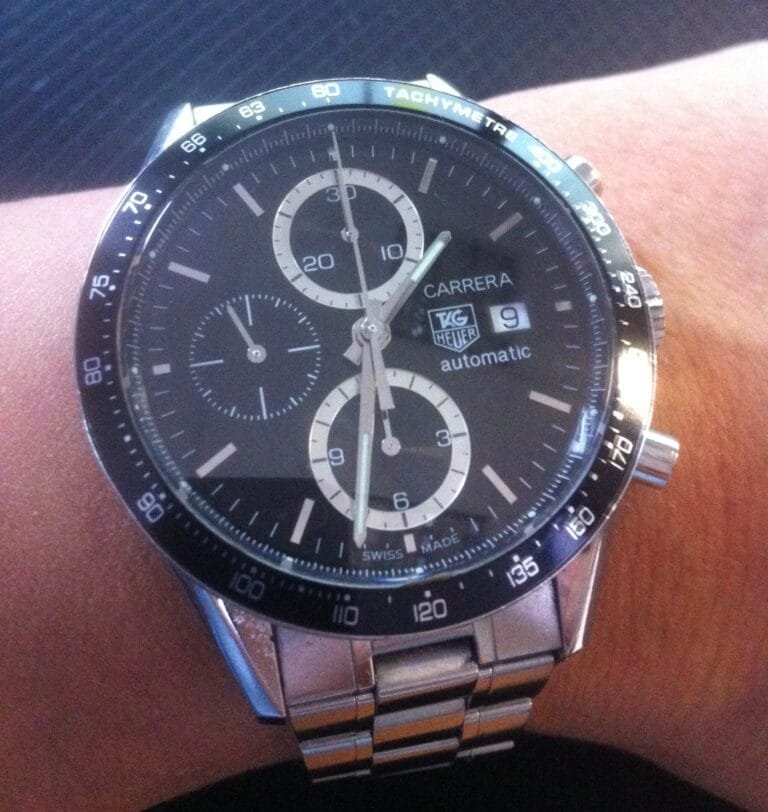
If your automatic gains time sitting dial up on the nightstand but behaves on the wrist, nothing is broken. Every mechanical watch keeps slightly different time depending on which way it is facing. The useful part is that once you know your watch’s pattern, you can use it to cancel out its daily error.
Why Position Changes the Rate
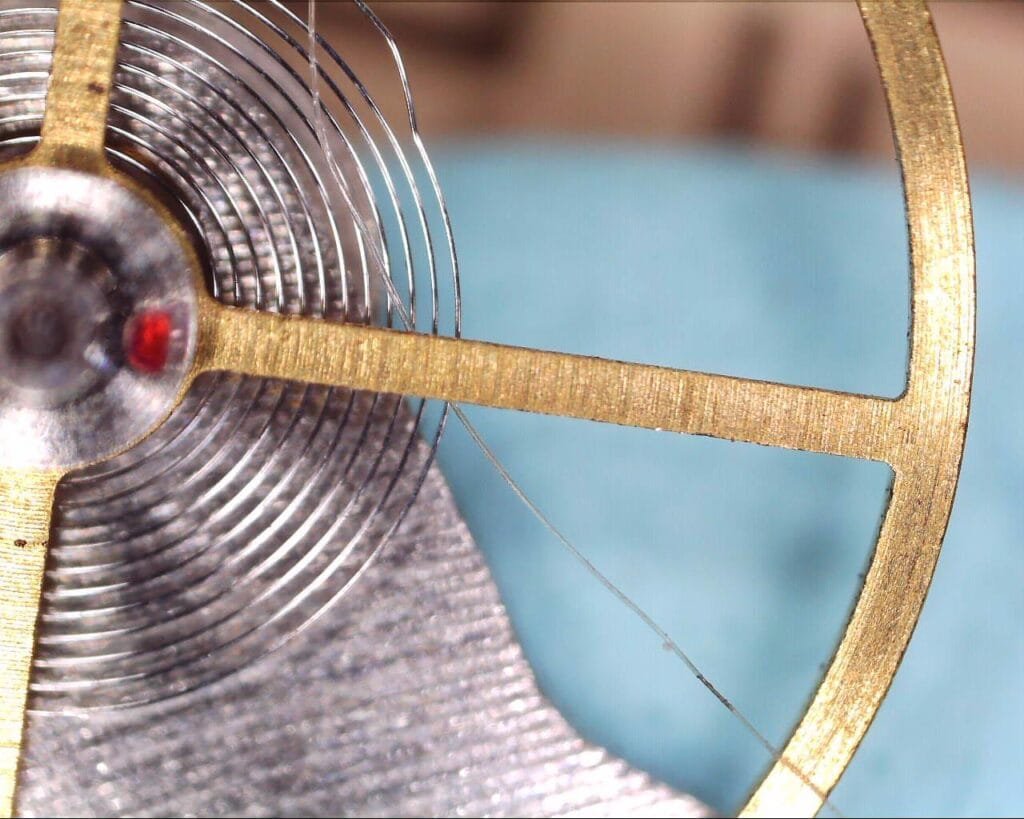
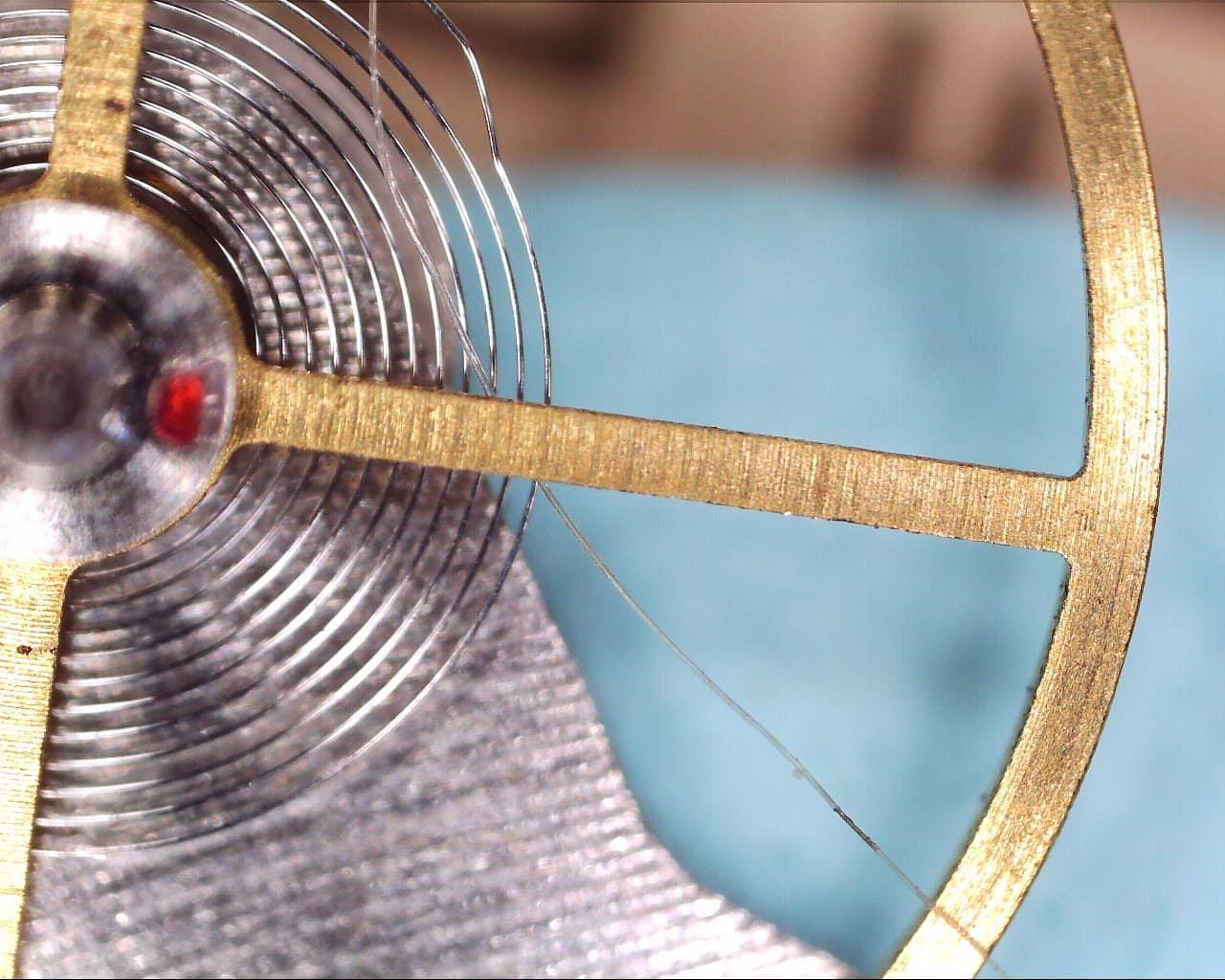
The balance wheel swings on a staff with two microscopic pivots, each riding in a jewel. How much friction those pivots meet depends on which way the watch is facing.
- Dial up or dial down: the balance lies flat and the pivot tip rests lightly on a flat jewel. Friction is low.
- Crown up, crown down, or on its side: the balance stands upright and the sides of the pivots drag against the jewel holes. Friction is higher.
Different friction means the balance swings with a different arc, and that changes the rate. On most watches the flat positions run faster and the upright ones slower, though it is a tendency rather than a rule, and individual watches vary.
How Much Variation Is Normal
More than most owners expect. Miyota’s specification for its 9 series movements allows up to 40 seconds a day of difference between positions. A top-grade ETA or Sellita is held to about 15. Entry-level movements like Seiko’s 4R and 7S calibres are regulated across fewer positions and often show a wide spread.
So a watch that gains 15 seconds overnight dial up but holds steady on the wrist is behaving exactly as designed. Your wrist is an average of every position the watch passes through in a day.
Find Your Watch’s Pattern
A few nights of simple measuring tells you everything.
- Wind the watch fully in the evening and note the error against an accurate clock.
- Leave it in one position overnight, about eight hours.
- Note the error again in the morning. The difference is that position’s overnight rate.
- Repeat on following nights with dial up, dial down, crown up and crown down.
Always start from a full wind. Accuracy drifts as the power reserve runs low, so a half-wound watch will give misleading results.
Use It to Correct Your Watch for Free
Once you know the pattern, the nightstand becomes a regulator.
- If the watch runs fast on the wrist, rest it overnight in its slowest position, often crown up.
- If it runs slow on the wrist, rest it in its fastest position, often dial up.
Eight hours in the right position can pull a watch that drifts 10 to 15 seconds a day very close to zero, with no tools and no opening the case.
When It Points to a Real Problem
A big gap between positions is not automatically a fault, but certain patterns are worth a watchmaker’s attention:
- A spread well beyond the movement’s spec, such as a minute or more between two positions.
- One position wildly out while the rest agree. That can mean the hairspring is touching the regulator pins in that orientation, or the balance is out of poise.
- The pattern has suddenly changed after a knock or a drop.
- The watch also loses time overall and the power reserve feels short. Old, thickened oil cuts the balance’s swing in every position, and that is a service rather than a positional quirk.
A watchmaker with a timegrapher can measure every position in a few minutes and tell you which of these it is.
Conclusion
Gaining time in one position is the normal behaviour of a mechanical watch, not a defect. Measure each position overnight from a full wind, then rest the watch in whichever position cancels out its daily drift. Only an extreme spread, a sudden change, or a watch that is slow everywhere needs a professional.
Related Guides
- Why is my Seiko automatic watch losing time?: positional error is one of the seven culprits, alongside six others worth ruling out.
- How to regulate a Seiko automatic at home: the next step if the watch is consistently off in every position.
- Seiko 5 accuracy: what spec to actually expect: the published tolerance to measure your results against.
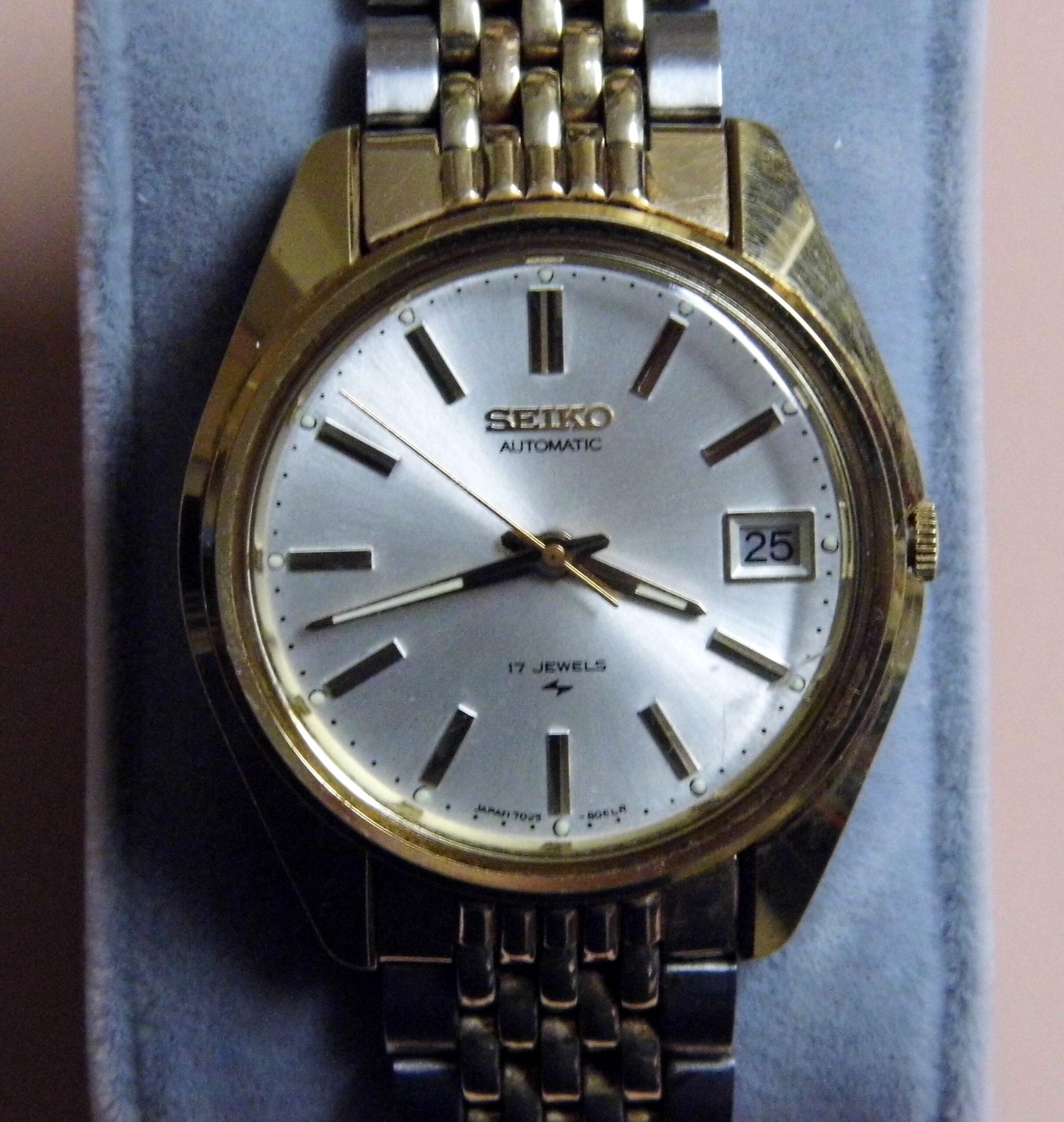
Image credits: balance spring photograph via Wikimedia Commons. Seiko automatic by Joe Haupt via Wikimedia Commons, CC BY-SA 2.0.