Replacing a G-Shock band and bezel is a genuine home job, but two things catch people out badly. Bezels are not interchangeable between variants that look identical, and the four bezel screws shear off far more easily than their size suggests.
This post contains affiliate links. We may earn a small commission if you purchase through them, at no extra cost to you.
Order by Module Number, Not Model Name
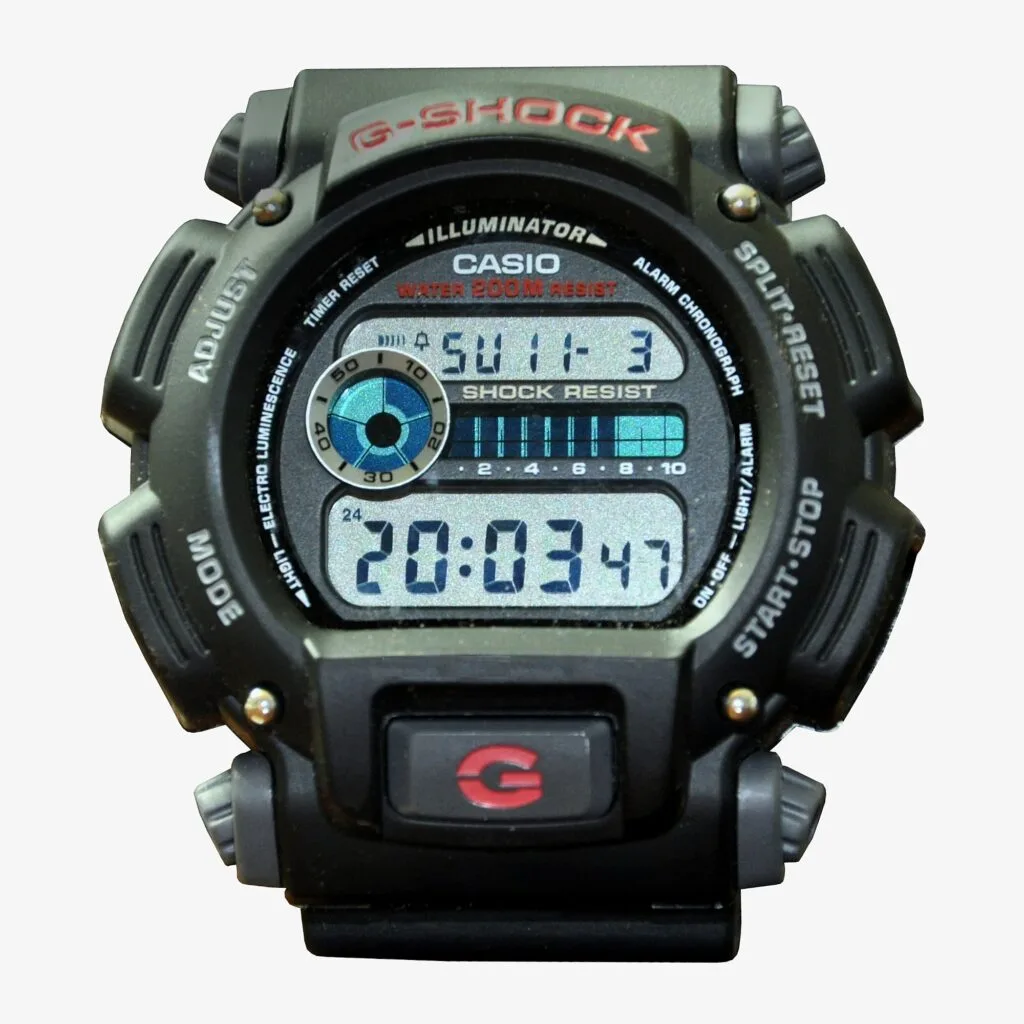
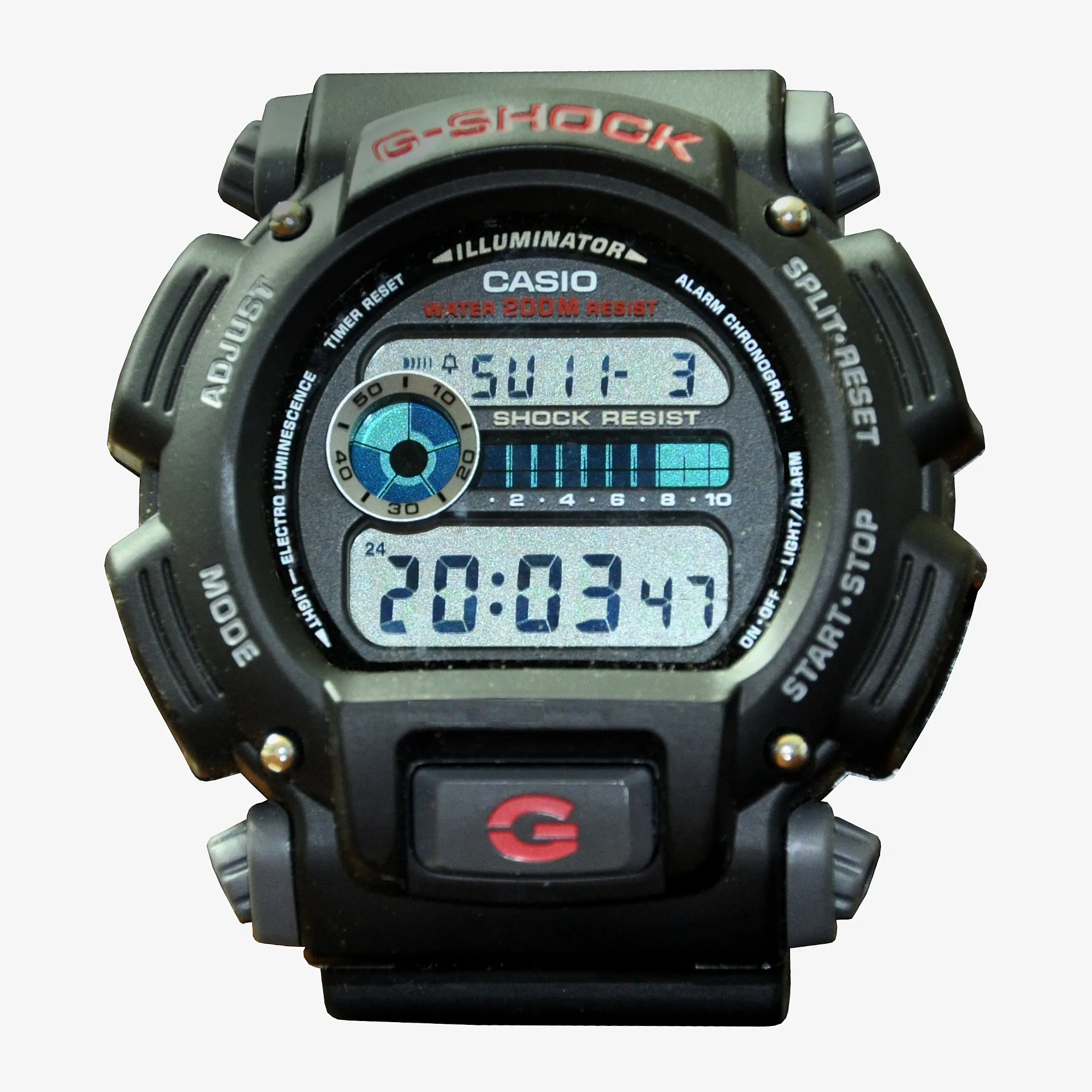
This is where most of the wasted money goes. A DW-5600, a DW-5600C, a DW-5600E and a GW-B5600 are all “a square G-Shock” to look at, and their bezels are not the same part. Owners regularly order the wrong one, try to make it fit, and break a lug in the process. At that point the watch will no longer hold a strap.
Check the module number stamped on the caseback and buy against that. Older watches are the fussiest: a first-generation square running module 691 takes a bezel that modern replacements will not match, and several parts suppliers will tell you outright that newer bezels do not fit.
Aftermarket case and strap sets exist that supply the bezel and the band together, which saves matching two parts and two shades of black. The GA-series sets cover a wide span of models including the GA-100, GA-110, GA-400, GA-700, GD-100 and GW-8900. Confirm the fitment against your module before ordering rather than against the picture.
What You Need
- A precision flathead screwdriver, roughly 1.5mm. Not a general-purpose small screwdriver.
- A plastic pry tool. A guitar pick works well and will not mark the case.
- A spring bar tool for the band and buckle.
- A case opener only if you are also changing the battery while it is apart, which is worth doing.
The Screws Are the Real Risk
Four small screws at the edges hold the bezel on. They sit in resin, they are decades old on a vintage watch, and they strip and shear readily.
Owners have described a screw head shearing off completely and leaving the shank buried in the case, at which point the hole has to be re-drilled by a jeweller. One restorer tried warm water and cold water to free a seized screw before the head gave way.
- Make sure the driver tip fills the slot completely before applying any force. A loose fit is what rounds out a head.
- Press down firmly as you turn, rather than twisting hard.
- If a screw will not move, stop. A sheared screw is a much bigger problem than a bezel you did not replace today.
- On reassembly, snug is enough. The G-Shock repair community’s own guidance is explicit that these screws strip easily if overtightened.
The Sequence
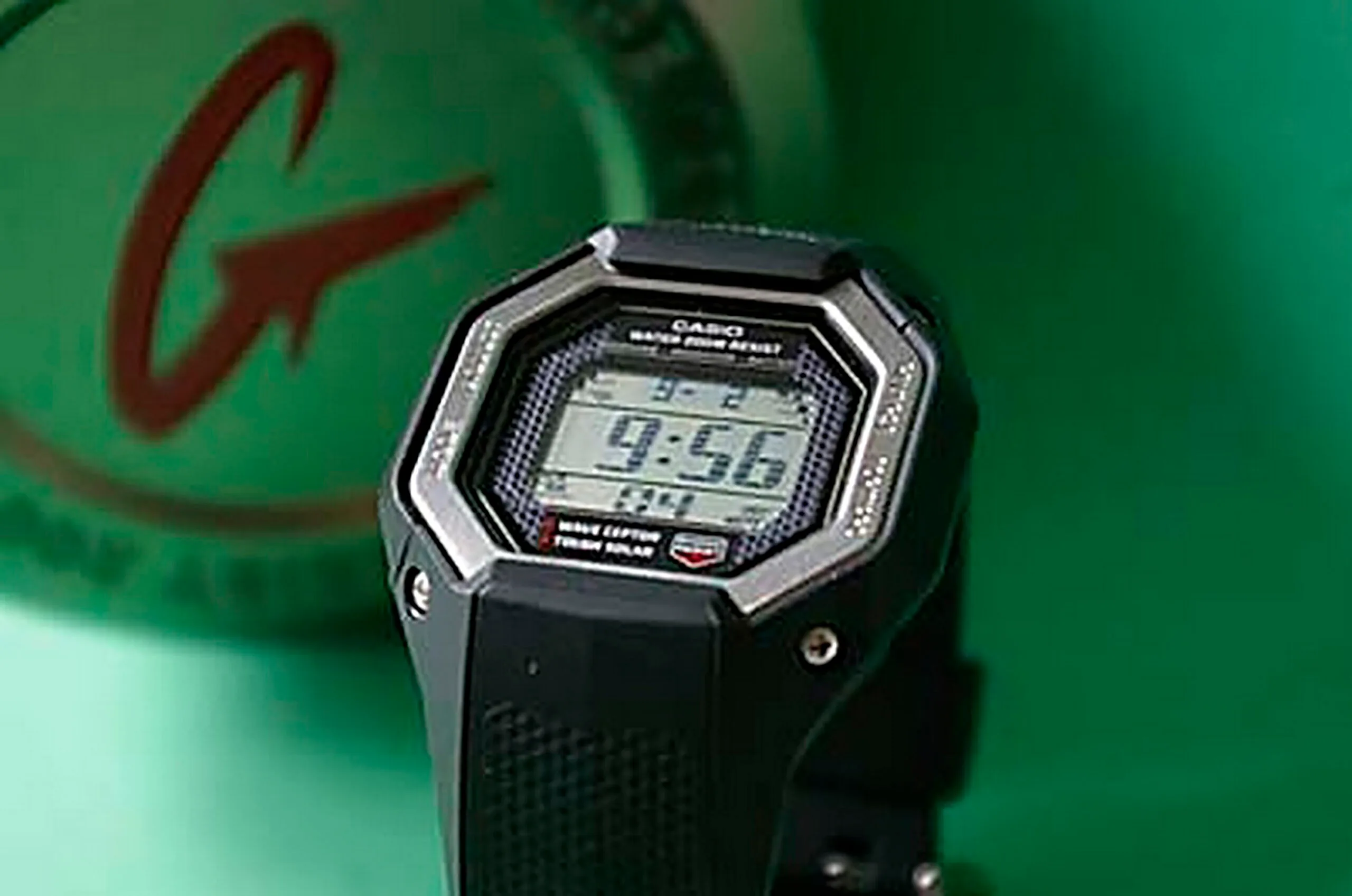
- Remove the band first. It is held by spring bars, and getting it out of the way makes the bezel easier to handle.
- Undo all four bezel screws and keep them somewhere they cannot roll away. Replacement screws are surprisingly hard to source, and Casio’s current parts do not always fit older watches.
- Lift the bezel off with a plastic pry tool, working around the edge rather than levering at one point.
- Clean the case where the bezel sat. Degraded resin leaves residue.
- Seat the new bezel, check it is fully home all the way round, then fit the screws finger-light before tightening any of them.
- Refit the band and tug it firmly in both directions before wearing the watch.
The buckle is the easy part. It is held by a single spring bar and the buckle lugs are drilled through, so a pin or tool pushes straight in. The G-Shock repair wiki is a good reference for model-specific variations.
Original Versus Aftermarket
Aftermarket bezels are cheaper and plentiful, especially for older models Casio no longer supports. The trade-offs reported by owners are fitment and material quality rather than anything dramatic: some arrive slightly the wrong dimensions, and some resin compounds stiffen faster than the original did.
For a watch you swim with, an ill-fitting bezel matters more than on a desk watch, because the bezel is part of how the case seals. If you cannot get an original for an older model, ask the seller to confirm the exact module compatibility in writing before buying.
Conclusion
Identify the module number, buy against that rather than the model name, use a driver that properly fills the screw slots, and stop if a screw resists. Done in that order it is a fifteen minute job that makes a decade-old G-Shock look new. Rushed, it turns a cosmetic problem into a drilling job.
Related Guides
- G-Shock strap cracking: why resin bands degrade: why the old parts failed, and how to make the new ones last longer.
- Casio showing all segments or a frozen display: worth an AC reset while the watch is open if the display is misbehaving.
- G-Shock buttons stuck or unresponsive: the bezel comes off for this job too.
Image credits: Casio G-Shock photographs via Wikimedia Commons.