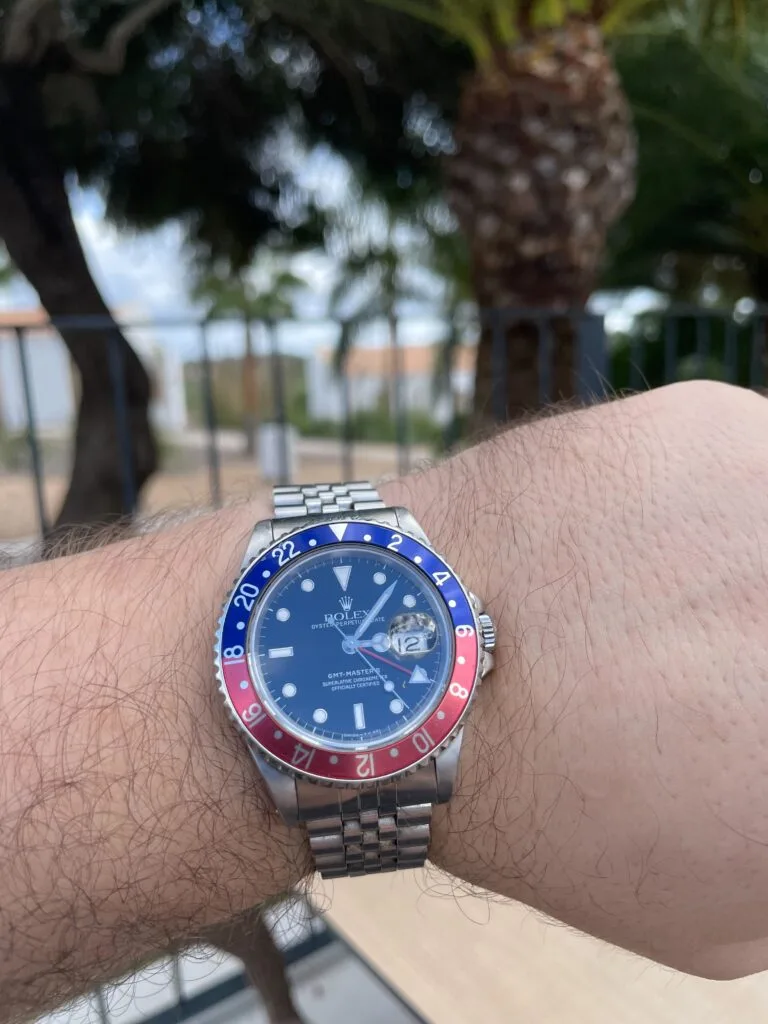
There is a short answer to this, and it surprises people. A current Datejust and a current Submariner Date run the same movement. Not a similar one, not a variant. The same calibre 3235.
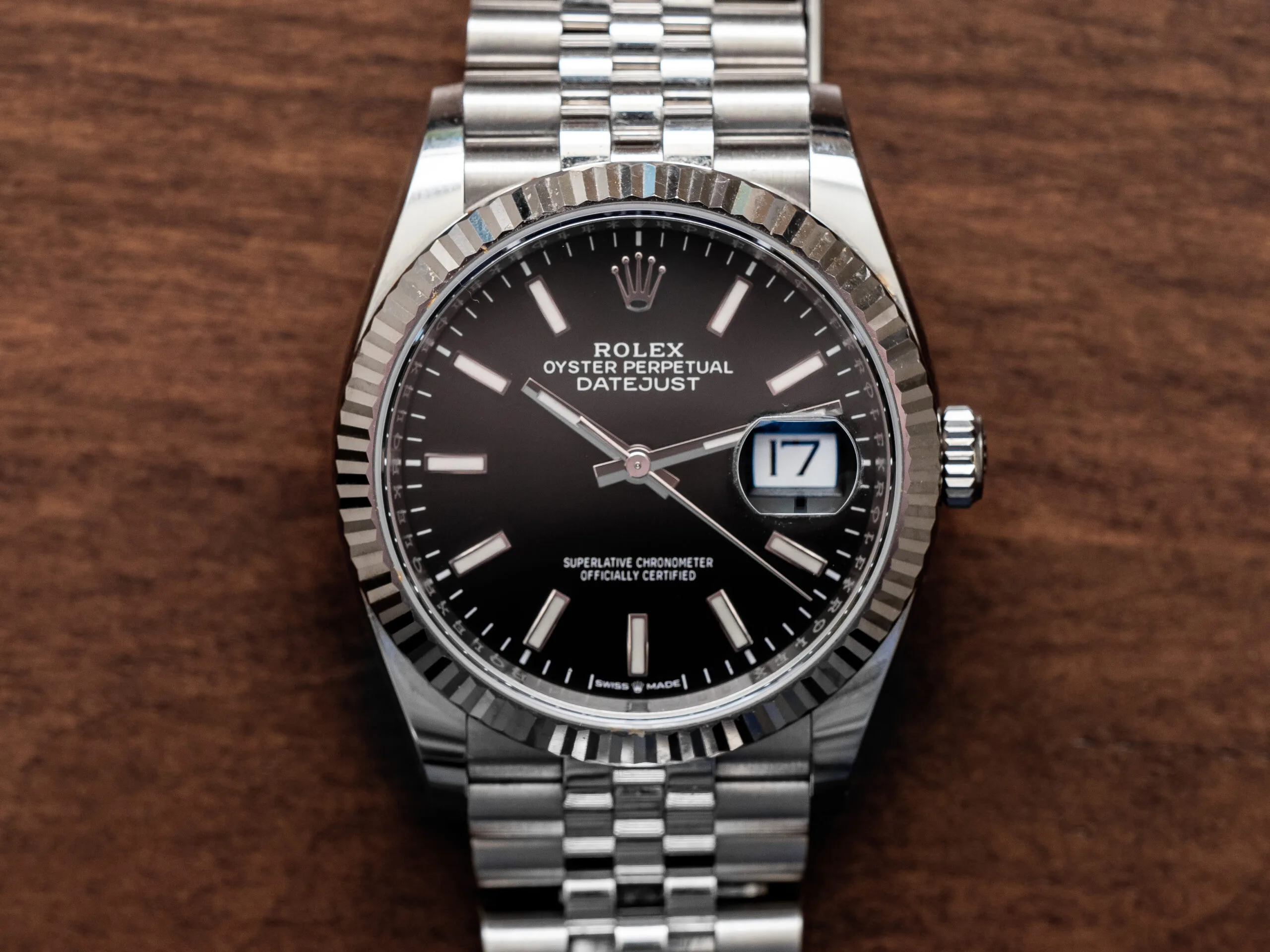
What Is Actually Inside Each One
- Datejust 36 and Datejust 41: calibre 3235.
- Submariner Date 126610: calibre 3235.
- Submariner No-Date 124060: calibre 3230, which is the same movement without the date module.
The 3235 arrived in 2015 in the Datejust 41 and reached the Submariner in 2020. Rolex says more than 90 percent of its parts were new against the outgoing 3135, covered by fourteen patents.
Shared across both: the Chronergy escapement in nickel-phosphorus, a roughly 70 hour power reserve, the blue Parachrom hairspring, and Superlative Chronometer certification at minus two to plus two seconds a day. The 3230 in the no-date Submariner is the same generation, same escapement, same reserve, same rate.
So Why Do They Feel So Different?
Everything that separates these watches is outside the movement. That is worth knowing if you are choosing between them, because the specification sheet is not where the difference lives.
The crown
The Datejust uses a Twinlock crown with two sealed zones, rated for 100 metres. The Submariner uses a Triplock with three sealed zones, rated for 300 metres. That single component is most of the water resistance difference.
The case
A Submariner has a thicker midcase, a reinforced caseback and crown guards flanking the crown. A Datejust has none of those and wears noticeably slimmer. The Submariner’s case is built for pressure; the Datejust’s is built to sit under a cuff.
The bezel
Fixed on the Datejust, whether fluted or smooth. Unidirectional and Cerachrom on the Submariner, so it only turns one way and cannot accidentally overstate your remaining dive time.
The clasp
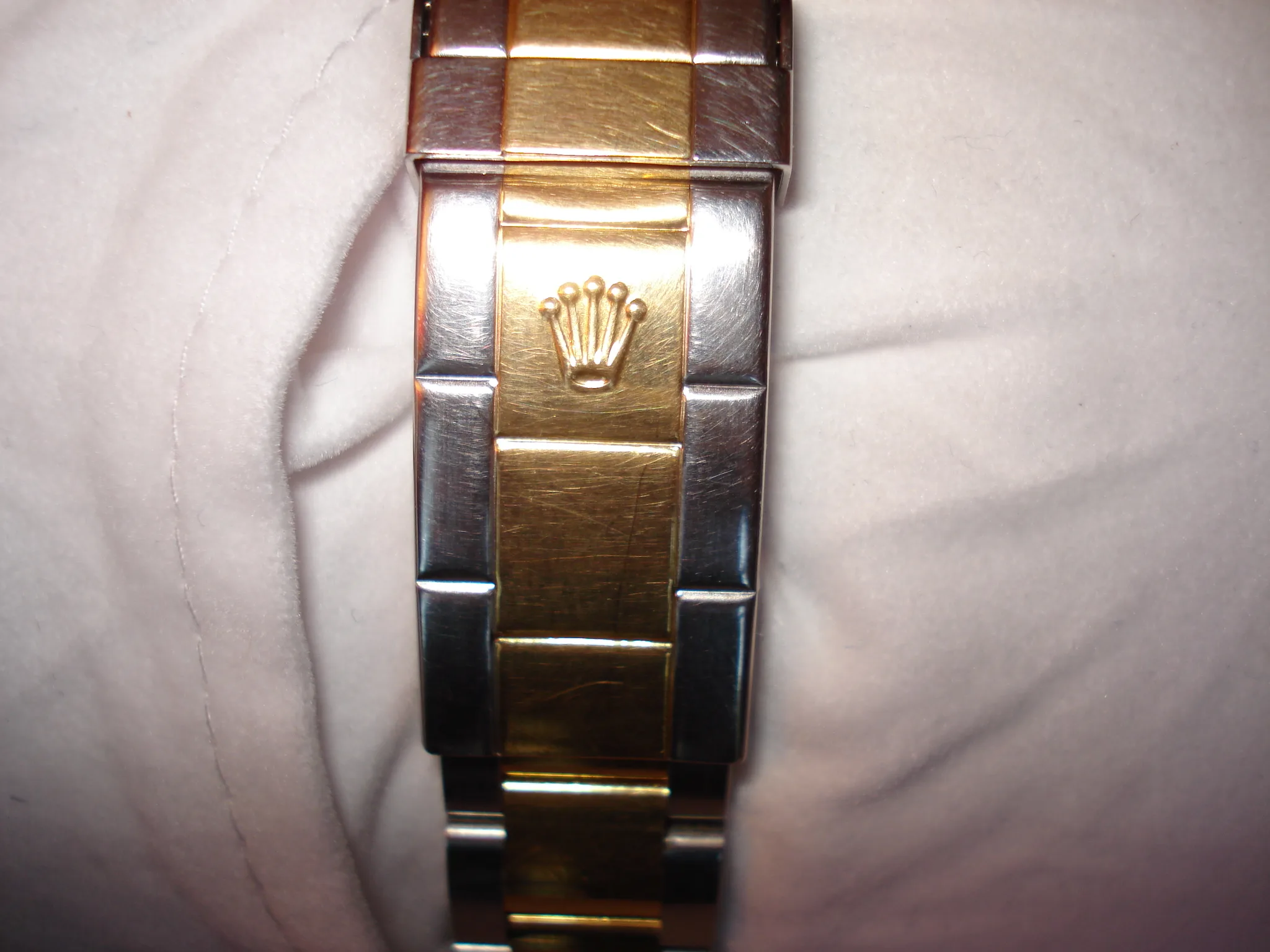
Submariners get Glidelock, which adjusts in 2mm steps across roughly 20mm. Datejusts get Easylink, a single 5mm folding extension. A practical difference you will notice far more often than anything mechanical.
What This Means for Servicing
This is the part that actually matters to owners rather than buyers.
Because the movement is shared, the mechanical side of a service is broadly the same job on both watches. Same parts, same intervals, same expectations for rate afterwards. A Submariner is not carrying a more delicate or more demanding movement.
The difference is the sealing. A Submariner has more gaskets doing harder work, and it should be pressure tested after any case opening, which a Datejust arguably does not need to the same standard. If you swim with a Submariner, annual water resistance testing is the sensible habit. If you own a Datejust, the honest advice is simply to keep it away from water, because 100 metres on paper is a laboratory figure rather than a swimming permit.
If Yours Is Older
The same pattern holds further back. The outgoing generation was the 3135, introduced in 1988 and used in both the Datejust and the Submariner Date for decades. The main practical difference against the current movement is the power reserve, around 48 hours against roughly 70.
So a 116610 Submariner and a period Datejust also shared a movement. Rolex has been doing this for a very long time.
Conclusion
If you are choosing between them on mechanical grounds, there is nothing to choose. Pick on case, crown and how you will actually use it. And if a seller tells you one has a superior movement to the other, check the calibre number on the reference, because for current production it is the same one.
Related Guides
- How to adjust a Rolex Oyster bracelet without a jeweler: Glidelock and Easylink in practice, and the hidden third adjustment on older clasps.
- Why does my Rolex keep stopping?: power reserve, winding and the usual causes on a 3135 or 3235.
- Rolex cyclops lens scratched or foggy: the date magnifier both watches share, and why fogging is a seal warning.
Image credits: Rolex Datejust 126234 by Ajay Suresh. Rolex Submariner via Wikimedia Commons.