These are two different problems. A scratched cyclops is cosmetic and you can take your time over it. A foggy one usually means moisture has got somewhere it should not be, and that is a water resistance issue rather than a looks issue.
This post contains affiliate links. We may earn a small commission if you purchase through them, at no extra cost to you.
Do the Fingernail Test First
Run a fingernail across the mark. If your nail does not catch, it is probably not a scratch at all.
Silvery, slightly thick-looking marks on a sapphire cyclops are very often metal transfer, picked up from a doorframe or a desk edge, and they come off. Sapphire is harder than the steel or aluminium that left the mark. A mild abrasive on a cotton bud will usually take it away entirely, and plenty of owners have panicked over a mark that wiped off.
If your nail does catch, it is a real scratch, and what happens next depends entirely on what your crystal is made of.
Acrylic or Sapphire?
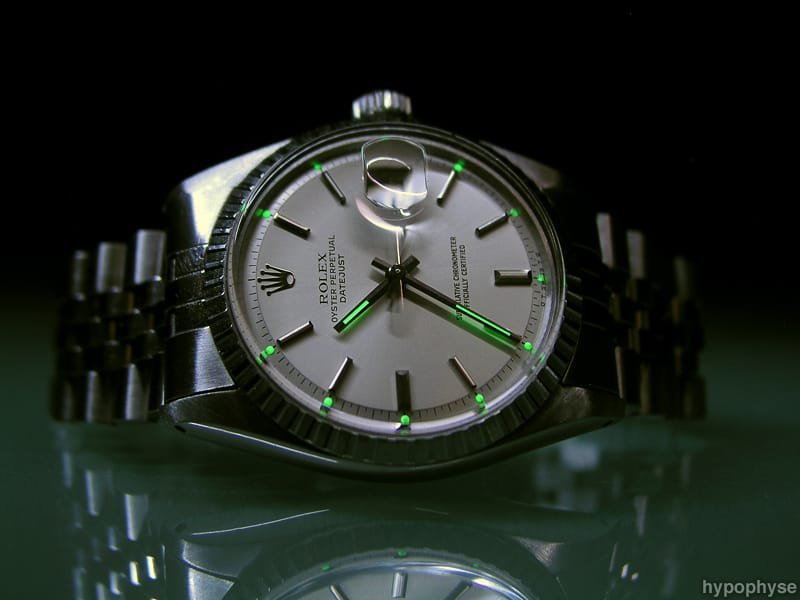
Acrylic, sometimes called Plexi, on older four and five digit references. The crystal is domed, warmer looking, and the cyclops is moulded into it as part of the same piece.
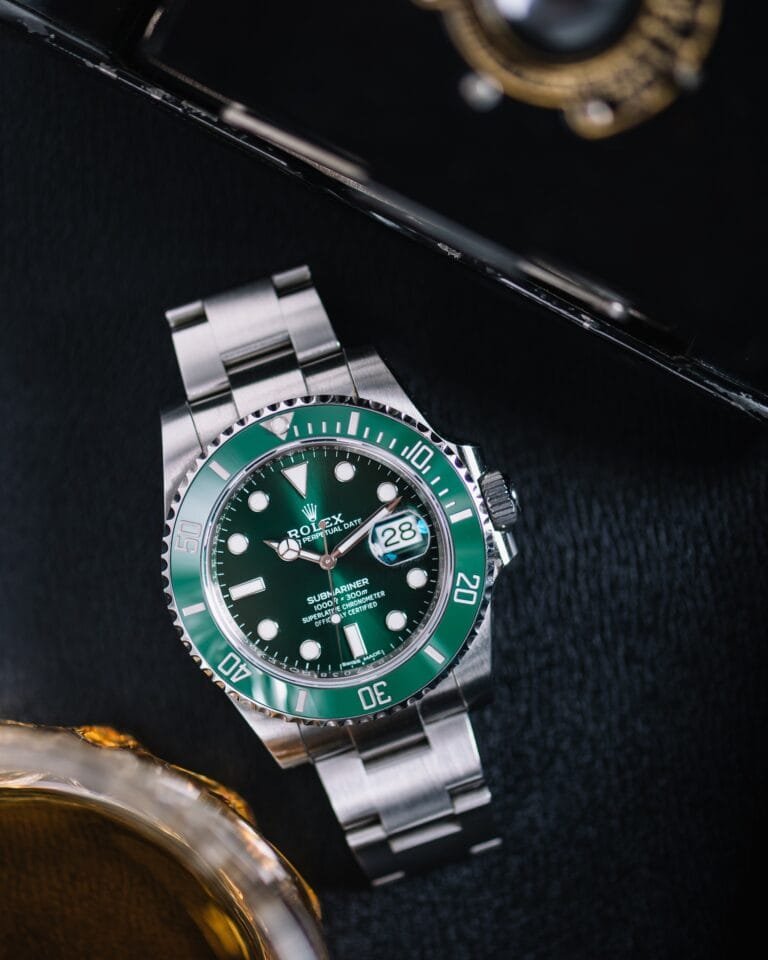
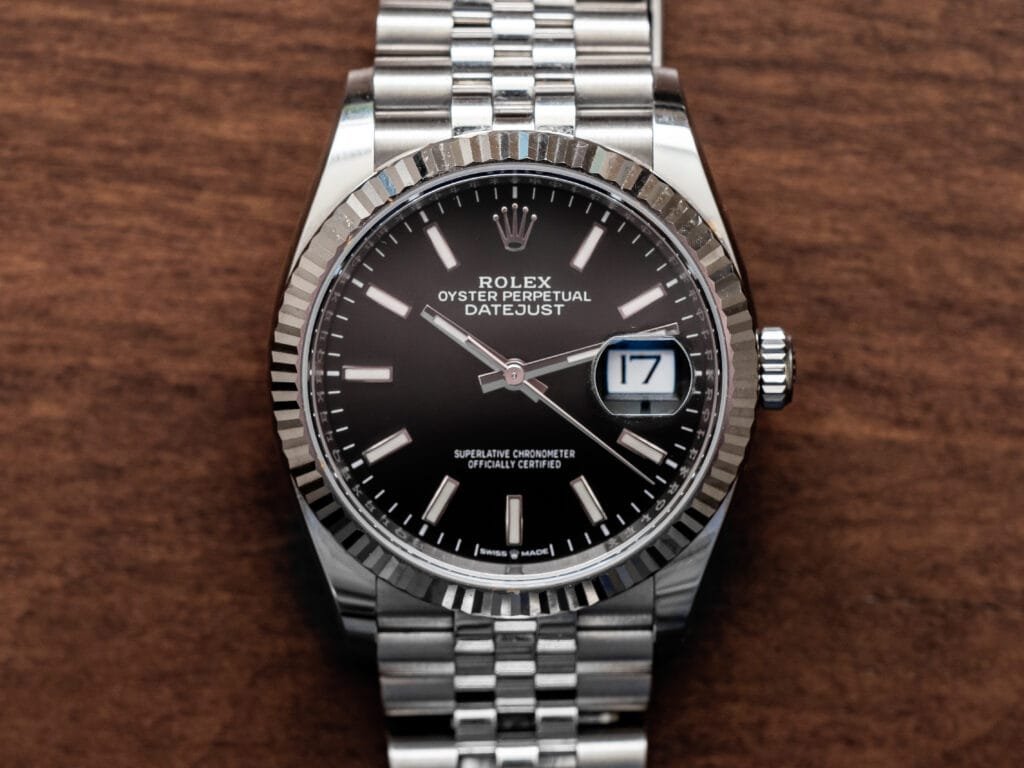
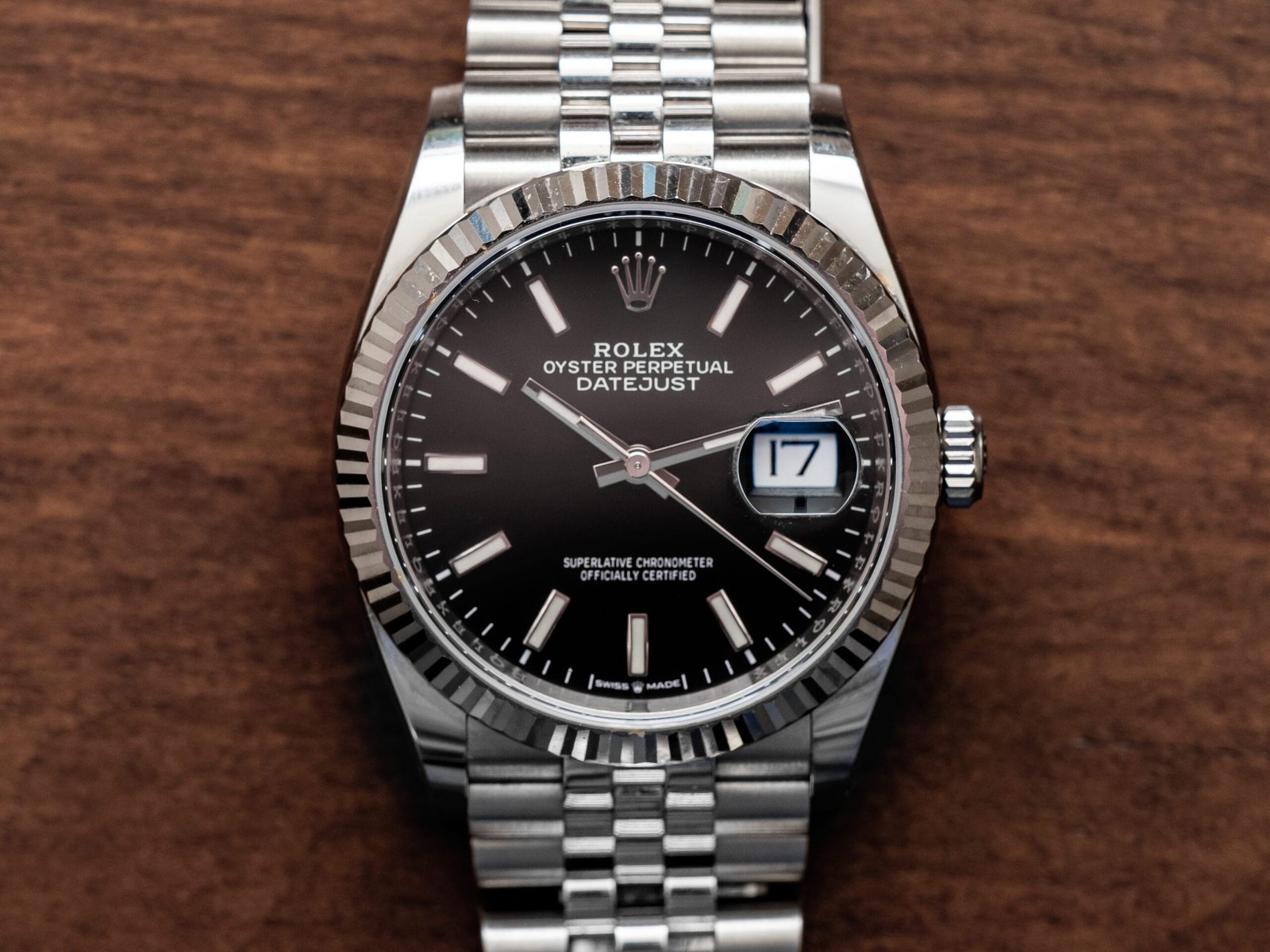
Sapphire, on modern references. Flatter, glassier, and the cyclops is a separate piece bonded onto the top.
If It Is Acrylic, You Can Fix It Yourself
This is the good outcome. Acrylic polishes readily, and a plastic crystal polish on a cotton cloth removes most scratches in a few minutes. Work only on the cyclops if that is where the damage is, and use a cotton bud rather than a cloth so you are not abrading the whole crystal.
Even if the scratch is too deep, a replacement acrylic crystal is one of the cheapest parts on a Rolex. There is no reason to live with a badly marked one.
If It Is Sapphire, Read This Before Polishing
Plastic crystal polish does almost nothing to sapphire. Its abrasive is aluminium oxide, which is essentially the same material as sapphire, so it cannot cut it. Removing a genuine scratch from sapphire needs diamond paste.
And there is a specific risk here that does not apply to a flat crystal. The cyclops is a lens. Its magnification depends on its curvature, so abrading it unevenly distorts the date rather than clearing it. People have polished out a scratch and ended up with a warped view of the date window, which is worse than the scratch was.
One reassuring detail: Rolex applies its anti-reflective coating to the underside of the cyclops and to both faces of the crystal beneath it, not to the top surface. So working on the top face is not destroying the coating, which is what most people assume.
The Cyclops Can Be Replaced On Its Own
On a sapphire crystal the cyclops is glued on. That means a watchmaker can lift it off, clean the residue and bond a new one, without opening the case at all. It is roughly a fifteen minute job.
Rolex will not do this. Take it to an authorised dealer and they will replace the entire crystal, along with the caseback, crown, bezel and crystal seals, because that is the only way they will guarantee water resistance afterwards. That is why a quote for a scratched cyclops comes back at several hundred, and it is not padding, it is their standard.
Options, cheapest first:
- Live with it. Genuinely the most common outcome, and on a watch you wear daily it will acquire company soon enough.
- Independent watchmaker replaces the cyclops only. Cheapest real repair. The watch is no longer factory original, which matters if you ever sell.
- Independent fits an aftermarket crystal. The case has to be opened, so insist on a new gasket. Aftermarket crystals that ship without one are a leak waiting to happen.
- Rolex service. Original parts, new seals, water resistance guaranteed, and the highest price.
Foggy Is a Different Matter
Haze or cloudiness under or around the cyclops is usually one of two things, and neither is cosmetic.
- Moisture between the cyclops and the crystal. The bond has started to fail and water has wicked in.
- Moisture inside the case. Far more serious, and you may also see it at the edge of the dial or on the hands.
Either way the case seals are no longer doing their job. Stop wearing it in water and get it looked at, because condensation inside a movement causes corrosion that costs far more than a crystal.
Conclusion
Fingernail test first, because a good share of these marks are metal transfer that wipes off. Then work out whether you have acrylic or sapphire, since one polishes at home and the other does not. And treat fogging as a seal problem rather than a scratch, because that is what it is.
Related Guides
- Five reasons Rolex bezels fade: the other cosmetic issue owners notice on an older Rolex, and how much of it is avoidable.
- How to adjust a Rolex Oyster bracelet without a jeweler: the three built-in adjustments before anyone removes a link.
- Why does my Rolex keep stopping?: worth reading if you have also seen moisture inside the case.
Image credits: Rolex Datejust 126234 by Ajay Suresh. Rolex Datejust 1603 via Wikimedia Commons.