Whether dim lume is a fault depends almost entirely on how old the watch is. Older dials used a radioactive material that fades permanently with time. Modern lume does not wear out at all, so if a recent watch has stopped glowing, the cause is almost always how it is being charged.
This post contains affiliate links. We may earn a small commission if you purchase through them, at no extra cost to you.
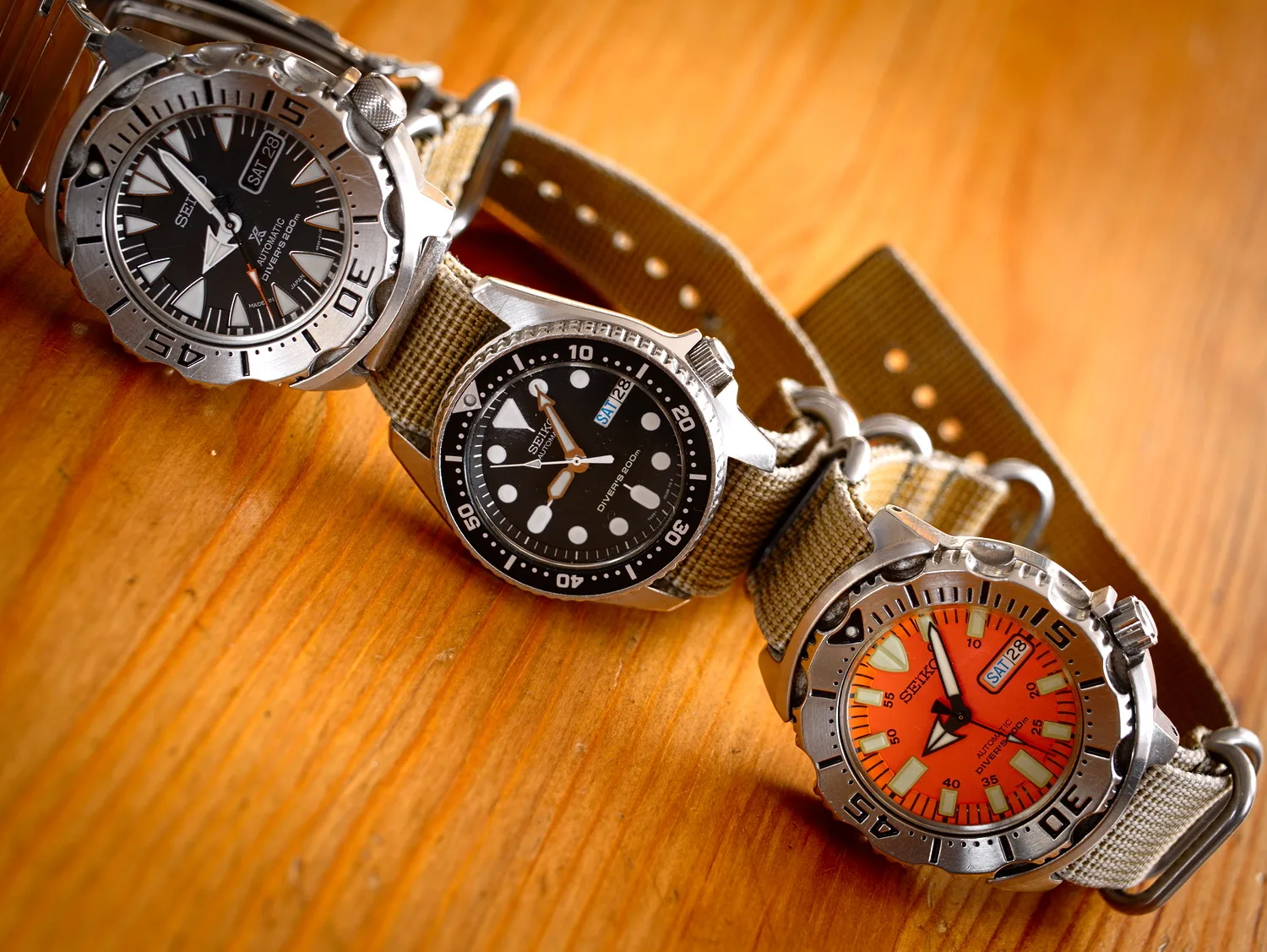
Step One: Work Out Which Lume You Have
- Tritium paint, used from the 1960s until the late 1990s. The giveaway is the marking “T Swiss T”, “Swiss T<25” or similar at the bottom of the dial.
- Modern photoluminescent lume: Super-LumiNova, Seiko’s LumiBrite, Rolex’s Chromalight. Used on almost every watch made since around 2000. It only glows after being exposed to light.
- Tritium gas tubes: tiny glowing glass vials, used by Ball, Luminox, Marathon and Traser. They glow constantly without needing light.
If It Is Tritium Paint: It Has Simply Run Down
Tritium is radioactive, and its glow comes from that decay. With a half-life of about 12.3 years, its luminosity steadily fades over time. After 25 to 30 years, most tritium dials barely glow at all.
Nothing is broken, and it cannot be recharged. The only way to restore the glow is to relume the dial, and on a vintage watch that is usually a mistake. Original aged tritium, often with a warm cream patina, is a large part of what collectors pay for. A relumed dial typically lowers the value.
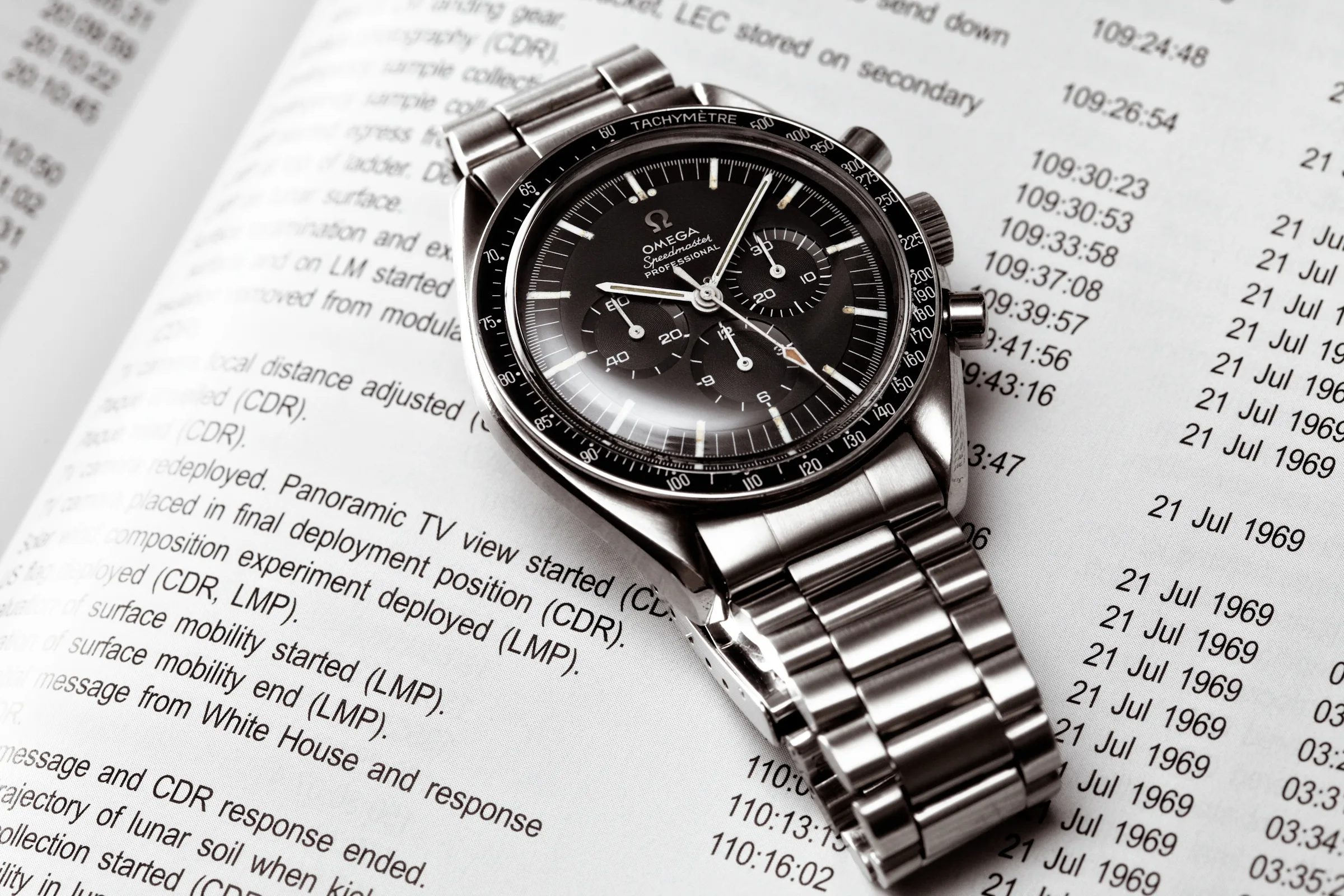
If It Is Modern Lume: It Probably Is Not Being Charged
Super-LumiNova and its relatives do not decay. They work like a rechargeable battery for light, and their chemistry is stable enough that they keep performing for decades. So a modern watch that has stopped glowing almost always has a charging problem, not a lume problem.
- Indoor lighting is weak. Office lighting and household LEDs give the lume very little to work with. A watch that spends all day under a shirt cuff in an office starts the night nearly empty.
- It fades fast at first. Brightness peaks immediately after charging and drops quickly in the first hour, then glows faintly for hours more. A dim glow at 3am is normal.
- Your eyes need time. Straight after the lights go out, the lume looks weak. Give your eyes a few minutes to adjust and it brightens noticeably.
The fix: ten to twenty seconds of direct sunlight or a strong torch charges it fully. A small 365nm UV torch does it in a couple of seconds and is the easiest way to check whether your lume is genuinely weak or just uncharged.
If It Is a Dive Watch, Rule Out Moisture
This is the one genuine fault to watch for. Modern lume is sensitive to moisture, and if water gets inside the case it can make the lume flake or crumble off the hands and markers.
- Fogging under the crystal, or lume flaking from the hands, points to a seal failure.
- If the watch has recently had a battery change or the caseback opened, that is the likeliest route in.
- Stop wearing it in water and get it pressure tested before the movement suffers too.
If It Uses Tritium Tubes
Tubes glow constantly, but they still run on tritium and dim gradually over the years. Most are rated for a useful life of roughly 20 to 25 years. If yours is approaching that, gradual dimming is expected rather than a fault.
Conclusion
Check the bottom of the dial first. A “T” marking means tritium that has run down by design, and it is best left alone. Anything modern almost certainly just needs a proper charge, and a few seconds of sunlight or UV will prove it. Only lume that is flaking, or a glow that dropped suddenly on a dive watch, points to a real fault, usually moisture.
Related Guides
- Did a battery change void your water resistance?: the most common route for moisture into a dive watch.
- Dive watch fogging and gasket failure: what to do once you see condensation.
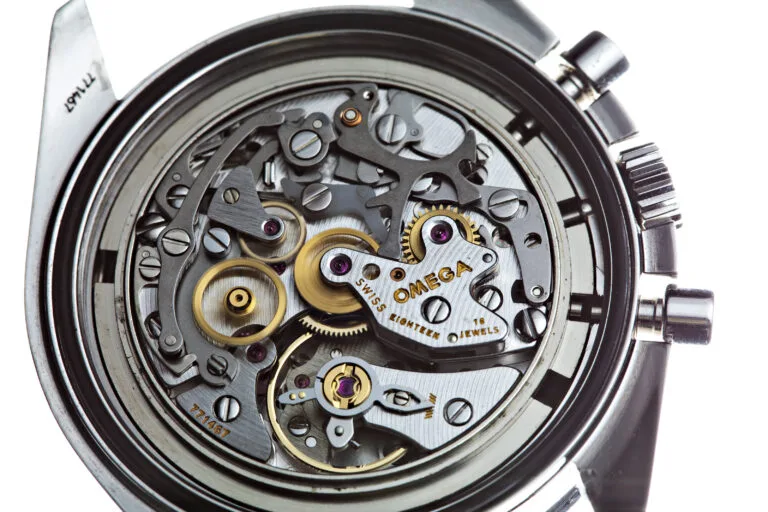
- Watch crystal types compared: why the Speedmaster above kept an acrylic crystal.
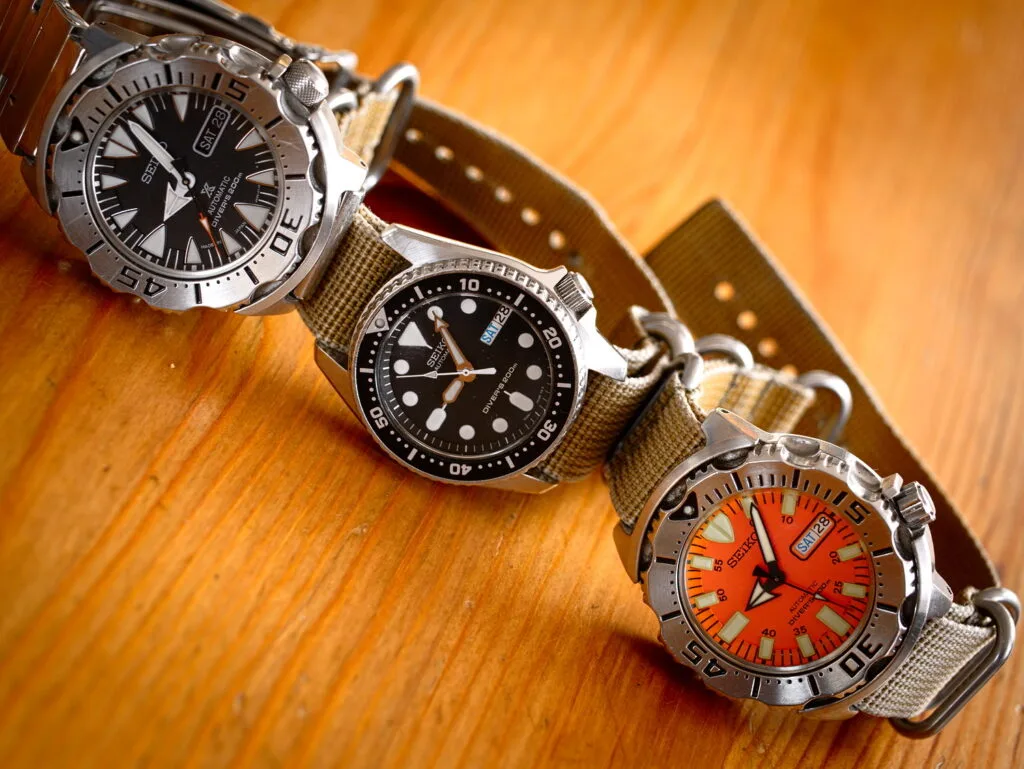
Image credits: Seiko divers and vintage Omega Speedmaster via Wikimedia Commons.