Whether your Rolex bezel fades depends almost entirely on one thing: what it’s made of. Rolex used aluminum bezel inserts for decades, and those genuinely do fade with age and sun exposure, in a way many collectors actually prize. Modern ceramic bezels are a different story. Here’s how to tell which one you have, and what’s actually happening to it.
Aluminum Bezels: Built to Fade, and Collectors Love Them for It
From the mid-1950s until the mid-2000s, Rolex used anodized aluminum for its rotating bezel inserts, on Submariners, GMT-Masters, and Daytonas alike. Aluminum is soft (roughly a 2.5 to 3 on the Mohs hardness scale) and its color coating breaks down under prolonged UV exposure. Black bezels shift toward grey or brown, blue fades toward a powdery shade, and the red half of a GMT-Master “Pepsi” bezel can fade all the way to pink or salmon.
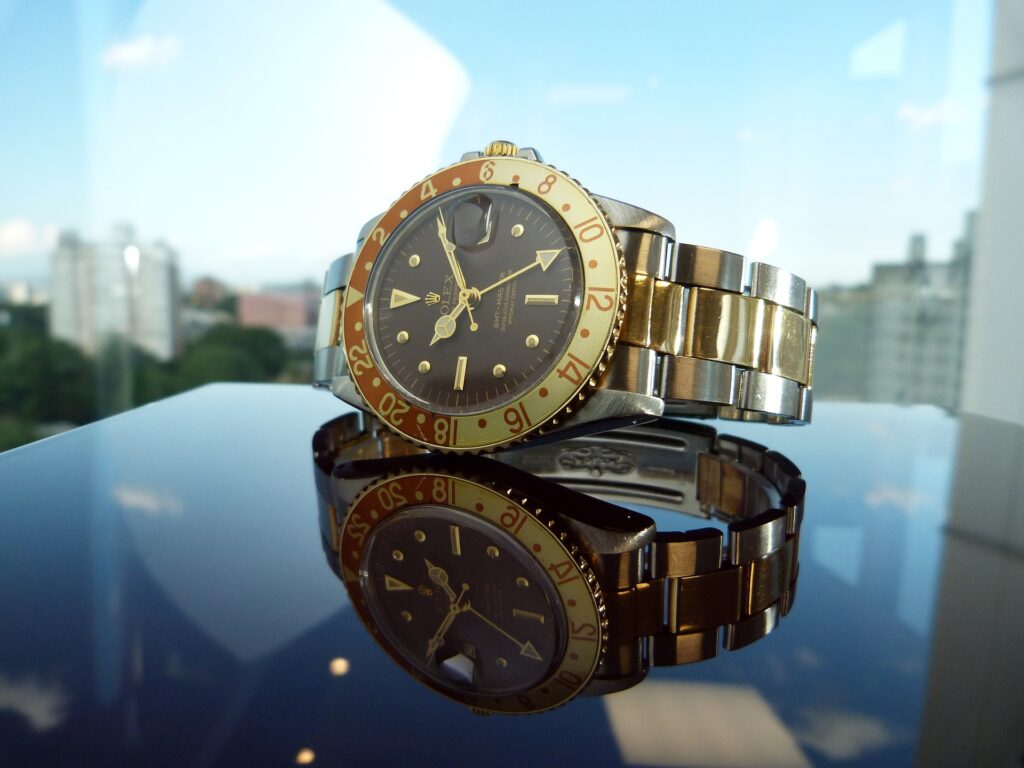
Rather than treating this as damage, the vintage watch market treats it as character. Submariners with heavily faded aluminum bezels are nicknamed “ghost” bezels, and faded GMT-Master bezels can sell for more than pristine ones, since no two fade in exactly the same way or on the same timeline. If your Rolex has an aluminum insert and has faded evenly over years of wear, there’s nothing wrong with it, that’s simply how the material ages.
Ceramic (Cerachrom) Bezels: Built Specifically to Not Fade
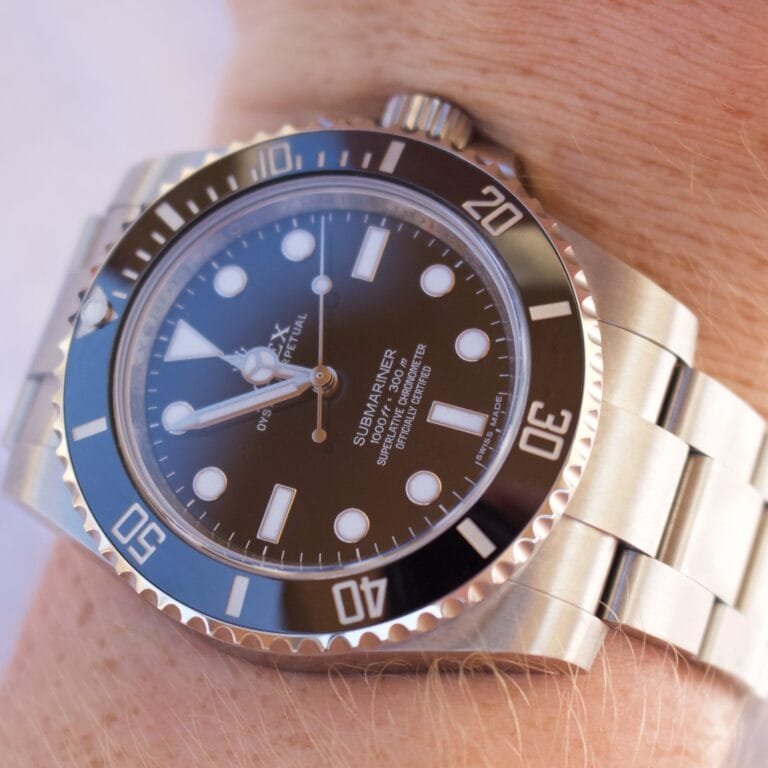
Rolex introduced its proprietary Cerachrom ceramic bezel in 2005, starting with the GMT-Master II, and rolled it out across the Submariner (from around 2008 onward) and the rest of the professional line over the following years. Ceramic sits at roughly 8 to 9 on the Mohs scale, several times harder than aluminum, and is essentially immune to UV fading. A black Cerachrom bezel stays black for decades; a blue one stays blue.
If your watch has a ceramic bezel and you’re noticing a color change, sun exposure almost certainly isn’t the cause. It’s worth checking for a chip or crack instead, ceramic is much harder than aluminum but also more brittle, and a hard knock against a doorframe or countertop can crack the insert in a way that catches the light differently and looks like discoloration up close.
Other Factors That Affect Either Material
A few things accelerate wear regardless of which bezel your watch has:
- Chlorine and saltwater: both can dull an aluminum insert’s coating faster than fresh water or normal daily wear. Rinse the watch with fresh water after swimming in a pool or the ocean.
- Household chemicals: solvents, some cleaning agents, and certain cosmetics can affect an aluminum bezel’s surface on contact. This isn’t a concern for ceramic.
- Physical impact: aluminum dents and scratches easily but rarely cracks; ceramic resists scratches almost entirely but can chip or crack from a hard, direct hit.
If your Rolex has stopped rather than showing bezel wear, see our guide on why a Rolex Submariner keeps stopping. And if it’s running fast instead, check our guide on why a Rolex runs fast.
Conclusion
If your bezel is aluminum, fading is expected and, to a lot of collectors, desirable, there’s no need to “fix” it unless you specifically want the original color restored, which a service center can do by replacing the insert. If your bezel is ceramic and something looks off, look for a chip or crack rather than assuming it’s fading, since Cerachrom simply isn’t built to fade the way its predecessor was.