Almost every case of a “broken” TAG Heuer bezel comes down to one thing: grit or dried salt has worked its way under the bezel ring, making it stiff, gritty, or unable to click at all. Understanding how the mechanism actually works makes it much easier to tell whether that’s what’s happening to yours, or whether it’s something that genuinely needs a watchmaker.
How the Bezel Mechanism Actually Works
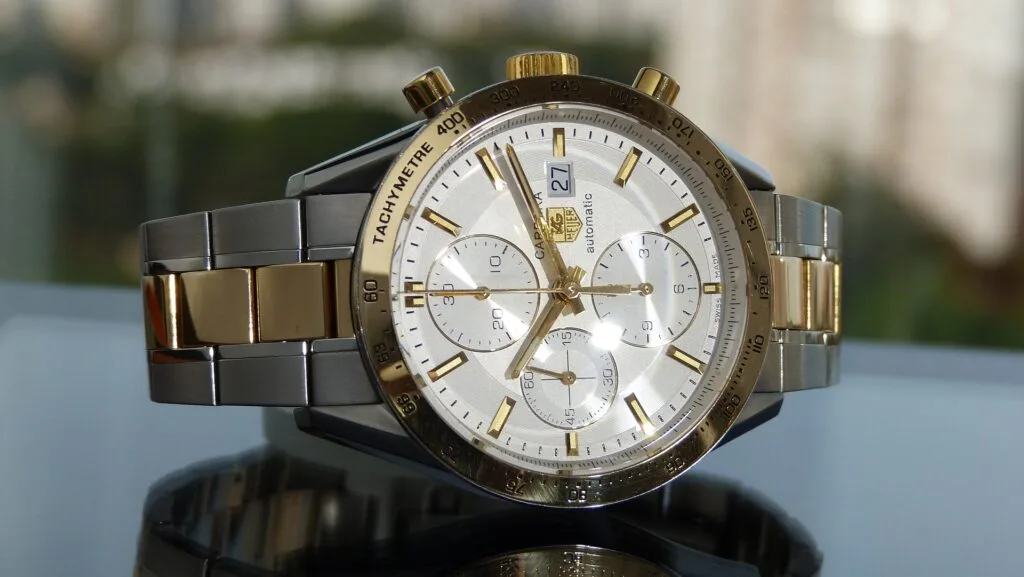
TAG Heuer’s dive watches, like the Aquaracer, use a click-spring bezel: a spring-loaded pawl underneath the bezel ring presses into a row of teeth on a fixed ring inside the case. Each tooth the pawl passes over produces one of the satisfying “clicks” you feel when turning it. This is also why the bezel only turns counter-clockwise, it’s a deliberate ISO 6425 diving-watch safety standard, so that if the bezel gets bumped mid-dive, it can only ever indicate less remaining time than you actually have, never more.
Stiff or Gritty Rotation: Almost Always Dirt or Dried Salt
The gap between the bezel and the case is narrow but not sealed against everything, sand, salt residue, and general grime can work their way in over time, especially after ocean or pool use. This is by a wide margin the most common reason a bezel starts feeling stiff, gritty, or difficult to turn.
Fix: Rinse the watch under warm water while working the bezel back and forth, then use a soft toothbrush and a drop of mild dish soap around the edge of the bezel to work out any trapped grit. Rinse again and dry thoroughly. This is safe on any dive watch with a rated water resistance, it’s exactly the kind of use these bezels are built for. If it’s still stiff after a thorough clean, the issue is likely inside the mechanism rather than surface dirt.
Bezel Spins Freely With No Click: Spring or Pawl Wear
If the bezel turns smoothly in both directions with no resistance and no clicking at all, that’s a different problem: the spring-loaded pawl has likely worn down or lost tension, so it’s no longer catching the teeth underneath. This happens gradually with age and heavy use, and cleaning won’t fix it, the spring or pawl itself needs replacing.
Fix: This is a job for a watchmaker. It’s a relatively minor, well-understood repair, not a sign of a bigger problem with the watch.
Impact Damage
A hard knock against a doorframe, table edge, or countertop can misalign the bezel ring itself or damage the teeth it clicks against, causing it to bind or skip in one spot rather than everywhere.
Fix: If the bezel only sticks or skips at one specific point in its rotation rather than throughout, that’s consistent with impact damage. A watchmaker will need to realign or replace the affected part.
Conclusion
Start with a warm water and soft toothbrush clean, it resolves the large majority of stiff or gritty bezels. If it’s completely free-spinning with no clicks, or only binds at one specific spot, that points to a worn spring or impact damage instead, and both are routine fixes for a watchmaker rather than anything to worry about long-term. If it’s the chronograph hands rather than the bezel giving you trouble, see our guide on TAG Heuer chronograph hands misaligned, and for a loose bracelet clasp, check our guide on TAG Heuer Aquaracer clasp replacement.