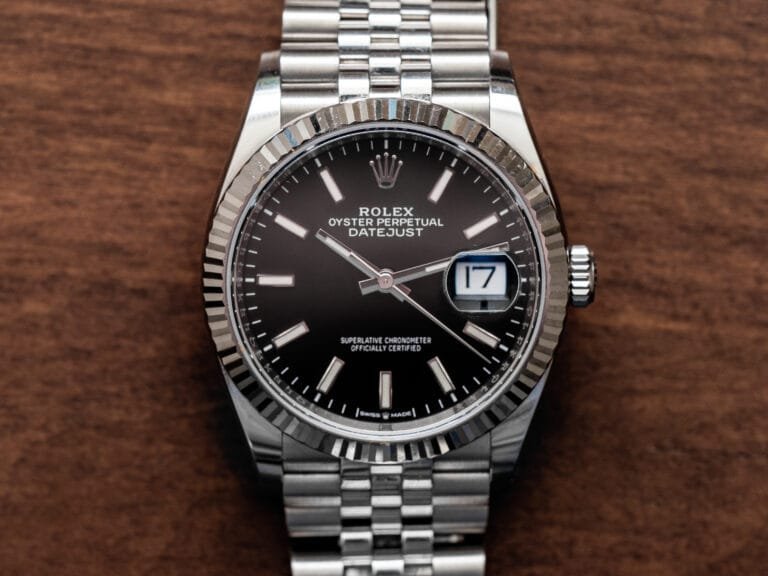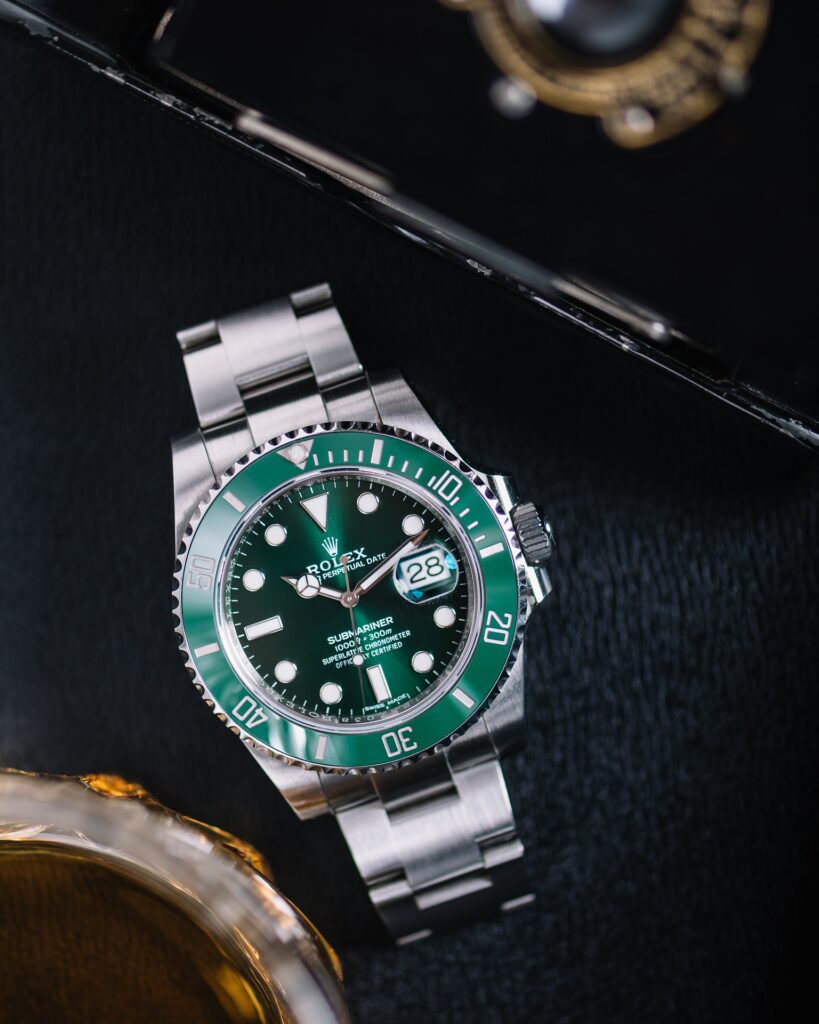
First, the number that actually matters: Rolex’s own Superlative Chronometer standard allows a fully cased watch to gain or lose up to 2 seconds per day and still be considered within spec. If your watch is gaining a handful of seconds a day, that’s normal mechanical behavior, not a fault. If it’s gaining a minute or more over a few days, something specific is going on, and magnetism is the most common cause by far.
Magnetism (the Most Likely Cause of a Watch Running Fast)

When a watch’s hairspring picks up magnetism, coils of the spring can cling together, effectively shortening it. A shorter hairspring oscillates faster, and the watch runs fast, sometimes dramatically, gaining several minutes a day rather than a couple of seconds. This is specifically why “running fast” and “magnetized” go together so often in watch repair: it’s a distinctive enough symptom that watchmakers usually check for magnetism first.
Common culprits are everyday magnets you wouldn’t expect: phone cases and covers with magnetic clasps or MagSafe rings, laptop and tablet covers, speaker magnets, and clasps on bags or wallets. Newer Rolex movements with a Parachrom hairspring resist this better than older ones, but no watch is fully immune to strong or prolonged exposure.
Fix: A watchmaker can demagnetize a movement in a few minutes with a demagnetizer, it’s inexpensive and usually resolves the issue immediately if magnetism was the cause.
Positional Error
A mechanical movement doesn’t run at exactly the same rate in every position, dial up, dial down, crown up, or crown left, because gravity pulls on the balance wheel slightly differently in each orientation. This is called positional error, and it’s normal in all mechanical watches to some degree. If your watch consistently gains more overnight (sitting still on a nightstand) than during the day (worn on the wrist, changing position constantly), positional error is a likely explanation, and it’s a normal characteristic rather than a defect.
Temperature Extremes
Large or sudden temperature swings can cause the metal components in the movement to expand or contract slightly, which affects the balance wheel’s rate. This is a minor factor for day-to-day accuracy, but it can explain short-term timing changes if your watch has recently gone from, say, a cold car to a hot day outside.
The Movement Needs Regulation
Every mechanical movement is regulated (fine-tuned to run as close to accurate as possible) when it leaves the factory or after a service. That regulation can drift slightly over years of wear, or after a service if it wasn’t set precisely. If your watch has been consistently running fast for a while with no obvious cause like magnetism, it may simply need to be re-regulated, a routine, inexpensive adjustment for a watchmaker rather than a sign of a bigger problem.
Dust or Debris in the Movement
This is uncommon on an intact, properly sealed watch, but debris that has worked its way into the movement can interfere with the balance wheel or escapement and throw off timekeeping. If your watch has had prior case-back or crystal work, or is old enough to be due for a full service, this becomes more likely.
Conclusion
A gain of a couple of seconds a day is normal and expected, even for a Rolex. A gain of a minute or more usually points to magnetism first, positional error or regulation second, and dust or temperature as less common factors. If demagnetizing doesn’t resolve it, a watchmaker can check regulation and rule out anything mechanical during a routine service. If your watch is stopping rather than running fast, see our guide on why a Rolex Submariner keeps stopping, and for bezel wear, check our guide on why Rolex bezels fade.