Chronograph pushers are supposed to have a defined, deliberate feel, they are not meant to be soft. But there’s a real difference between the crisp resistance of a healthy Speedmaster and the gritty, sticky, or inconsistent action of one that needs attention. Here’s how to tell them apart.
What Normal Actually Feels Like
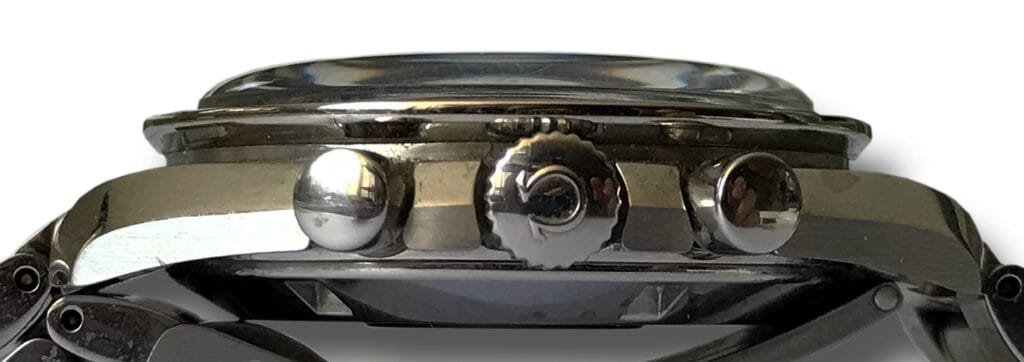
On a mechanical chronograph, pressing the top pusher physically engages a column wheel or cam system inside the movement. That takes real force, and you should feel a distinct click as the mechanism engages. A Speedmaster pusher that requires a firm, purposeful press is behaving correctly. If yours has always felt that way, nothing is wrong.
What matters is change. A pusher that used to click cleanly and now feels mushy, gritty, or needs noticeably more force than its neighbour is telling you something.
Dried or Hardened Pusher Gaskets
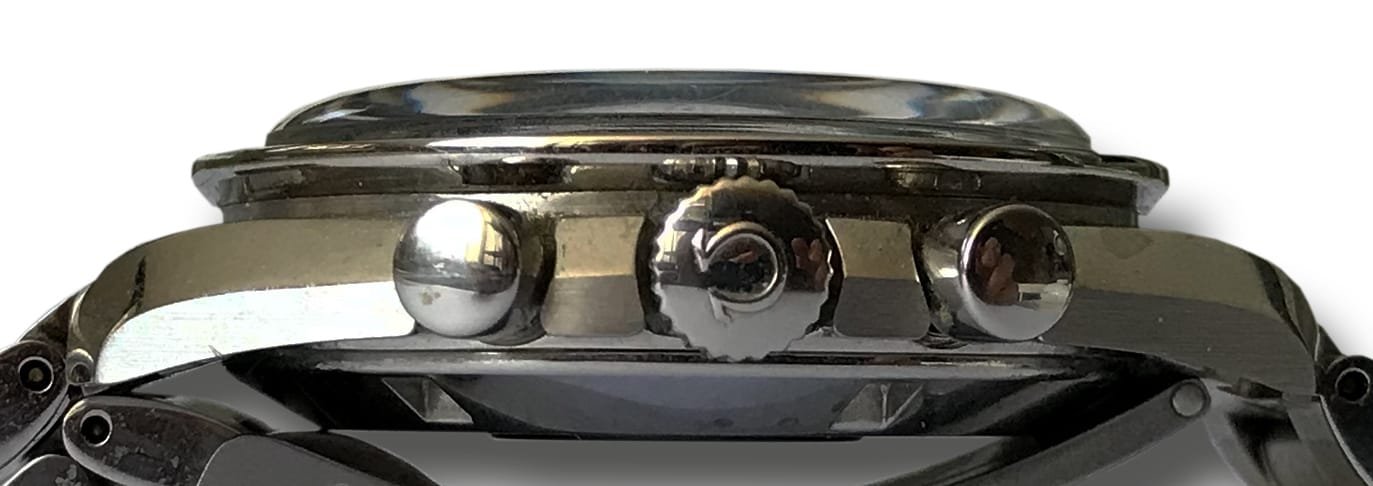
Each pusher passes through a tube in the case, sealed by a small rubber gasket. Those gaskets are lubricated at assembly, and both the rubber and the lubricant degrade over years. As they harden, friction against the pusher stem increases and the action gets stiff and draggy rather than crisp.
This is one of the most common causes on a watch that’s gone a long time between services, and it’s also why gaskets are replaced as standard during an Omega service regardless of whether anything has failed yet.
Grime and Salt in the Pusher Gap
Sweat, sunscreen, soap residue, and general dust collect in the narrow gap around each pusher, exactly as they do around a G-Shock’s buttons. The build-up adds friction on the outside of the mechanism rather than the inside.
Fix: Rinse the case under warm fresh water while gently working each pusher, then use a soft brush around the pusher base and dry thoroughly. If the stiffness disappears, it was external grime, not a movement issue.
The One Thing Not to Do
Never operate the chronograph pushers underwater or while the watch is wet, on a Speedmaster Professional the pushers are not screw-down, and pressing them breaks the seal at exactly the moment water is present. This is a genuinely common way owners introduce moisture into an otherwise healthy watch.
When It’s the Movement, Not the Case
If cleaning changes nothing and the stiffness is accompanied by the chronograph hand stuttering, failing to start, or not resetting cleanly to zero, the issue is inside the movement rather than at the pusher tube. Dried lubricant on the chronograph works produces exactly this combination of symptoms.
Fix: That’s a service, not a home repair. Don’t keep forcing a stiff pusher, the levers and springs in a chronograph module are delicate and repeated hard presses against a jammed mechanism can bend them.
Conclusion
Firm is normal; gritty, sticky, or newly-changed is not. Clean the outside first, since grime is the easiest cause to rule out. If the feel doesn’t improve, or the chronograph itself is misbehaving alongside it, that points to hardened gaskets or dried movement lubricant and a proper service. If your chronograph hands won’t return to zero, see our guide on chronograph hands misaligned and how to reset them, and for accuracy problems on a Co-Axial Omega, our guide on why a Co-Axial movement runs slow.