If your Seiko is gaining time rather than losing it, the list of likely causes is shorter and the fix is usually cheaper. Most automatics that suddenly start running fast are simply magnetised, and that takes under a minute to put right.
This post contains affiliate links. We may earn a small commission if you purchase through them, at no extra cost to you.
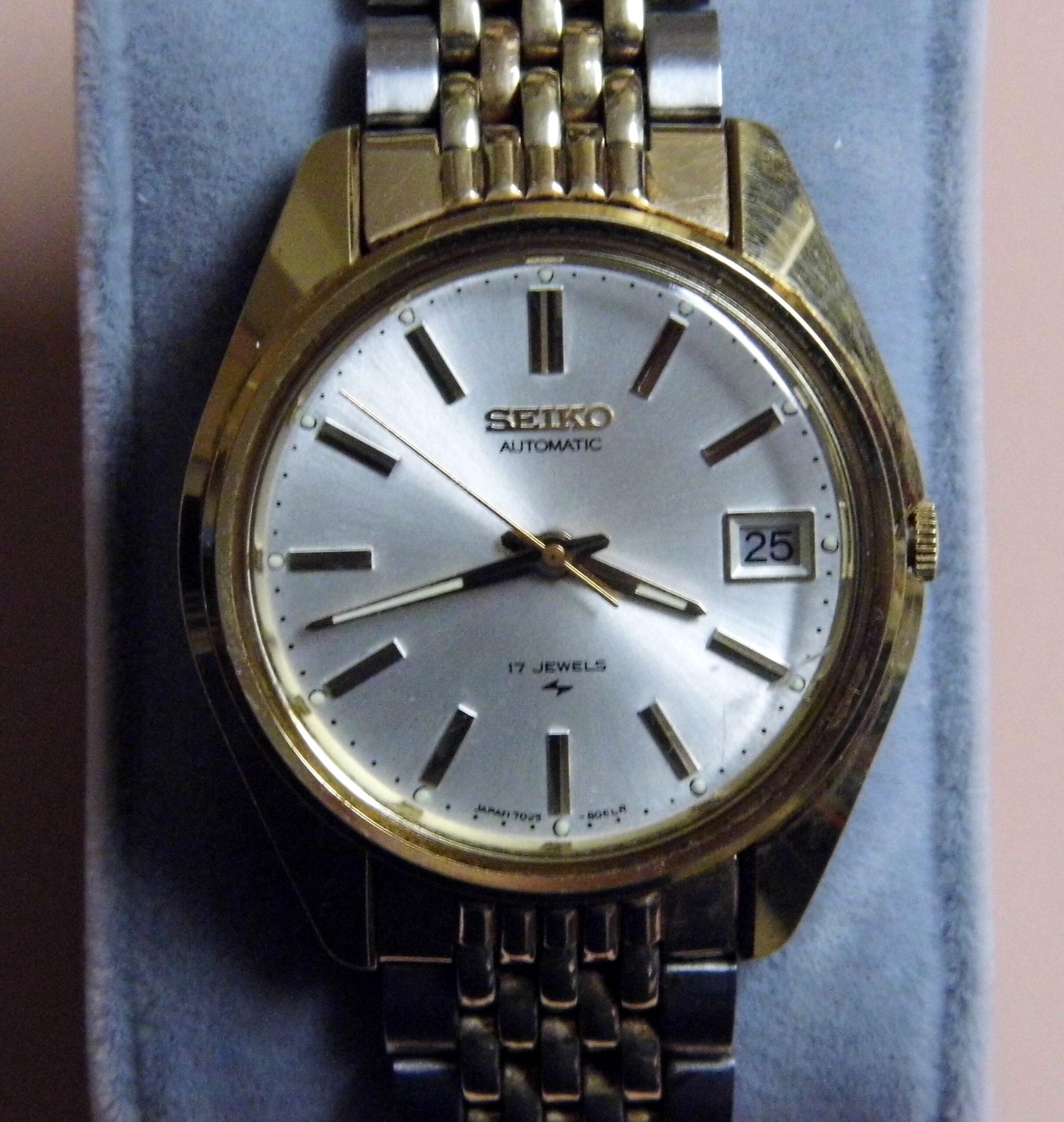
First, Check Whether It Is Actually a Fault
Seiko rates the 4R35 and 4R36 calibres at -35 to +45 seconds per day. The mechanically identical NH35, sold to third-party brands rather than used in Seiko’s own watches, is usually published at a tighter -20 to +40. Same movement, same production line, two different published tolerances, which is worth knowing before you decide your watch is broken.
So a Seiko gaining 20 seconds a day is inside factory specification, even though it feels wrong. In practice most of these calibres settle somewhere between -10 and +20 seconds per day, and a watchmaker can usually regulate one down to roughly 5 to 8 seconds either way.
Judge by change, not by the number. A watch that held +5 for two years and now sits at +30 has changed internally. One that has always run +25 is a mass-produced movement doing exactly what it was specified to do.
Magnetism: The Most Common Cause
When the coils of the hairspring become magnetised, they cling to one another. That shortens the spring’s effective length, the balance wheel beats faster, and the watch gains. This is the one cause that produces dramatic numbers: 60 seconds a day or more is common, and some watches gain several minutes.
Everyday sources are unremarkable: laptop speakers, magnetic tablet and laptop covers, handbag and jacket clasps, cabinet catches, and induction hobs.
Test: lay a compass flat and pass the watch slowly over it. If the needle swings, the movement is magnetised.
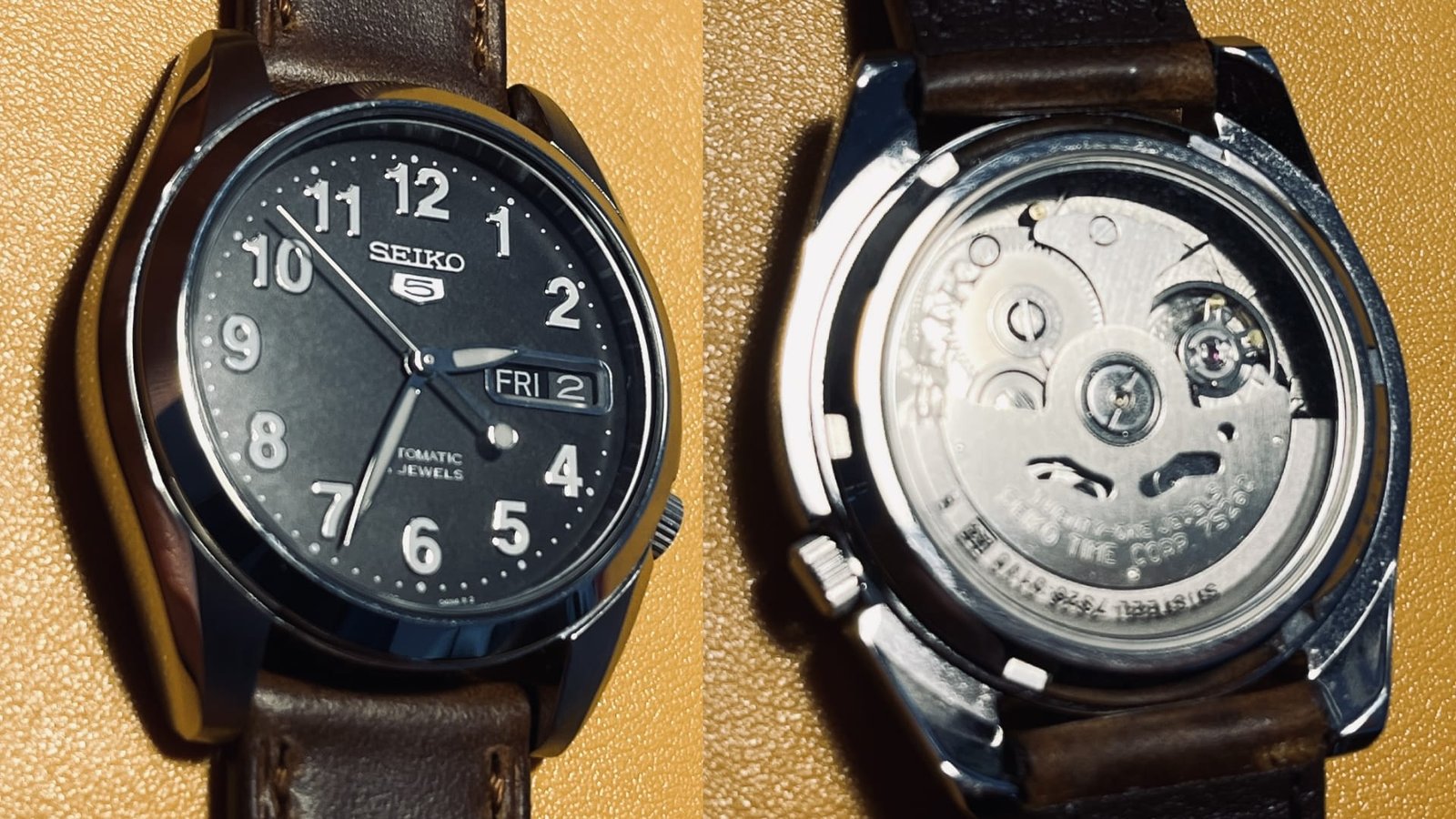
Fix: a watchmaker will demagnetise it in well under a minute, and many do it free while you wait. A handheld watch demagnetizer does the same job at home in seconds and pays for itself quickly if you own more than one mechanical watch.
It Was Freshly Wound, or It Is Sitting Dial Up
Automatics tend to run slightly fast when the mainspring is at full tension, and most run faster dial up than dial down. If you hand-wind every morning and leave the watch face up on a nightstand overnight, you are stacking both effects and reading the result as a fault.
Test: rest it crown down for three or four nights and compare the daily rate. A swing of several seconds between positions is normal on a movement in this price bracket, which is not regulated across as many positions as a chronometer.
A Knock Moved the Regulator
The regulator arm sets the effective length of the hairspring. A hard impact against a doorframe or a drop onto a hard floor can nudge it, and if it moves toward shortening the spring the watch gains from that moment onward.
Tell: the change was sudden and you can trace it to a specific event. Nothing gradual about it.
It Simply Needs Regulating
If the watch gains the same amount every single day, that is the easy case. Consistency means the movement is healthy and just set slightly fast. Regulation is a short bench job, far cheaper than a service, and it is the correct fix rather than something to tolerate.
Quick Reference
- Gained suddenly and by a lot: magnetism, check with a compass first
- Only fast overnight, fine on the wrist: resting position
- Fast since a specific knock: the regulator has shifted
- Consistently fast by the same amount for years: needs regulating
- Fast and erratic, watch is over five years old: due a service
Conclusion
Rule out magnetism before anything else, because it is free to test, cheap to fix, and explains most sudden gains. Then check resting position. Only after both of those should you consider regulation or a service. And remember that Seiko’s own published tolerance is wide enough that a watch gaining 20 seconds a day is performing to specification, whatever your phone clock says.
Related Guides
- Why is my Seiko automatic watch losing time?: the seven causes that apply when the drift runs the other way.
- Why is my Seiko 5 second hand skipping?: when the problem is an uneven seconds hand rather than the rate.
- Why is my Rolex running fast?: the same diagnosis on a chronometer-grade movement with a much tighter tolerance.
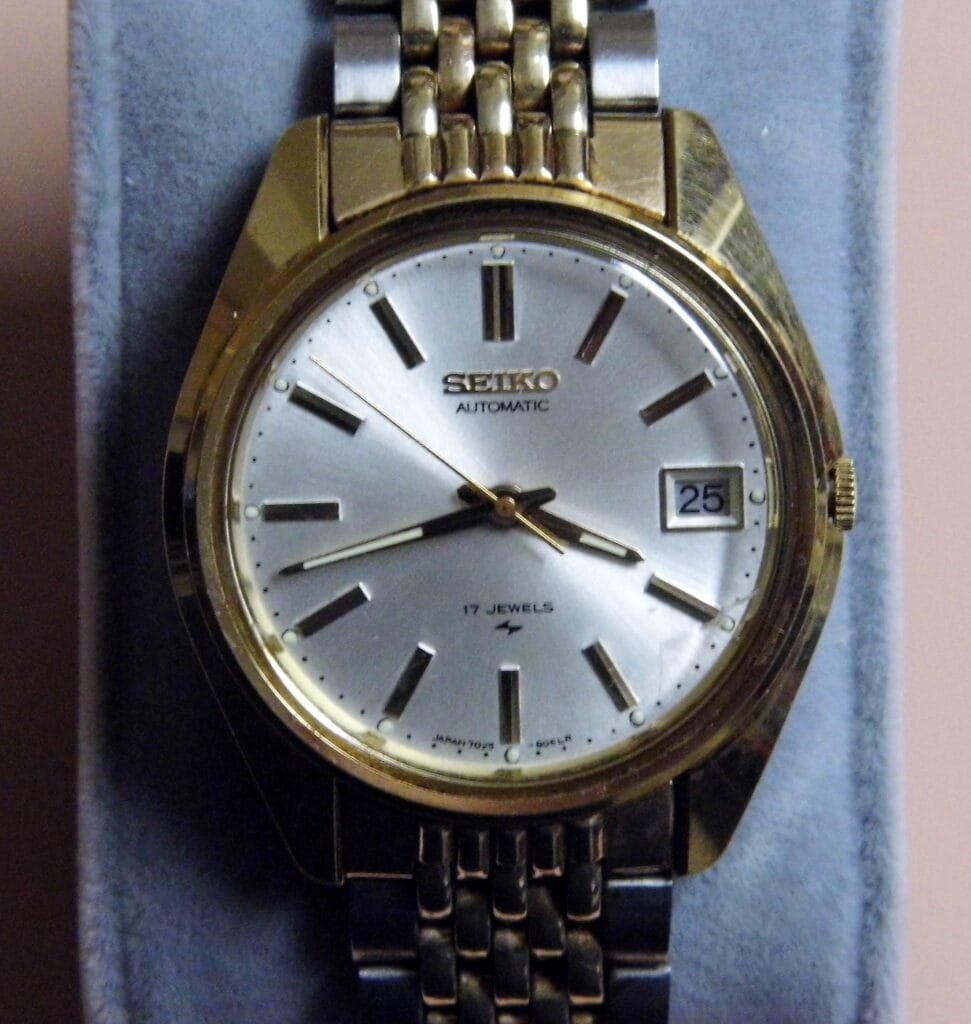
Image credits: Seiko automatic dial by Joe Haupt, CC BY-SA 2.0. Seiko 7S26 movement by Racomi, CC BY-SA 4.0. Both via Wikimedia Commons.