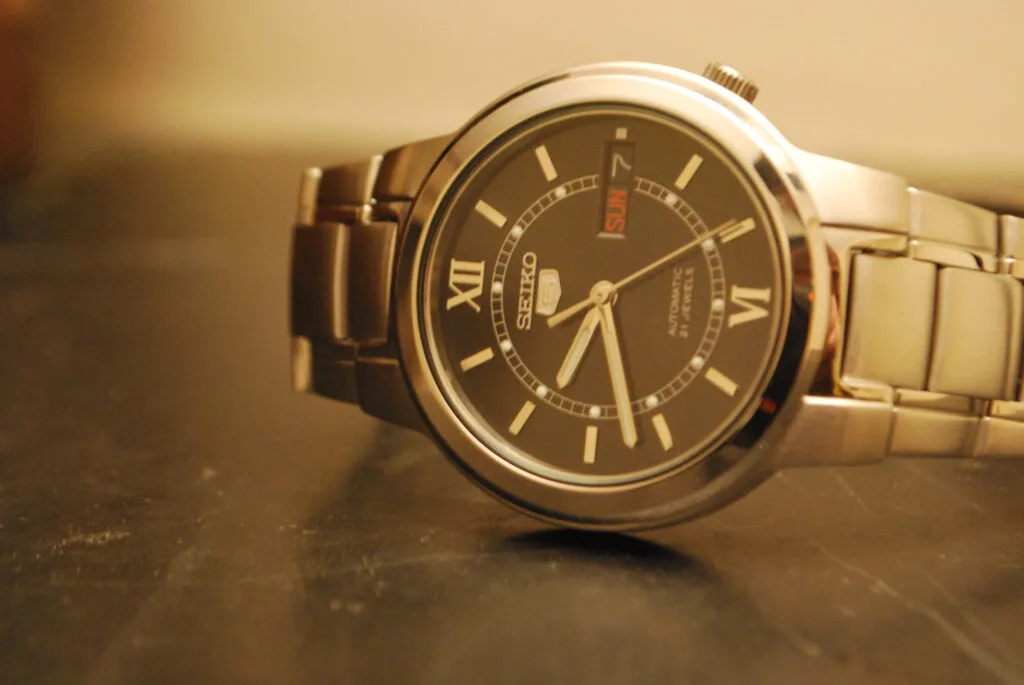
Most owners who think their Seiko 5 is not keeping time have a watch performing exactly to specification. Seiko’s published tolerance for these movements is far wider than anyone raised on quartz expects, and knowing the real number tells you whether to shrug or book a service.
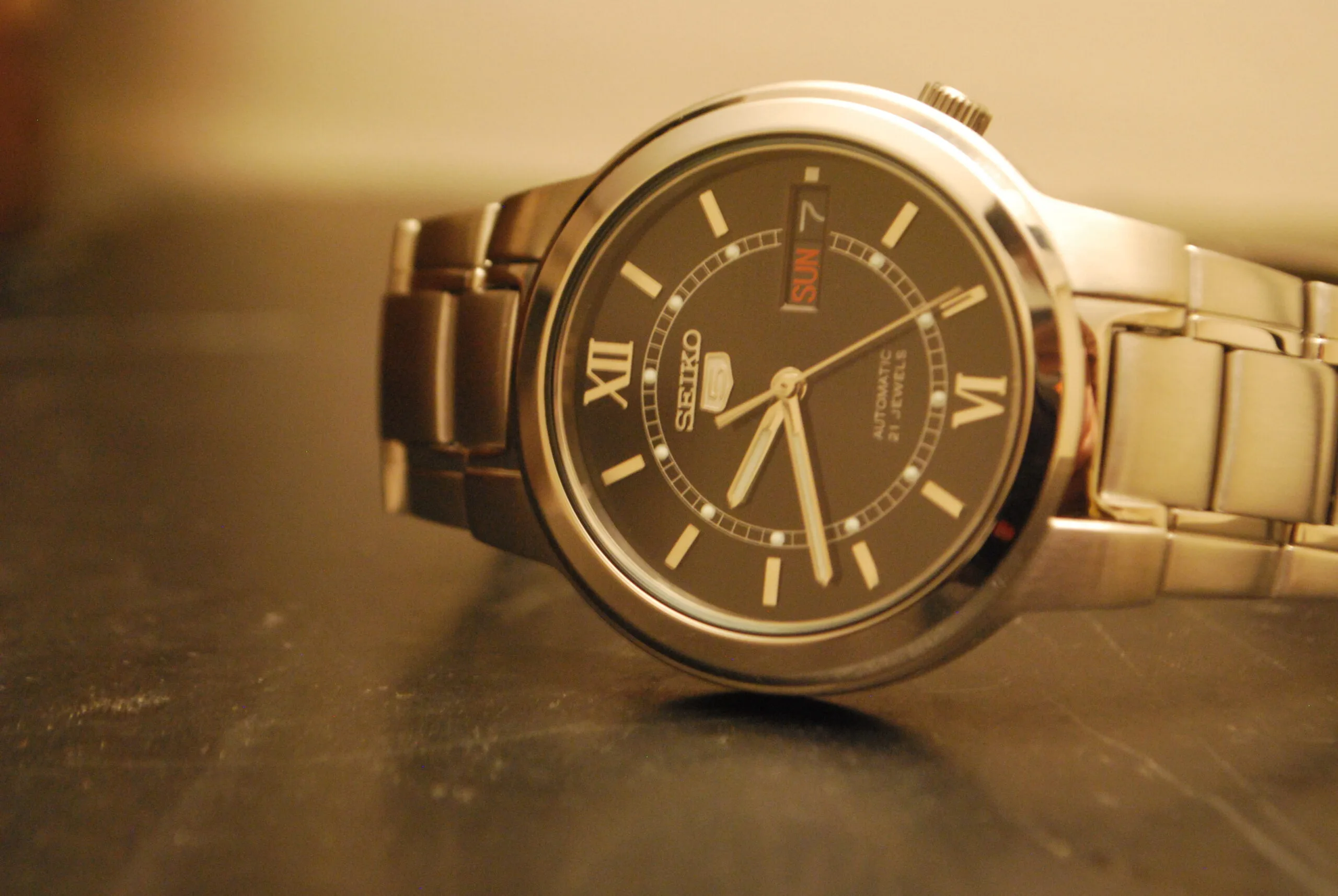
First, Work Out Which Calibre You Have
The answer depends entirely on what is inside, and there are two very different generations still in daily use.
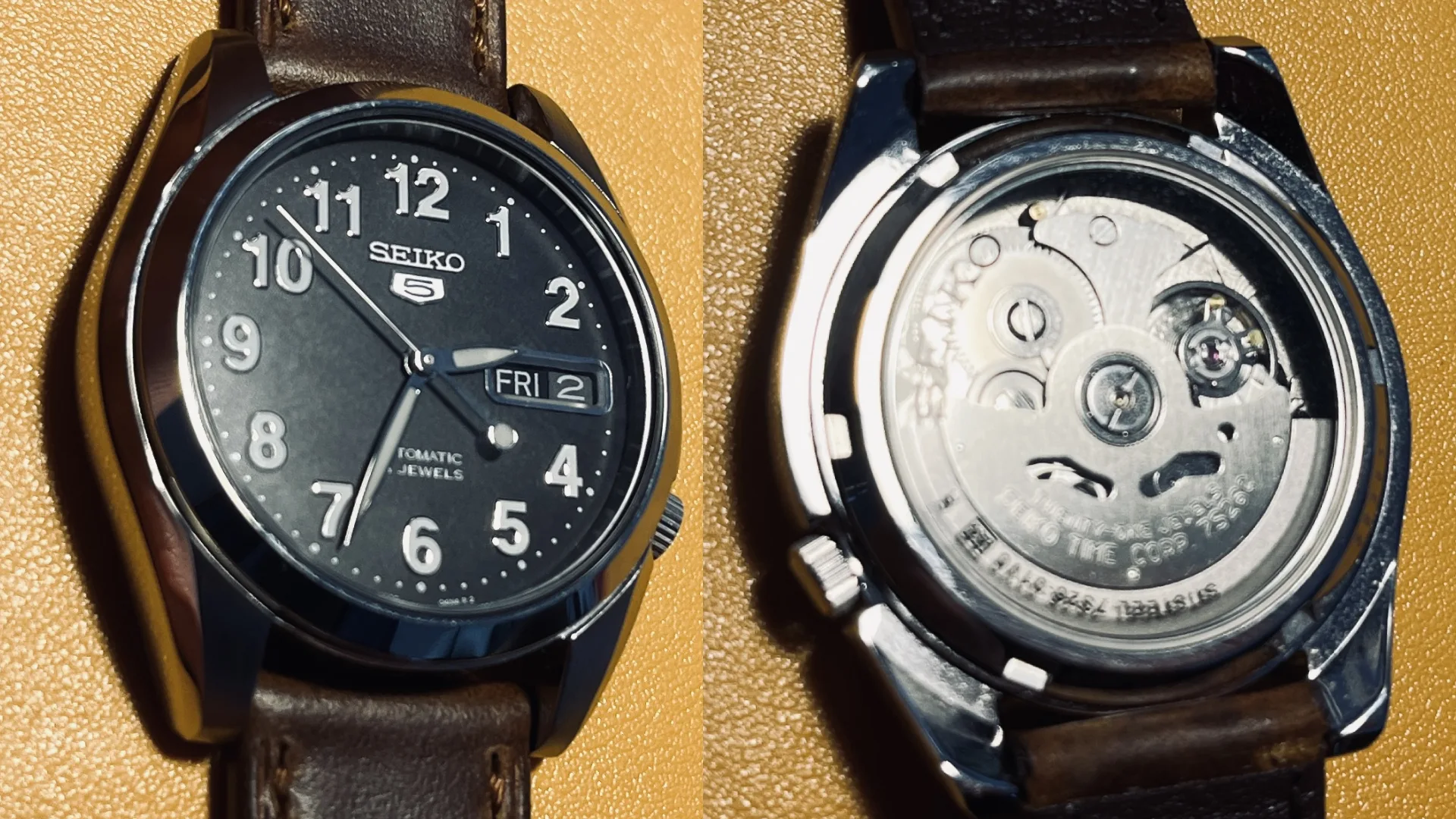
- 7S26, from 1996 to the late 2010s. 21 jewels, 21,600 vibrations per hour, around 41 hours of reserve. No hacking, no hand-winding. Found in the SNK809, the SKX divers and most older Seiko 5s.
- 4R36, in the current Seiko 5 Sports line. 24 jewels, same beat rate and roughly the same reserve, but it adds hacking and hand-winding.
Quick test: if pulling the crown out stops the seconds hand, you have a 4R36. If the seconds hand keeps sweeping, it is a 7S26.
The Numbers Seiko Actually Publishes
The 7S26 is rated at roughly -20 to +40 seconds per day. The 4R36 is rated wider still, at -35 to +45. Both figures are startling if you have only owned quartz, but a watch anywhere inside that band is performing within specification, however unsatisfying that feels.
Worth knowing that published figures for these calibres vary between sources, with some quoting the 7S26 as high as +49. Treat the spec as a wide band rather than a precise promise.
In practice the distribution is kinder than the spec. A healthy 7S26 most commonly settles between +10 and +25 seconds per day, and plenty run under +10.
Why Your Seiko 5 Probably Runs Fast Rather Than Slow
Notice that both specs are lopsided: far more room on the fast side than the slow side. That is deliberate on a non-hacking movement. You cannot stop the seconds hand to set it precisely, so a watch running slightly ahead is easier to live with than one running behind. Watchmakers regulating these often aim a few seconds fast for exactly that reason.
Measure It Properly Before Deciding Anything
A single day’s reading against your phone tells you very little. Do this instead:
- Wear the watch normally for a full week, every day.
- Note the deviation at the same time each morning.
- Average across the week rather than reacting to one bad day.
Two things skew a reading badly. Positional variance is the 7S26’s honest weakness, so a watch left dial up overnight can read very differently from one worn continuously. And these movements grow noticeably less accurate as the power reserve runs down, which is why a Seiko 5 left in a drawer for two days performs worse than one worn daily.
When It Is Genuinely a Fault
- The rate has changed and stayed changed. A watch that held +8 for years and now sits at -25 has changed internally.
- Drift is erratic rather than consistent, varying wildly day to day.
- It is running more than about a minute a day, which usually means magnetism.
- The power reserve has shortened alongside the rate change.
Consistent drift, even a large amount, is the good case. It means the movement is healthy and simply regulated wrong, and a watchmaker can usually bring a 7S26 under 10 seconds a day.
One Economic Reality Worth Knowing
The 7S26 is discontinued, and replacement movements have been climbing in price. On an older entry-level Seiko 5, a full service can cost more than the watch is worth, and more than a movement swap. Regulation is cheap and worth doing. A complete overhaul on a low-end 7S26 rarely makes financial sense, however much it makes sentimental sense.
Conclusion
Identify your calibre with the crown test, measure across a full week of daily wear, and compare against -20 to +40 for a 7S26 or -35 to +45 for a 4R36. If you land inside that and the rate is consistent, nothing is wrong. If you want better, regulation is inexpensive and these movements respond well to it.
Related Guides
- Why is my Seiko automatic watch losing time?: the seven causes to work through when the drift is genuinely outside spec.
- Seiko automatic running fast: what’s normal and what isn’t: why magnetism is almost always behind a sudden large gain.
- Why is my Seiko 5 second hand skipping?: when the problem is an uneven seconds hand rather than the daily rate.
Image credits: Seiko 5 SNKA23 by Ash Crow, CC BY-SA 3.0. Seiko 7S26 movement by Racomi, CC BY-SA 4.0. Both via Wikimedia Commons.