An Eco-Drive that keeps poor time despite a full charge is a different problem from one that stops, and the cell is almost never the cause. Three of the four most common explanations are not faults at all.
The Number Citizen Actually Promises
Standard Eco-Drive calibres are specified at within 15 seconds per month. That is roughly half a second a day, and it is the figure printed in Citizen’s own manuals.
There is a detail in those manuals that matters more than the number. The accuracy figure applies when the watch is worn at normal operating temperatures, which Citizen gives as +5°C to +35°C. The watch will function from -10°C to +60°C, but it is not promised to keep time accurately across that whole range. Those are two different specifications and they are easy to conflate.
In practice owners report better than the spec, commonly two to eight seconds a month. So a watch drifting ten seconds in a month is unremarkable, and one drifting ten seconds a week is not.
Higher-end calibres are specified differently, some at around ten seconds per year. Citizen notes in its documentation that an annual figure does not simply divide by twelve, because temperature and how much you wear it both feed into the result.
Cause 1: It Is Not Losing Time At All
Most people now compare a watch against a phone, which is network-synced and effectively perfect. Against that reference, a correctly functioning quartz watch looks wrong within a couple of months.
Measure it properly. Note the deviation against a network clock, wait a full month, and compare. A single week is too short to distinguish a healthy watch from a faulty one.
Cause 2: A Hand Is in the Wrong Place
This one produces the most confusion, and it is worth checking before anything else on a chronograph or multi-hand model.
These calibres have a reference position, the home point the movement believes each hand sits at. If that reference drifts, usually after a deep discharge, a cell replacement or an all-reset, the movement keeps flawless time while the hands display something else. The watch is not losing time. It is showing the wrong time, consistently, and no amount of resetting the hour hand fixes it.
Citizen builds correction routines for exactly this. Some calibres check hand positions at intervals and correct any misalignment automatically. Others need you to run a reference position correction manually, and the sequence is calibre-specific.
The tell: the error is a fixed offset that never grows. Consistently four minutes behind, week after week, is a reference position problem. Genuine drift accumulates.
Cause 3: A Radio or Satellite Model That Is Not Syncing
On radio-controlled and satellite models, two settings imitate a timekeeping fault:
- Wrong city code. The watch is keeping perfect time for somewhere else. An hour out to the exact minute is nearly always this.
- Failed reception. If it has not received a signal in weeks, it has been free-running on quartz alone and drifting at the normal rate.
Reception commonly fails overnight indoors, through reinforced concrete, or simply outside the coverage area of the transmitter. Check the city code first, then try a manual receive near a window.
Cause 4: Magnetism, and Why It Is Different Here
Quartz watches are often described as immune to magnetism. They are not. Citizen’s own manuals state that strong magnetism can cause the motor to operate improperly.
The mechanism differs from a mechanical watch. There is no hairspring to stick together. Instead the stepper motor that drives the hands can miss steps, so the quartz oscillator counts correctly while the hands fall behind. That produces loss rather than the gain you would see on a magnetised automatic.
Usual suspects are the same as ever: laptop speakers, magnetic tablet covers, cabinet catches and induction hobs.
One Thing a New Cell Will Not Fix
If the seconds hand ticks normally at one-second intervals, the watch holds its charge, and it still drifts well beyond 15 seconds a month after you have ruled out the four causes above, the problem is in the module or the oscillator.
Replacing the cell will not change that. It is worth knowing before you spend anything, because a drifting Eco-Drive and a dead one need completely different work.
One genuine exception: a watch running on a very low charge reduces its own accuracy deliberately. Charge it fully and re-measure before concluding anything.
Conclusion
Check whether the error is a fixed offset or growing drift, because that single distinction separates a misaligned hand from real inaccuracy. Then check the city code if it is a radio model, rule out magnetism, and measure across a full month against the 15 second spec rather than against your phone after a week.
Related Guides
- Why your Citizen Eco-Drive stopped charging: for a watch that has stopped rather than one keeping poor time.
- Eco-Drive cell replacement: finding the right part: including why a reference position correction matters after fitting a new cell.
- Citizen Eco-Drive blinking hand: what the warning means: the low charge warning, and why accuracy drops while it is showing.
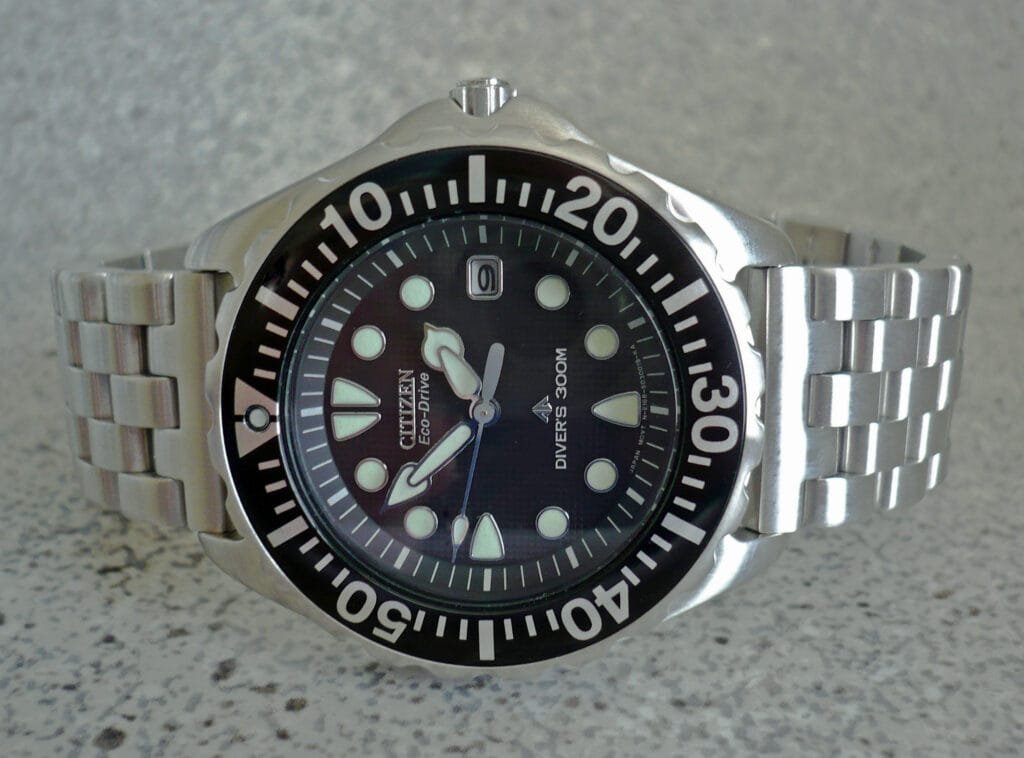
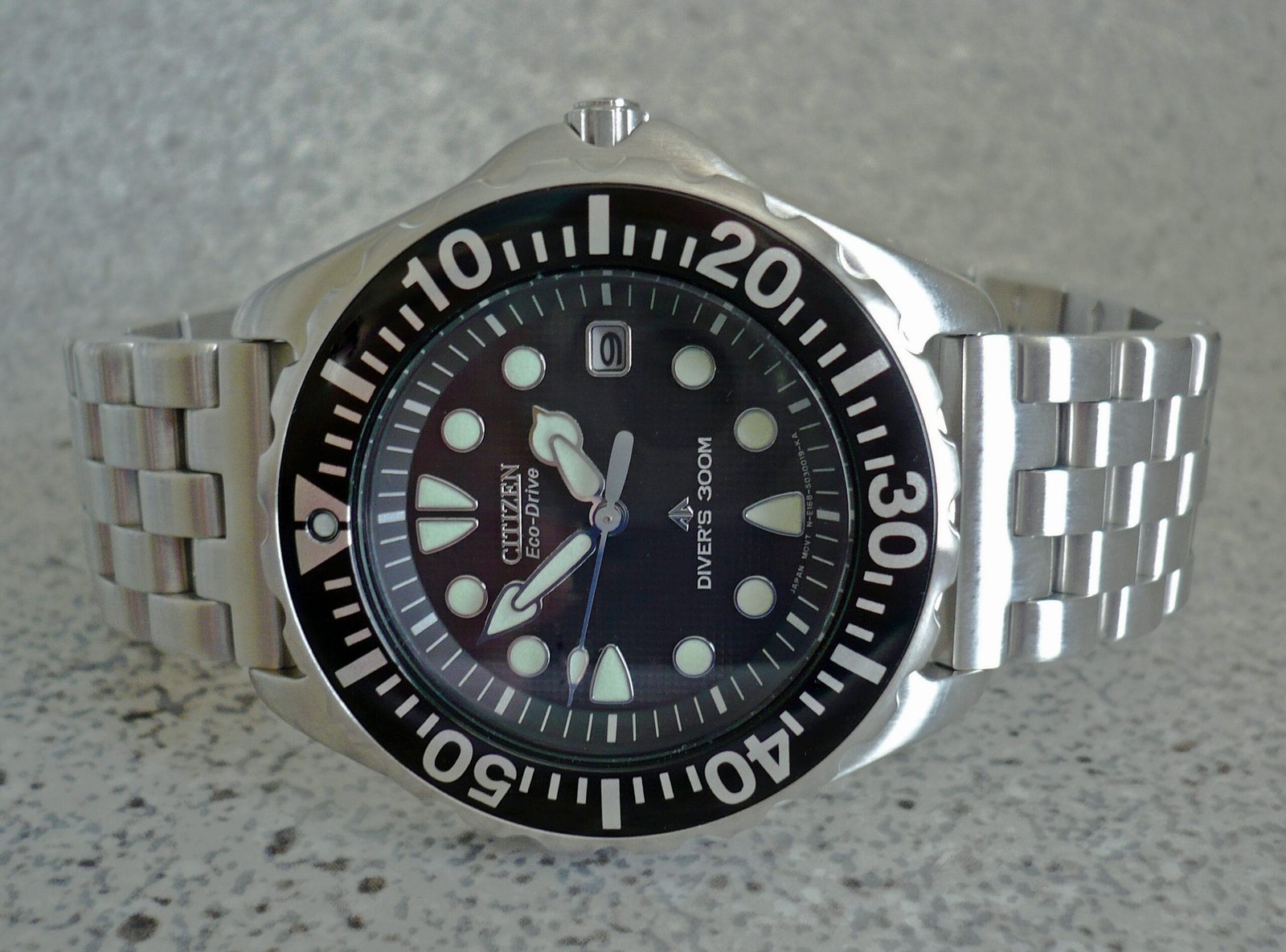
Image credit: Citizen Promaster Eco-Drive photograph by Francis Flinch via Wikimedia Commons, CC BY-SA 3.0.