The single most expensive mistake here is buying a strap because a listing says it fits a Seamaster. Seamaster is a family covering dozens of references across seventy years, and lug widths across it run from 18mm to 22mm.
This post contains affiliate links. We may earn a small commission if you purchase through them, at no extra cost to you.
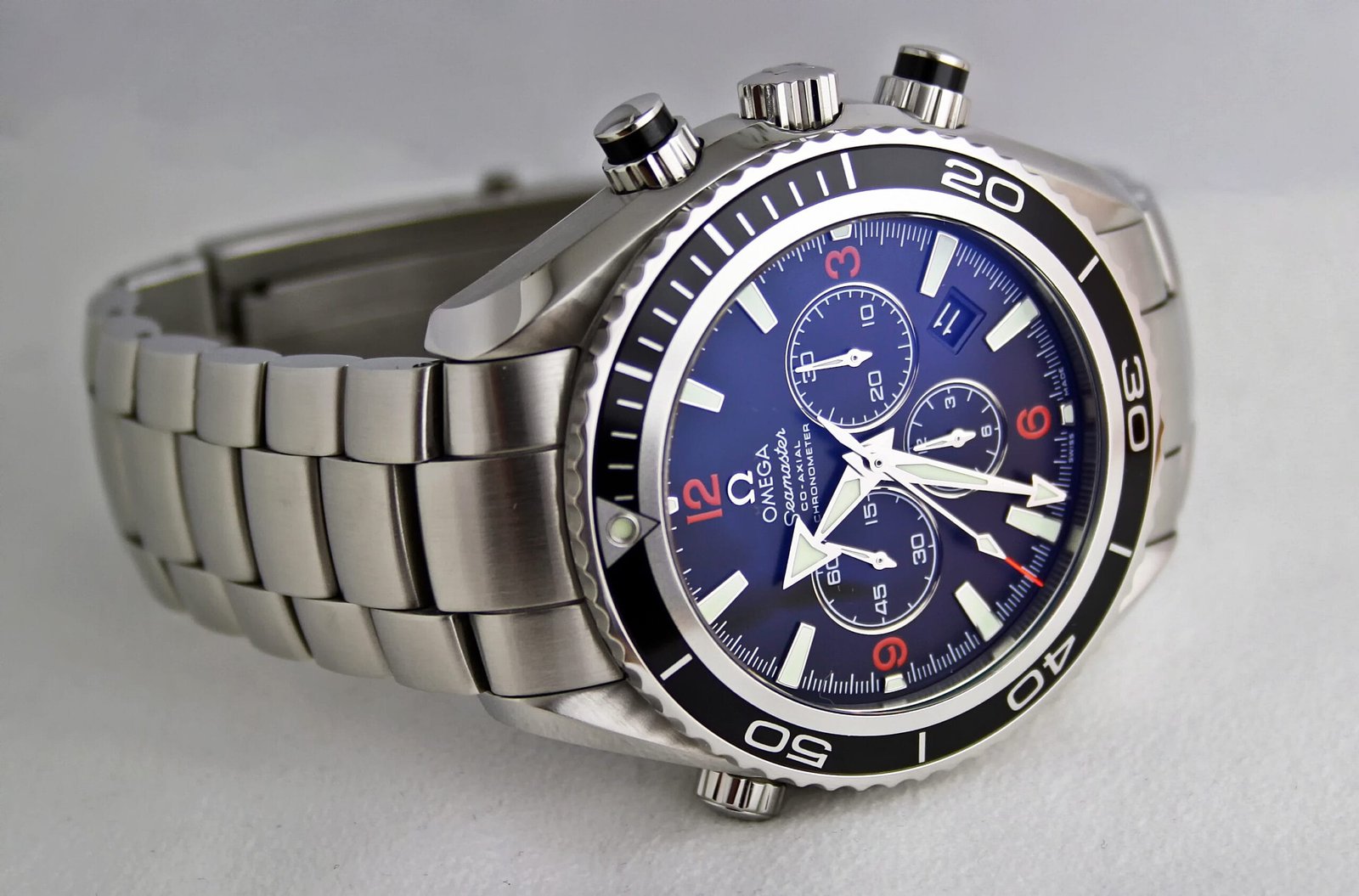
Even the Specialists Disagree
Worth knowing before you trust any chart, including this one. Researching this article, one strap retailer’s own site states on one page that the Seamaster Diver 300M has a 20mm lug width, and on another that it has 21mm. Both pages are confident. Both are right, for different references.
The 42mm Diver 300M takes 20mm. The 44mm Diver 300M takes 21mm. Same model name on the dial.
Rough Guide by Model
- Diver 300M, 42mm, post-2018: 20mm
- Diver 300M, 44mm: 21mm
- Seamaster 300, 41mm: 21mm
- Aqua Terra, 41mm: 20mm
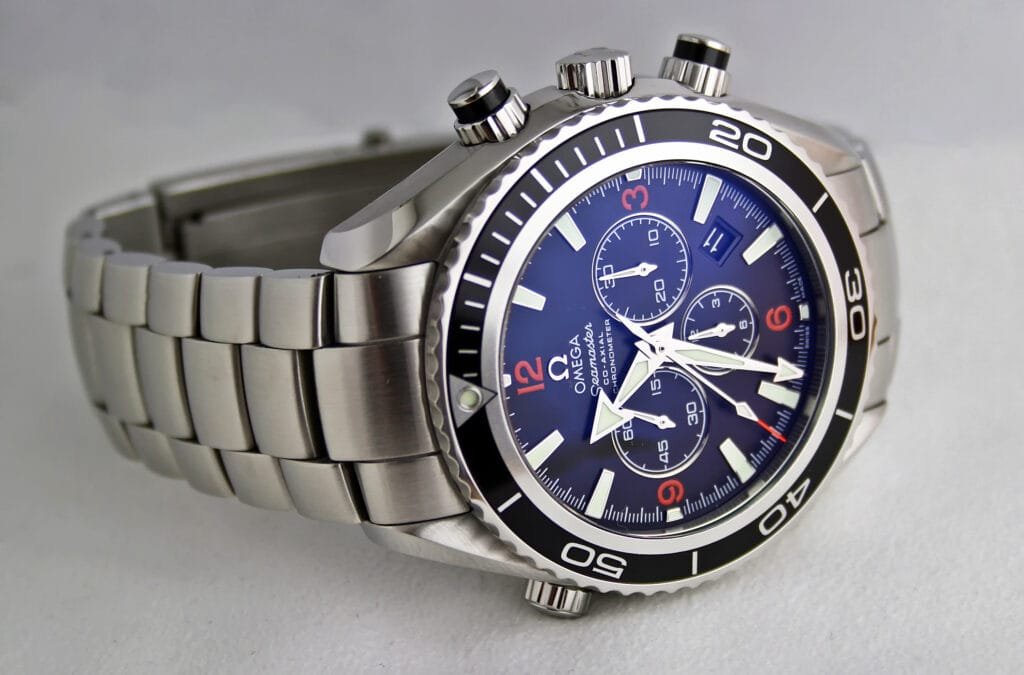
- Planet Ocean chronograph, 45.5mm: 22mm
- Vintage Seamaster, 36mm and smaller: often 18mm, sometimes 17mm
Treat that as a starting point, not an answer. The only reliable method is to remove the existing strap and measure the gap between the inside faces of the lugs with a ruler or callipers.
If You Land on 21mm, Read This First
21mm is an awkward size. Most off-the-shelf straps are made in even widths, so a large part of the aftermarket simply will not fit, and the choice narrows sharply.
Do not solve this by forcing a 22mm strap in. It will not seat properly against the lugs, it puts constant outward pressure on the spring bar, and it looks wrong from every angle. A 20mm strap in a 21mm gap leaves visible daylight either side.
If your reference is 21mm, buy 21mm or buy nothing.
Curved Ends Matter on a Seamaster
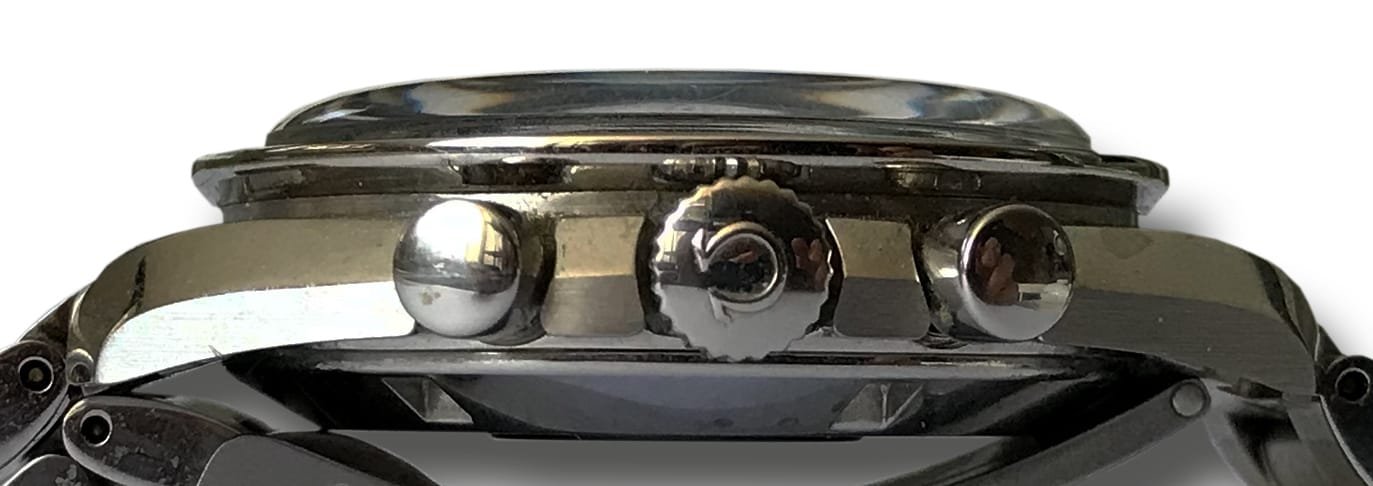
Omega sports cases have pronounced twisted lyre lugs, and straps designed for them have shaped end pieces that follow that curve. A straight-ended strap will physically fit and will leave a gap at the case that looks like a mistake rather than a choice.
Check what came off the watch. If the end pieces hug the case, order curved-end.
Choosing a Material
- Rubber. The correct answer for anything you swim in. Rubber straps with curved end links are made specifically for these cases and start around €20.
- Steel bracelet. A replacement steel bracelet in 20 or 22mm with a deployant clasp is the usual route when an original is stretched. It will need resizing after fitting.
- Nylon and NATO. Cheap, secure, and forgiving of a lug width that is a fraction out because the bar passes through the strap. Nylon straps in 18, 20 and 22mm are the low-risk way to try a new look.
- Leather. Right for an Aqua Terra or a dress Seamaster, wrong for a diver you actually use in water.
Fitting It
Most Seamasters have drilled lugs and standard spring bars, so the swap is a few minutes with a spring bar tool. Work face down on a soft cloth, slide the forked end between the strap and the lug, compress one end and angle the strap out.
Then tug the new strap firmly in both directions before wearing it. A bar that is not fully seated feels fine right up until it does not, and this is a watch you do not want landing on a tiled floor.
Conclusion
Measure your own lugs rather than trusting a model name, because even strap specialists publish conflicting numbers for the Diver 300M. Match curved ends to the case, and if you land on 21mm accept the narrower choice rather than forcing a 22mm strap into it.
Related Guides
- Seiko strap and bracelet replacement guide: the same job where thicker spring bars are the trap rather than lug width.
- Cleaning an Omega Seamaster bracelet: worth doing before you decide the old bracelet needs replacing at all.
- What the Omega helium escape valve does: worth understanding before you open anything on a Seamaster.
- Why does my Rolex feel loose on the wrist?: why a stretched bracelet is worn pins rather than stretched metal.
Image credits: Omega photographs via Wikimedia Commons.