Once you own more than one watch, the ones you are not wearing spend most of their lives sitting still. How they sit decides whether they come out in the same condition they went in. The good news is that it comes down to a handful of things, and none of them are expensive.
This post contains affiliate links. We may earn a small commission if you purchase through them, at no extra cost to you.
1. Keep Them Apart
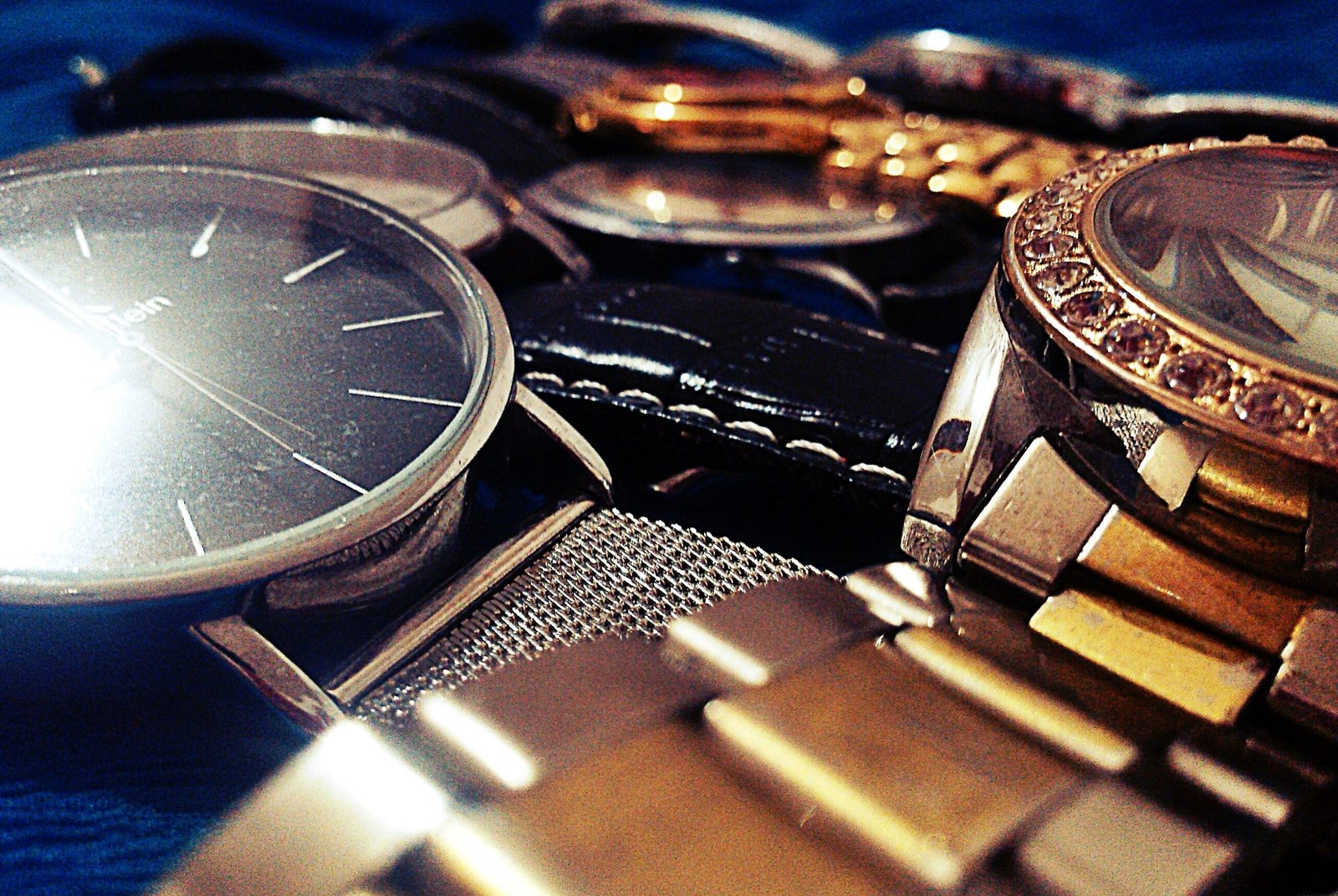
The most common storage damage is also the simplest: watches knocking against each other. A steel bracelet or a bezel will mark a polished case or a crystal in a drawer.
A watch box with individual compartments and pillows solves this completely. For travel, a watch roll does the same job in a bag.
2. Control Humidity
Moisture is the enemy you cannot see. High humidity speeds up corrosion, and temperature swings can draw condensation into a case whose gaskets have aged. Most watchmakers suggest somewhere around 40 to 50 percent relative humidity.
- Avoid bathrooms, basements, attics and window sills. All of them swing in humidity or temperature.
- Add a silica gel desiccant to a closed box. Rechargeable types can be dried out and reused.
- Do not seal watches in plastic bags. Trapped moisture has nowhere to go.
- Do not go to extremes either. Very dry air can dry out gaskets prematurely.
3. Watch Out for Magnets, Including the Box
Keep mechanical watches away from speakers, laptops, tablet covers and phone chargers. A magnetised hairspring makes a watch run fast, sometimes by minutes a day.
The detail most people miss: some watch boxes close with a magnetic catch. If yours does, avoid resting a mechanical watch right next to it.
4. Treat Each Movement Type Differently
- Quartz: for storage of a few months or more, have the battery removed. A dead battery left inside can leak and corrode the movement, and that turns a cheap battery job into an expensive repair.
- Automatic: it is perfectly fine to let it stop. A winder is a convenience, not a necessity. For storage over several months, some owners wind and run the watch for a day every few weeks to keep the lubricants moving.
- Solar: keep it somewhere it still sees some light, or charge it fully before putting it away, so the cell does not run completely flat.
5. Look After the Straps
- Leather: store it unbuckled or loosely buckled. Tight buckling holds a permanent crease, and leather hates humidity.
- Resin and rubber: keep it from pressing against other resin. Degradation tends to be worst where resin sits against resin.
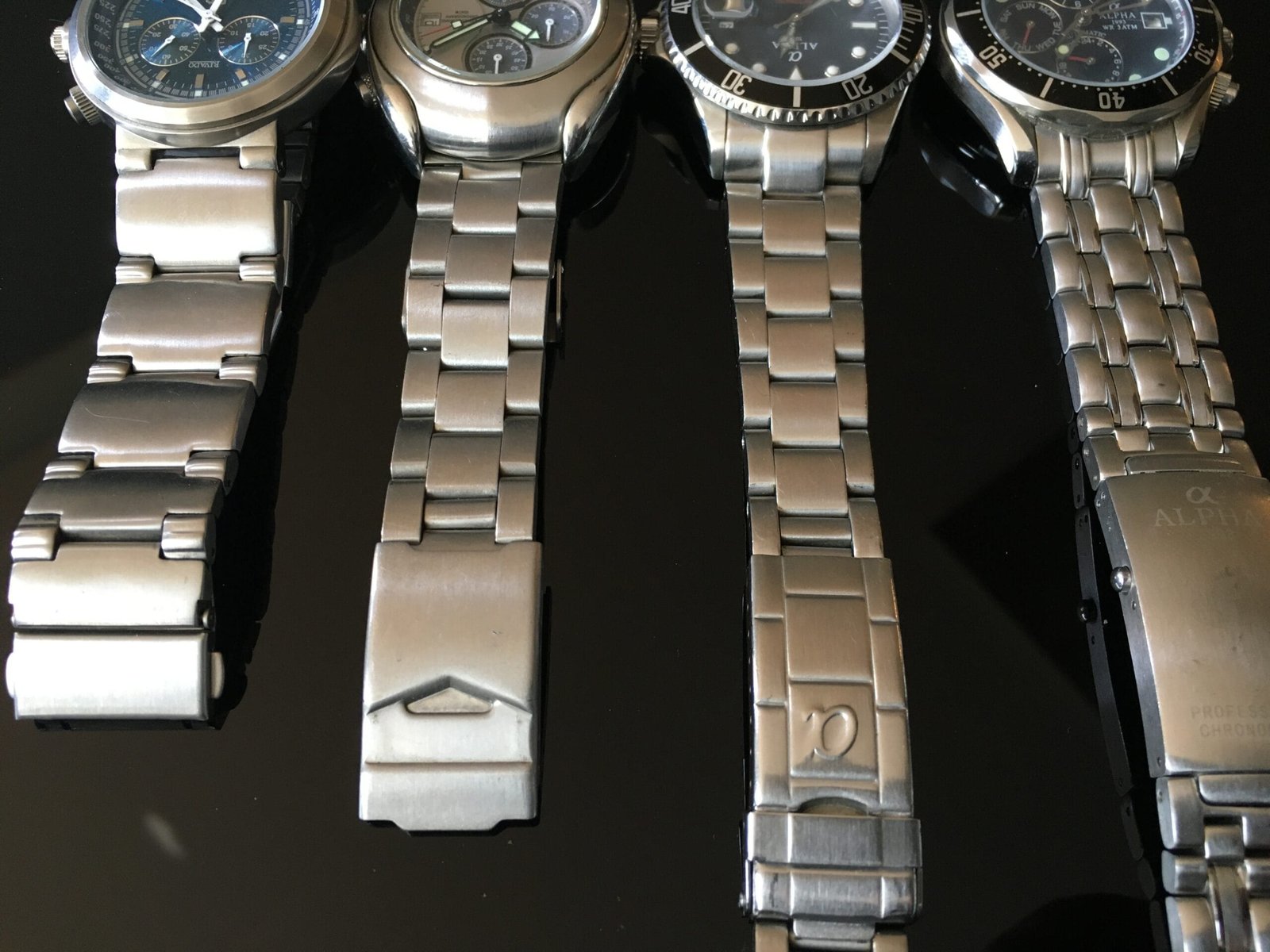
- Steel: clean it before storage. Sweat and grit left in the links keep working on the metal.
6. A Few Habits Worth Keeping
- Push in or screw down every crown before storage, so the seals are closed.
- Keep the box and papers somewhere separate and dry. They can add real value when you sell.
- Check on long-stored watches every few months. A problem caught early is cheaper.
- Service before long-term storage if a watch is due. Old oils and tired gaskets are worse for sitting still.
Conclusion
Separate compartments, stable humidity, distance from magnets, and the right treatment for each movement type cover almost everything. Take the battery out of a quartz watch you are putting away, let automatics stop without worrying, and never seal a watch in plastic.
Related Guides
- How a watch winder actually works: whether your automatics need one at all.
- TAG Heuer Formula 1 battery life: why a dead battery should never be left inside.
- G-Shock strap cracking: how resin degrades, and why storage affects it.
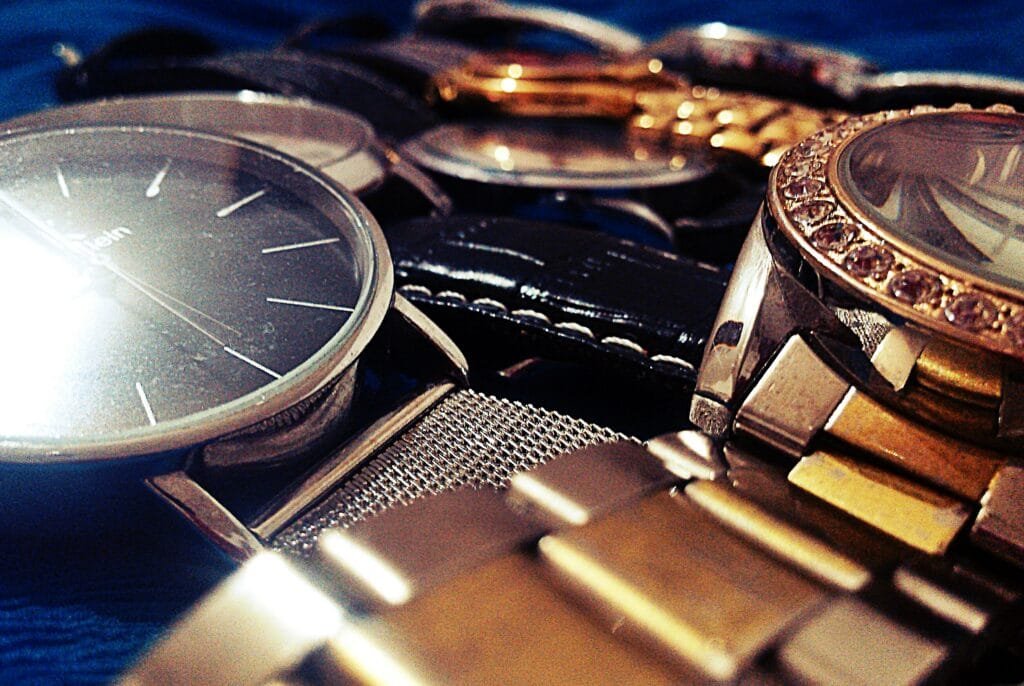
Image credits: watch collection by Abhijeet Singh Aulakh, and steel bracelet watches, both via Wikimedia Commons.