New automatic watch owners often panic the first time they shake their wrist and hear something rattling inside. In most cases that sound is the watch working exactly as designed. Here’s how to tell the normal noises from the ones worth acting on.
Why an Automatic Makes Noise at All
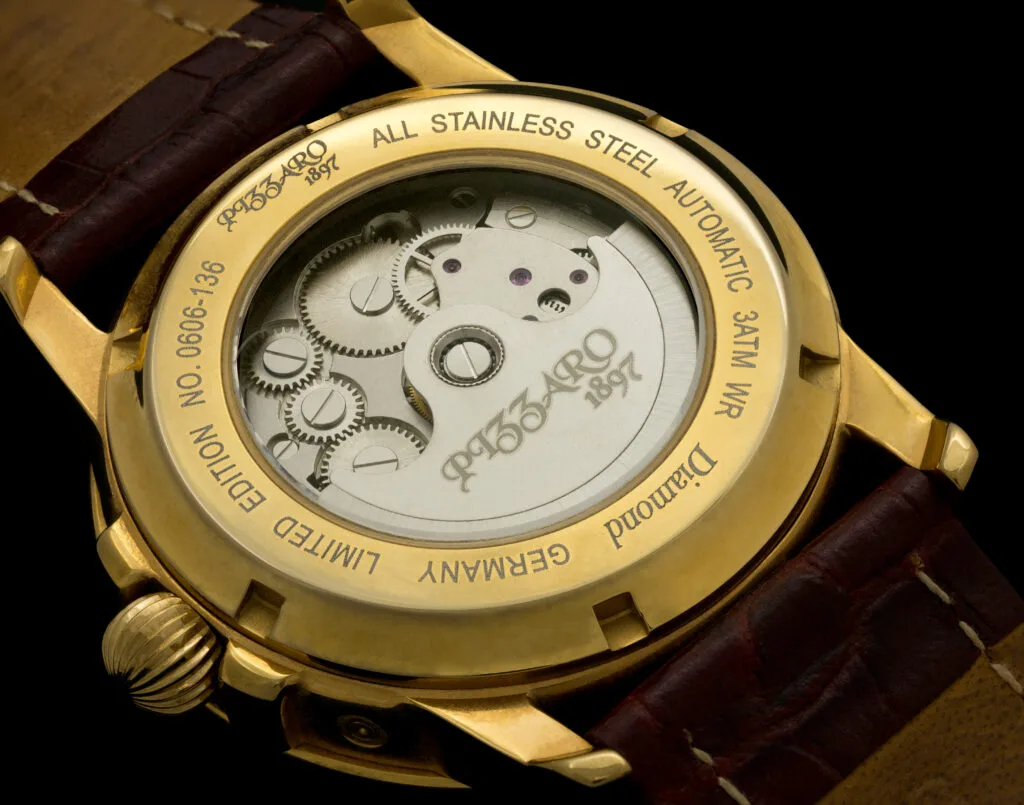
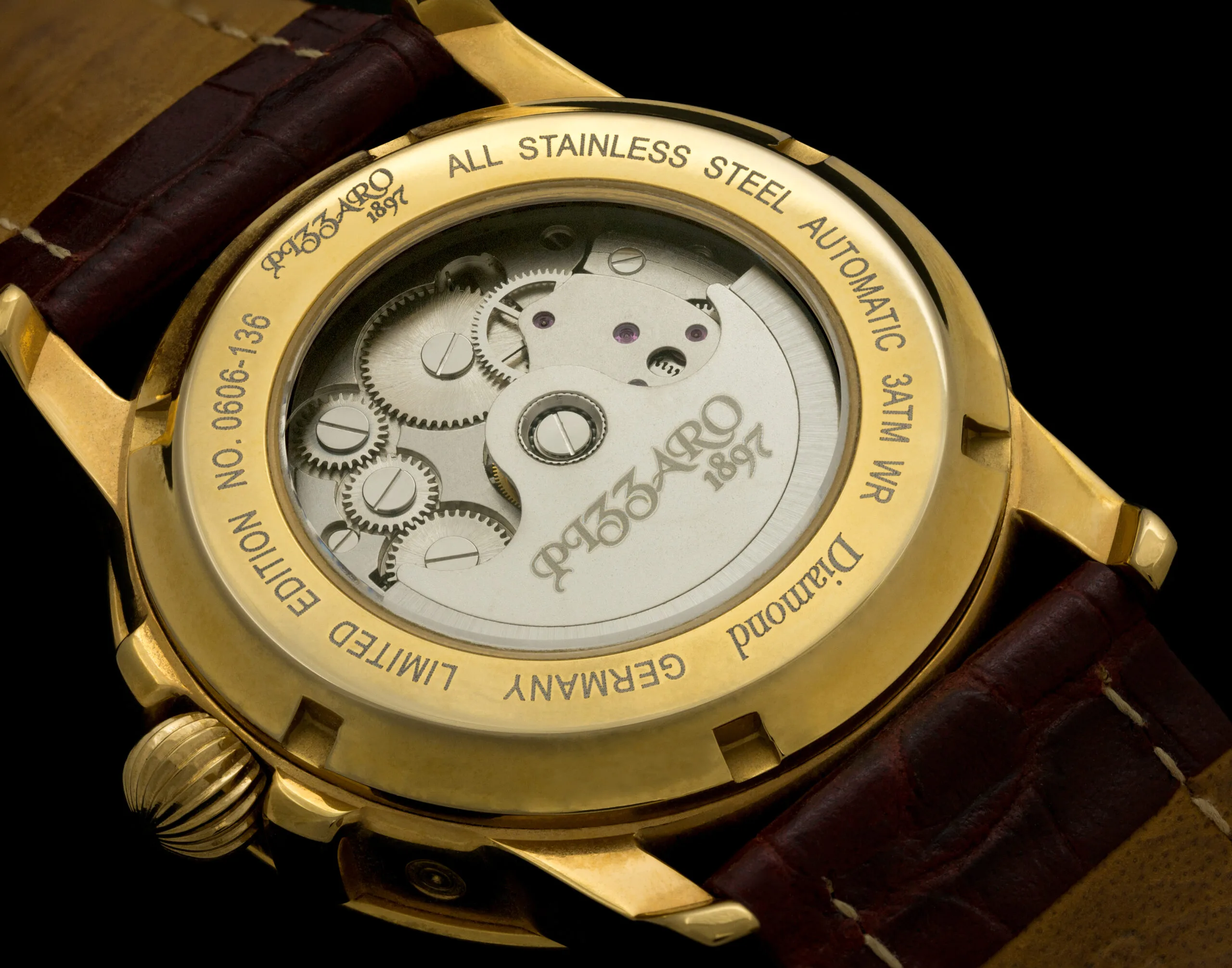
An automatic watch winds itself using a weighted semicircular rotor that spins freely on a bearing as your wrist moves. That rotor is a heavy metal component mounted with deliberate play so it can rotate without binding. Movement plus play equals sound. A completely silent rotor would arguably be more concerning than a noisy one.
Sounds That Are Completely Normal
- A soft whirring or spinning as you move your arm, that’s simply the rotor turning.
- A faint metallic rattle when you shake the watch, caused by the small amount of end-shake built into the rotor bearing. Some brands are noisier than others by design; Seiko and Nomos are both well known for it.
- A “shhh” or slipping sound when hand-winding, that’s the mainspring’s slip clutch engaging once fully wound, which is a safety feature rather than a fault.
- A pronounced wobble and whirring on a chronograph, especially with a Valjoux/ETA 7750 movement. Because that calibre winds in only one direction, the rotor free-wheels at speed in the other, which is an entirely normal characteristic of the movement.
Check the Bracelet Before Blaming the Movement
A surprising share of “movement rattle” turns out to be the bracelet. Worn spring bars or loose end links, the fitted metal pieces joining the bracelet to the case, click against the case when you move.
Quick test: hold the bracelet firmly against the case with your fingers and shake the watch again. If the noise vanishes, the movement is fine and the bracelet needs attention.
Sounds That Do Warrant Attention
A dry, zipping or light grinding noise is different from a healthy rattle. Reversing wheels, the components that let the rotor wind in both directions, work under high stress and can lose their lubrication. When they run dry they produce exactly that zipping sound, and it’s a reliable indicator that a service is overdue rather than something to live with.
Also worth taking seriously: a noise that is genuinely new on a watch that was quiet before, or a loose-feeling rotor that no longer spins smoothly when you gently tilt the watch (visible if you have a display caseback). A rotor that has worked loose can physically scrape against the movement or caseback, which causes real damage.
The Practical Test
Ignore the noise itself and judge the watch on behaviour: is it keeping accurate time, and does it hold a full power reserve? If yes to both, an audible rotor is a characteristic, not a fault. If the watch is also running slow or stopping early, the sound is a supporting clue rather than the problem itself.
Conclusion
Rattling and whirring are the sound of an automatic doing its job. Rule out the bracelet with the hold-and-shake test, then judge by timekeeping and power reserve rather than by ear. A dry zipping sound or a newly-loose rotor is the exception worth booking a service for. If your watch is stopping overnight rather than just making noise, see our guide on why an automatic watch stops overnight. For the other sounds and symptoms that do point to a service, see our guide on signs your movement needs a full service, and if you’re hearing the slipping noise while winding, how many hand-winding turns are safe.
Related Guides
- Why is my Seiko automatic watch losing time?: if the watch is noisy and also drifting, these are the seven causes worth checking in order.