Before you look at repair costs, work out two things: which crystal your watch has, and whether you are actually looking at a scratch in the crystal or damage to the coating on top of it. Those two answers decide everything that follows.
The Hardness Numbers That Matter
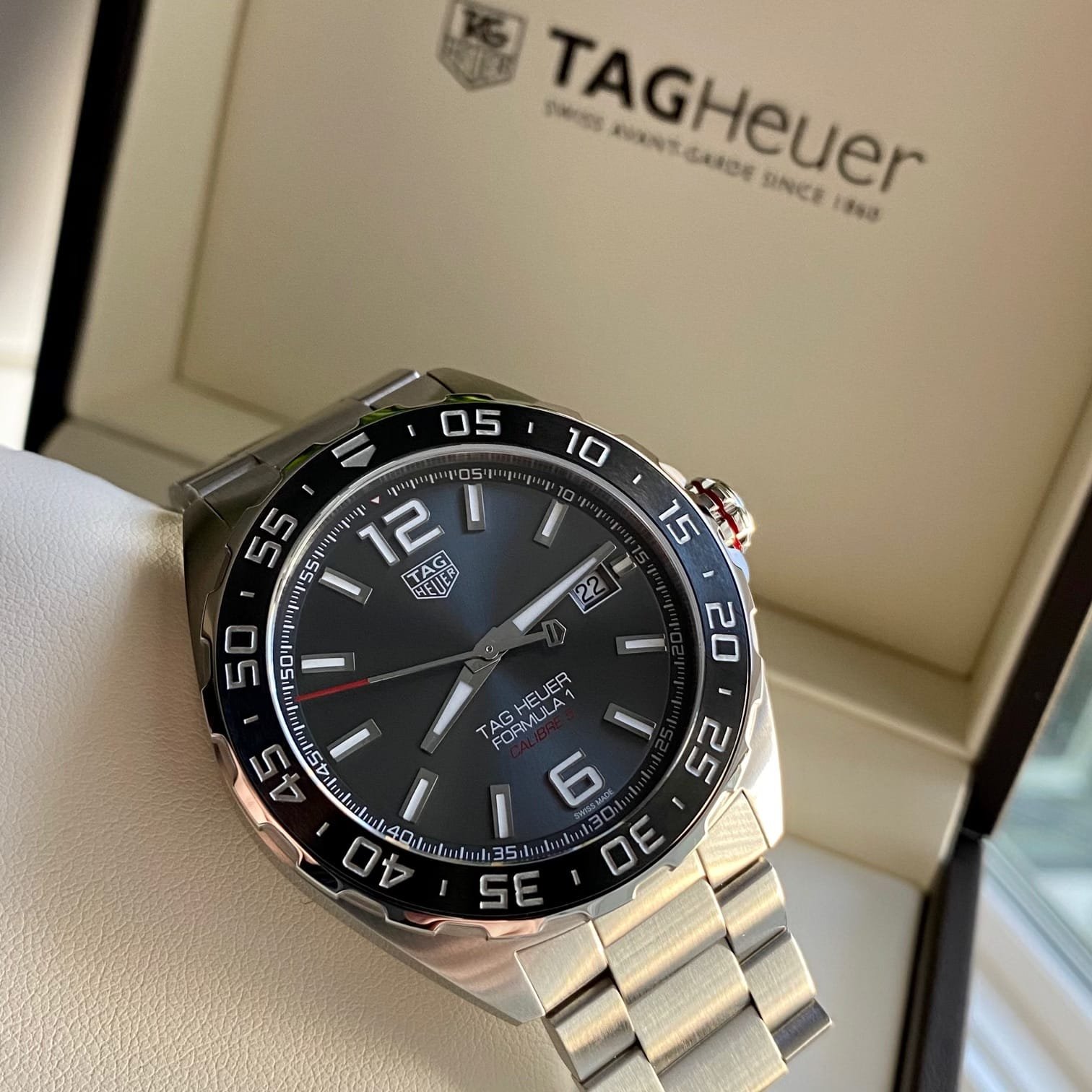
On the Mohs scale, acrylic sits at 3, mineral glass around 5 to 6, sapphire at 9, and diamond at 10. Sapphire is synthetic corundum, crystallised aluminium oxide, and TAG Heuer’s own magazine describes it as the third hardest mineral on earth.
Practically, that means sapphire is not scratched by steel, keys, coins or desk edges. Almost nothing you encounter day to day is hard enough. Mineral glass is a different story and will pick up marks from ordinary contact.
Which One Is in Your TAG?
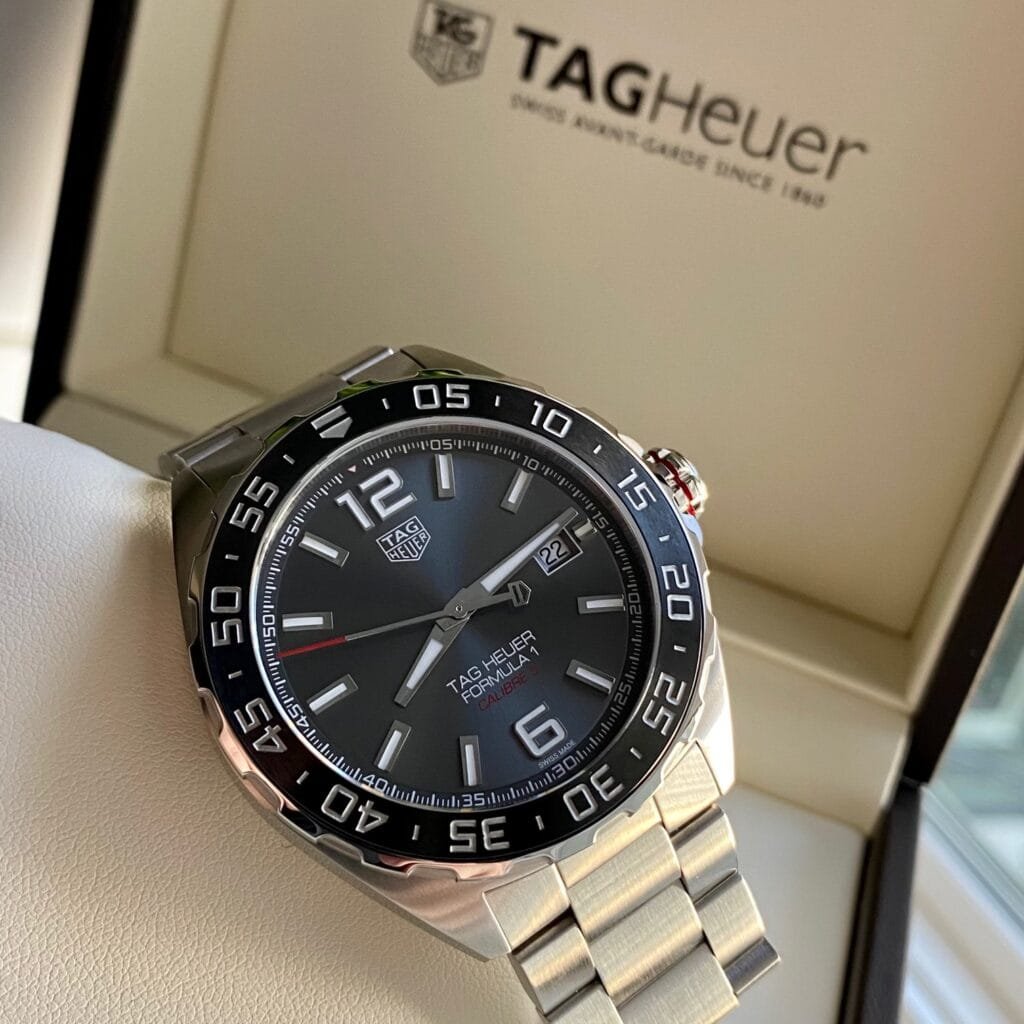
Sapphire across the Carrera, Aquaracer, Monaco and current Formula 1 three-hand and chronograph models. Mineral glass appears mostly on older Formula 1 references, and the Solargraph models introduced in 2025 use a mix of sapphire and mineral.
If you are unsure, two quick checks:
- Water drop. A droplet on sapphire holds a tight bead. On mineral it spreads out flatter.
- Touch. Sapphire conducts heat better, so it feels colder for longer against a fingertip. Vague, but consistent once you have compared two watches.
It May Be the Coating, Not the Crystal
This catches people out on the Carrera in particular. Sapphire is more reflective than mineral, so TAG applies anti-reflective coating to counter glare. That coating is far softer than the sapphire underneath it.
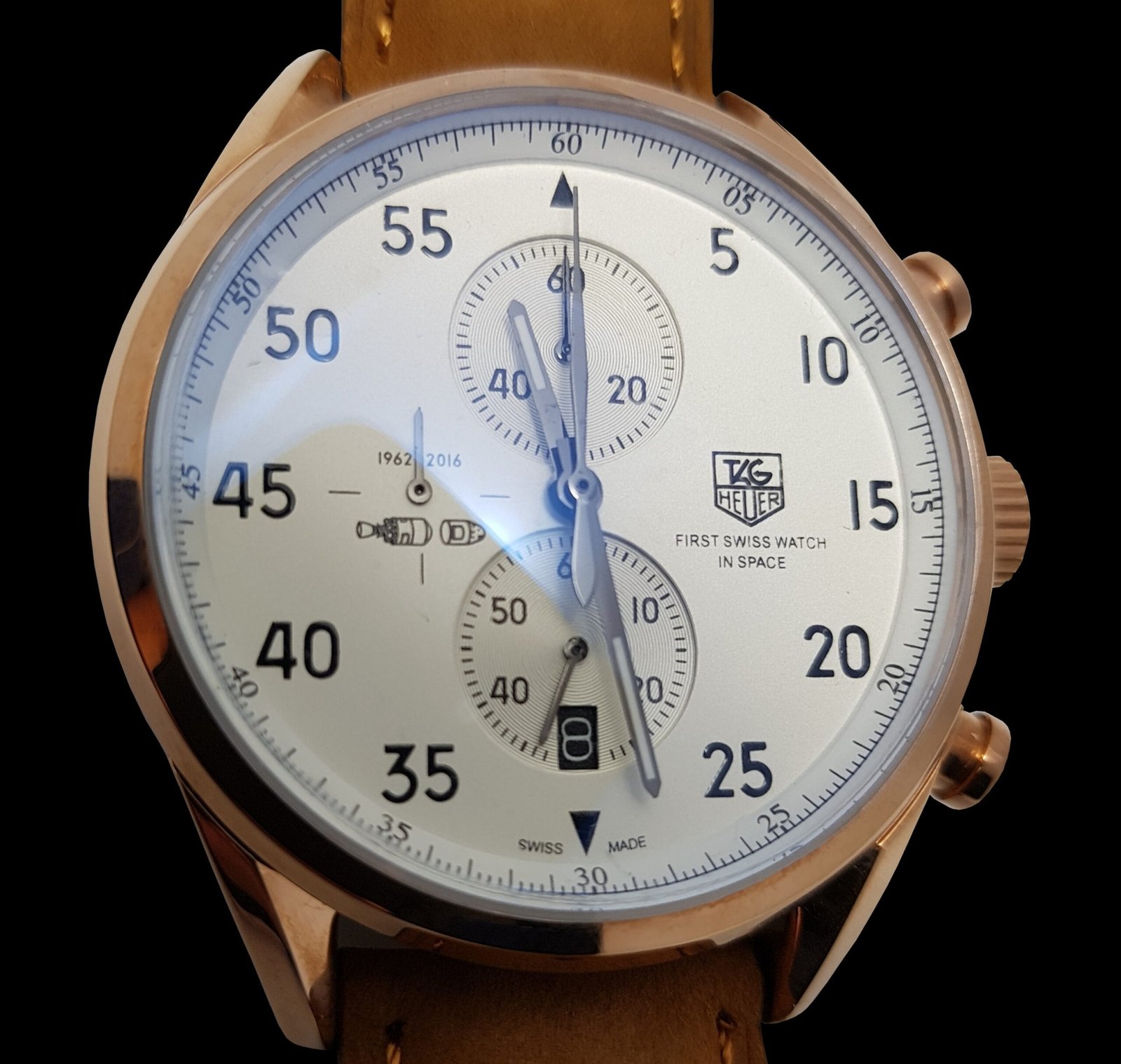
So a Carrera can show what look like fine scratches while the crystal itself is untouched. What you are seeing is worn coating. The tell is appearance: coating damage tends to look hazy or patchy, often with a faint colour cast, and shows up worst at an angle in bright light. A true scratch in sapphire is a single defined line you can usually catch with a fingernail.
Worth knowing because the fix is the same either way. Coating cannot be reapplied at home, and a crystal with worn coating is replaced rather than repaired.
Neither Sapphire Nor Mineral Polishes Out
This is the part most guides get wrong, and TAG Heuer states it plainly in their own material: if mineral glass gets scratched or chipped, unlike acrylic, it cannot be polished and repaired, and must be replaced.
Acrylic is the only crystal that genuinely polishes back to clear. Sapphire needs diamond paste and specialist equipment, and a domed crystal is easy to distort in the attempt. Light marks on mineral can sometimes be improved with cerium oxide, but deep ones cannot, and you are altering a surface that was tempered at the factory.
The honest answer for a scratched TAG crystal is replacement, not polishing.
Replacement, and What It Involves
TAG’s warranty does not cover crystal scratches, so this is a paid job regardless of the watch’s age.
- Through TAG Heuer. Correct part, correct coating, water resistance retested. The most expensive route.
- Independent watchmaker with an aftermarket crystal. Considerably cheaper. Owners of older Formula 1 references have long sourced generic crystals by measurement, since the vintage F1 crystals are a standard size, and some have fitted sapphire in place of the original mineral.
- Insist on a new gasket. The crystal gasket is what keeps water out. Refitting an old one after pressing in a new crystal is how watches develop fogging six months later.
If your watch is one you swim with, ask for a pressure test as part of the job rather than as an extra.
Upgrading Mineral to Sapphire
On an older Formula 1 this is a genuine option and owners have done it for years. Two cautions worth having.
Sapphire resists scratches but is more brittle than mineral, so it chips and shatters more readily on a hard impact. Mineral absorbs knocks better. Whether that trade is worth it depends on how you wear the watch.
And the crystal must match the original dimensions, both diameter and thickness, or it will not seat correctly in the gasket.
Conclusion
Identify the crystal with the water drop test, then decide whether you are looking at a scratch or worn coating. Either way, replacement rather than polishing is the realistic answer on a TAG, and the gasket matters as much as the glass.
Related Guides
- Why your TAG Heuer bezel stopped working: the other common TAG complaint, and what the click mechanism actually does.
- Rolex cyclops lens scratched or foggy: the same sapphire question on a magnifier, including where the coating actually sits.
- Citizen Promaster bezel insert replacement: fitting parts by measurement rather than by model name.
Image credits: TAG Heuer photographs via Wikimedia Commons.