A spring bar is the cheapest component on your watch and the only thing stopping it hitting the floor. Most people buy them by length alone, which is why so many end up with a bar that rattles in the lug and slowly wears the hole into an oval.
This post contains affiliate links. We may earn a small commission if you purchase through them, at no extra cost to you.
There Are Three Measurements, and Most Listings Only Give You One
- Length. Matches your lug width. 18mm, 20mm and 22mm are common; 19mm turns up on vintage Rolex and Seiko, 21mm on the modern Submariner.
- Barrel diameter. The thickness of the main body. This has to fit inside the strap end or the bracelet end link.
- Tip diameter. The tiny pivot that goes into the lug hole. This is the one that matters most and the one almost nobody checks.
When a listing says 1.78mm, that is the barrel, not the tip. Confusing the two is the single most common mistake here.
Barrel Diameters
- 1.5mm. Lighter dress watches and thinner straps.
- 1.78mm or 1.8mm. The default for most watches, and what you will get if a listing does not specify.
- 2.0mm and 2.5mm. Heavy duty, fitted to Seiko and Citizen divers and other tool watches.
Tip Diameters, and Why They Decide Everything
Standard tips run 0.7 to 0.8mm, and that covers the overwhelming majority of watches. Dive watches are the exception: Seiko and Citizen divers have larger lug holes, typically 1.1 to 1.2mm, and take tips to match.
Put a standard 0.78mm tip into a 1.1mm lug hole and you have roughly a third of a millimetre of slop at each end. The watch will feel fine at first. Over time that movement wears the hole oval, and an ovalled lug hole cannot be fixed without case work.
The working rule from people who do this daily: use the largest barrel that fits your strap or end link, with the largest tips that fit your lug holes.
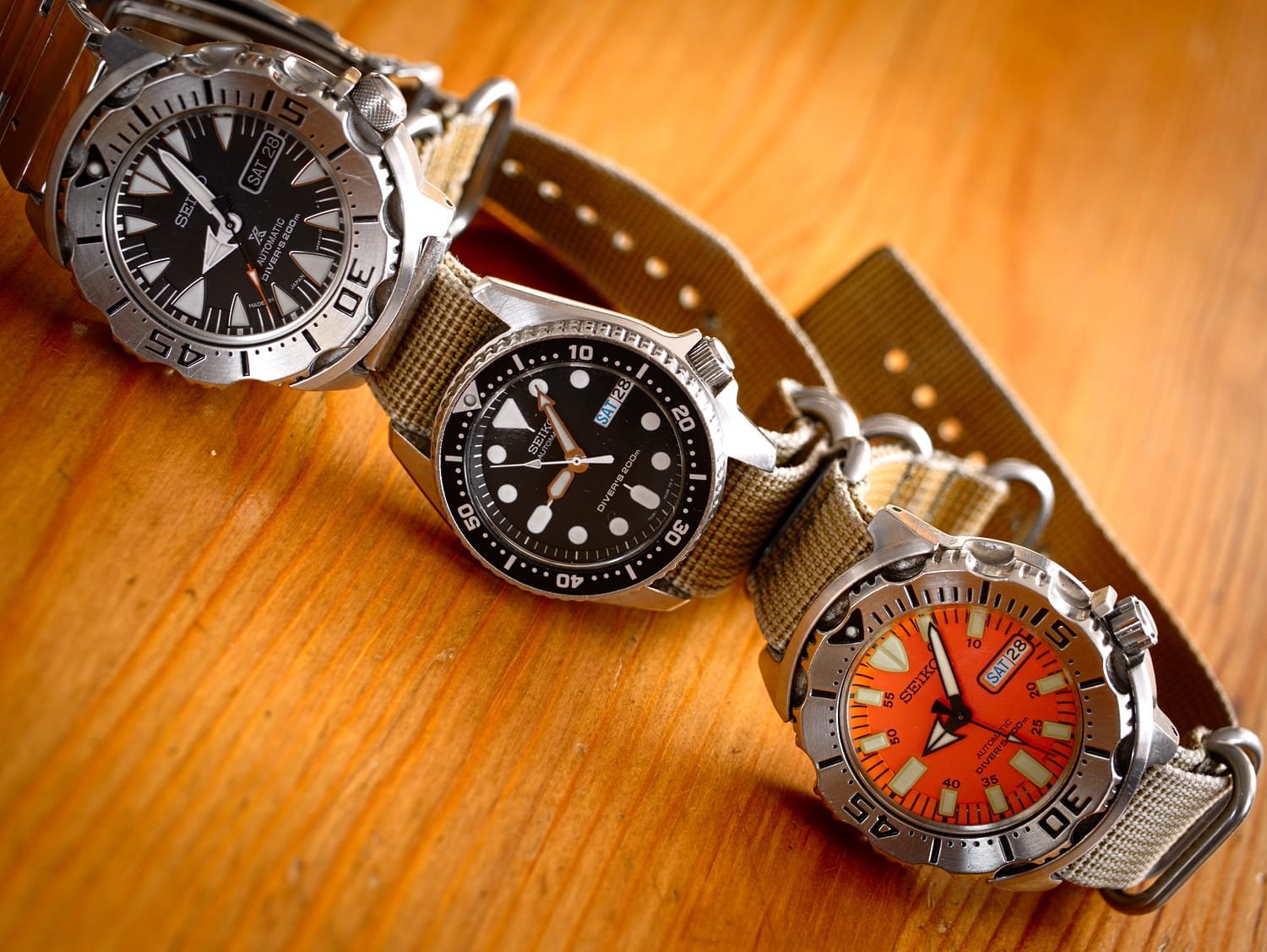
The Seiko Diver Problem, and the Part That Solves It
Here is a genuine catch-22 that trips up a lot of people fitting aftermarket straps to a Seiko diver.
Seiko’s own fat bars have a 2.0 to 2.5mm barrel with 1.1mm tips. The tips are right for the lug holes, but the barrel is too thick to pass through most aftermarket strap ends. So you cannot use the correct Seiko bar with the strap you just bought.
Fit a standard bar instead and the barrel works, but now the tips are far too small for the lug holes.
The answer is a hybrid part: a 1.78mm barrel with 1.1mm tips. Slim enough for an aftermarket strap, correct for a Seiko lug hole. These are sold specifically as spring bars with fat Seiko tips, and they solve a problem most owners do not realise they have.
Shouldered, Shoulderless and Quick-Release
- Double flanged or shouldered. The usual type, with a collar that stops the bar sliding too far through the strap.
- Shoulderless. For drilled or pierced lugs, where you push the tip in from outside the case.
- Quick-release. A small lever lets you swap straps with a fingernail. Just as secure in normal use, and worth having if you change straps often.
Measure the Watch, Not the Old Strap
A leather strap that has been worn for three years may have compressed or shrunk, and a 20mm strap can measure 19.5mm. Measure the gap between the inside faces of the lugs on the watch itself.
Manufacturers occasionally get this wrong too. Owners of the first-generation Citizen Skyhawk report that Citizen lists it as taking a 21mm bar when the watch actually needs 22mm.
Replace Them, Do Not Reuse Them
Spring bars cost pence. The internal spring weakens with every compression, and a bar that has been in and out of three straps is not the bar it was.
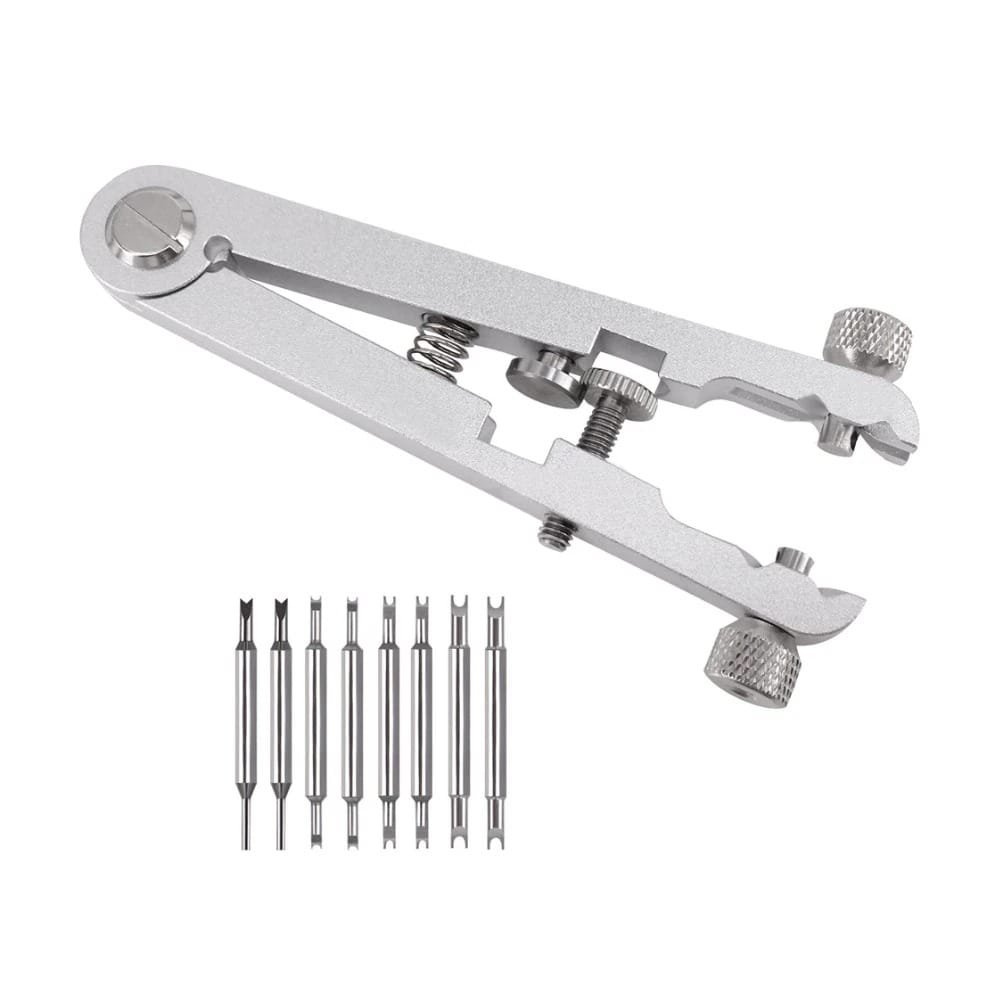
Fit new ones whenever you change straps, keep a small assortment in the sizes your watches use, and take the two seconds to tug the strap firmly in both directions afterwards. A plier-type spring bar tool compresses both ends at once, which keeps the tool away from the case entirely.
Conclusion
Length gets you a bar that fits between the lugs. Barrel diameter gets it through the strap. Tip diameter is what actually holds the watch on your wrist, and on a dive watch it is almost certainly not the 0.8mm the listing assumes.
Related Guides
- Seiko strap and bracelet replacement guide: lug widths across the Seiko range and where the fat bar rule applies.
- Omega Seamaster strap and bracelet replacement: why measuring beats trusting a model name.
- Seiko Presage bracelet sizing: the other end of the job, once the bracelet is on.
Image credits: tool image via Parts for Watch. Seiko divers via Wikimedia Commons.