Most watch repair kits are forty tools you will use six of. For straps, bracelets and batteries, which is what most owners actually do at home, a short list covers almost everything. The trick is knowing which tool deserves real money, because one of them does far more damage than the others when it is cheap.
This post contains affiliate links. We may earn a small commission if you purchase through them, at no extra cost to you.
The Six That Do Nearly Everything
- Spring bar tool. For every strap change. A forked end compresses the bar, a pointed end pushes through drilled lugs. An interchangeable-head spring bar tool is the single most-used item here.
- Case opener, wrench type. For screw-down casebacks, which most sports and dive watches have. An adjustable back case remover covers most patterns.
- Case knife and case press. For snap-on backs, common on quartz dress watches. The knife opens it; a press closes it evenly. Thumbs crack crystals.
- Bracelet link remover. For sizing pin-and-collar or split-pin bracelets. A screw-pressure link remover pushes pins out under control rather than by hammering.
- Case holder. Holds the watch still while you work. Without one, the opener slips and marks the case.
- Plastic tweezers and a loupe. Plastic for handling batteries, since metal can short them. A loupe for actually seeing what you are doing.
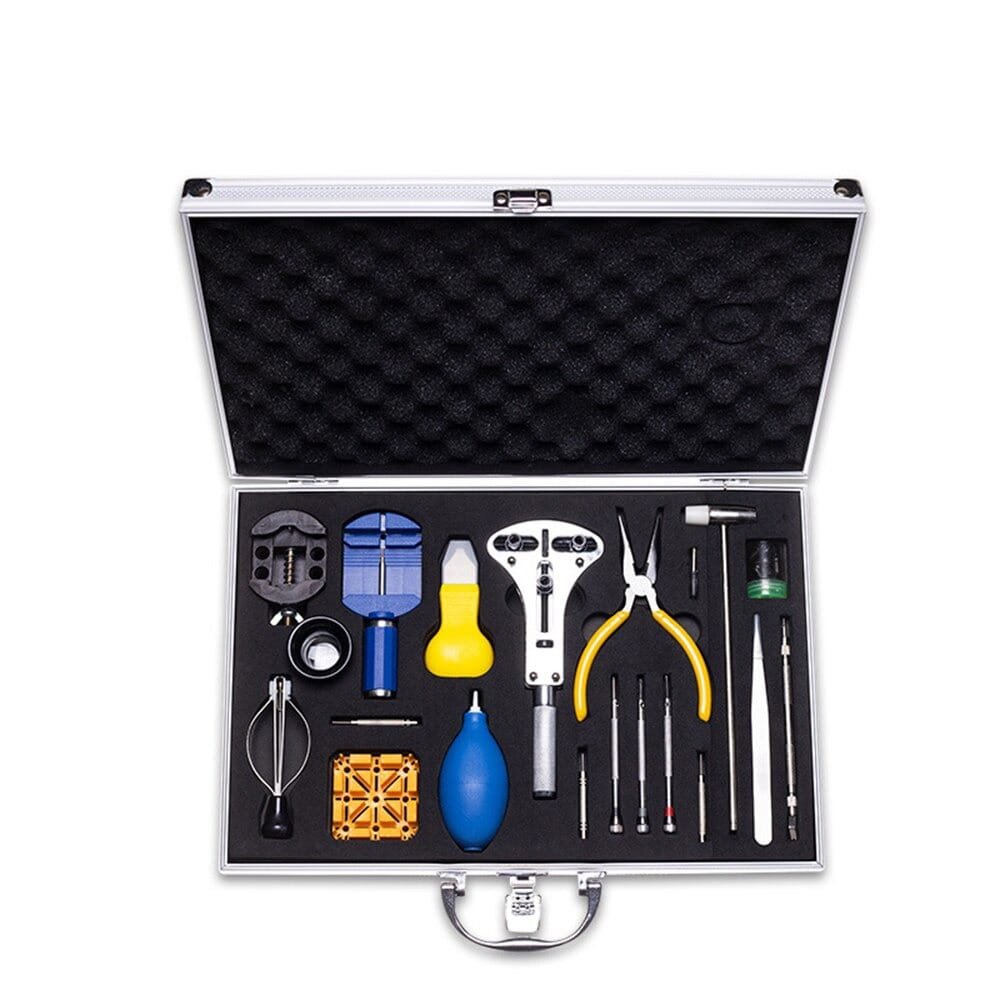
If you would rather start with one purchase, an all-in-one watchmaker kit bundles a case opener, holder, pin punches, hammer and spring bars for strap, bracelet and battery jobs.
The One Tool Worth Paying More For
Screwdrivers. This is where cheap kits fail, and where the damage is permanent.
Budget screwdrivers are made of soft steel. Under pressure the tip twists or chips, and a damaged tip slips out of the slot and rounds off the screw head. You have now turned a tiny screw that cost nothing into one that will not come out.
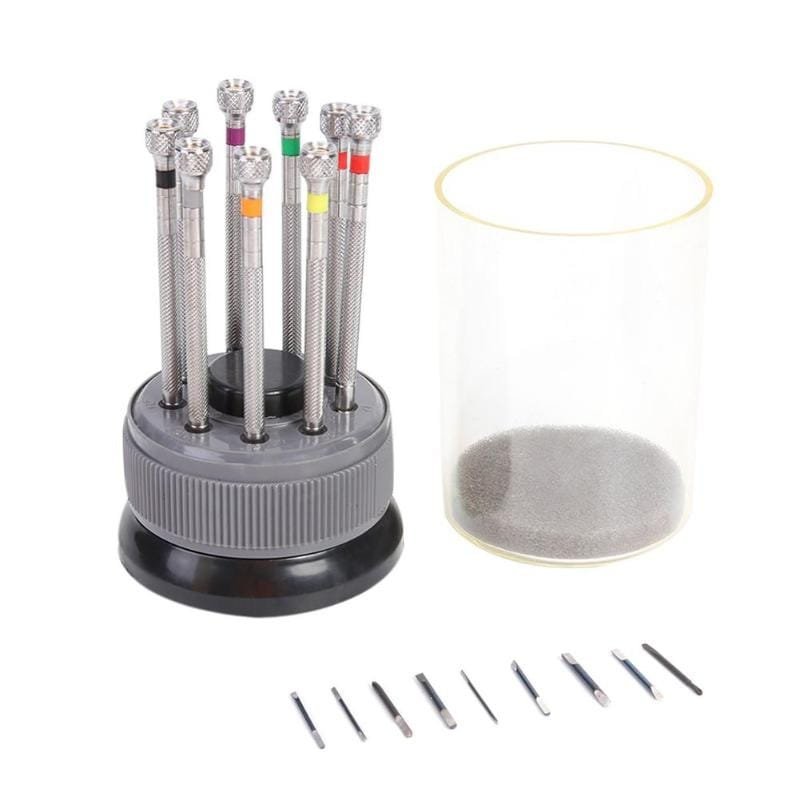
- For bracelet screws only: a budget screwdriver and link remover set is adequate. Bracelet screws are larger and more forgiving.
- For anything inside a movement: buy a proper Swiss set. Professional sets from makers like Bergeon and Horotec, with hardened tips and replaceable blades, typically cost from about $90 to $185. Replaceable blades mean a worn tip is a cheap fix rather than a new tool.
Whatever you buy, the rule from every bracelet guide applies: the tip must fill the slot completely. A tip that is too small is how screw heads get destroyed.
The Next Level: Accuracy
Once you want to fix timekeeping rather than straps, two tools matter:
- A demagnetiser. Cheap, fast, and it fixes the most common cause of a mechanical watch suddenly gaining time.
- A timegrapher. Measures rate, amplitude and beat error in seconds. Essential if you ever regulate a watch yourself.
What to Skip for Now
- Movement holders, oilers and lubricants. Only worth buying once you are servicing movements, which is a different hobby altogether.
- Crystal presses and removers. Crystal work needs the right die for each crystal. Leave it to a watchmaker until you have practised on cheap watches.
- Hand-setting tools. Same reason.
Match the Tool to the Job
- Change a strap: spring bar tool.
- Size a bracelet: link remover, plus a screwdriver for screwed links.
- Change a battery: case opener or knife, case holder, plastic tweezers, and a case press for snap backs.
- Fix a fast-running automatic: demagnetiser first.
- Regulate a watch: timegrapher, case opener, case holder.
One caution for battery changes: opening the caseback breaks the water seal, so a watch you swim in needs the gasket checked and a pressure test afterwards.
Conclusion
Buy the six tools you will actually use, spend properly on screwdrivers if you ever go inside a movement, and add a demagnetiser and timegrapher only when timekeeping becomes the job. Everything else in a forty-piece kit can wait.
Related Guides
- Spring bar sizes explained: the measurements to check before your first strap change.
- Seiko Presage bracelet sizing: the link remover in use, including the collar trap.
- Did a battery change void your water resistance?: what to do after opening the case.
Image credits: product images via Parts for Watch.