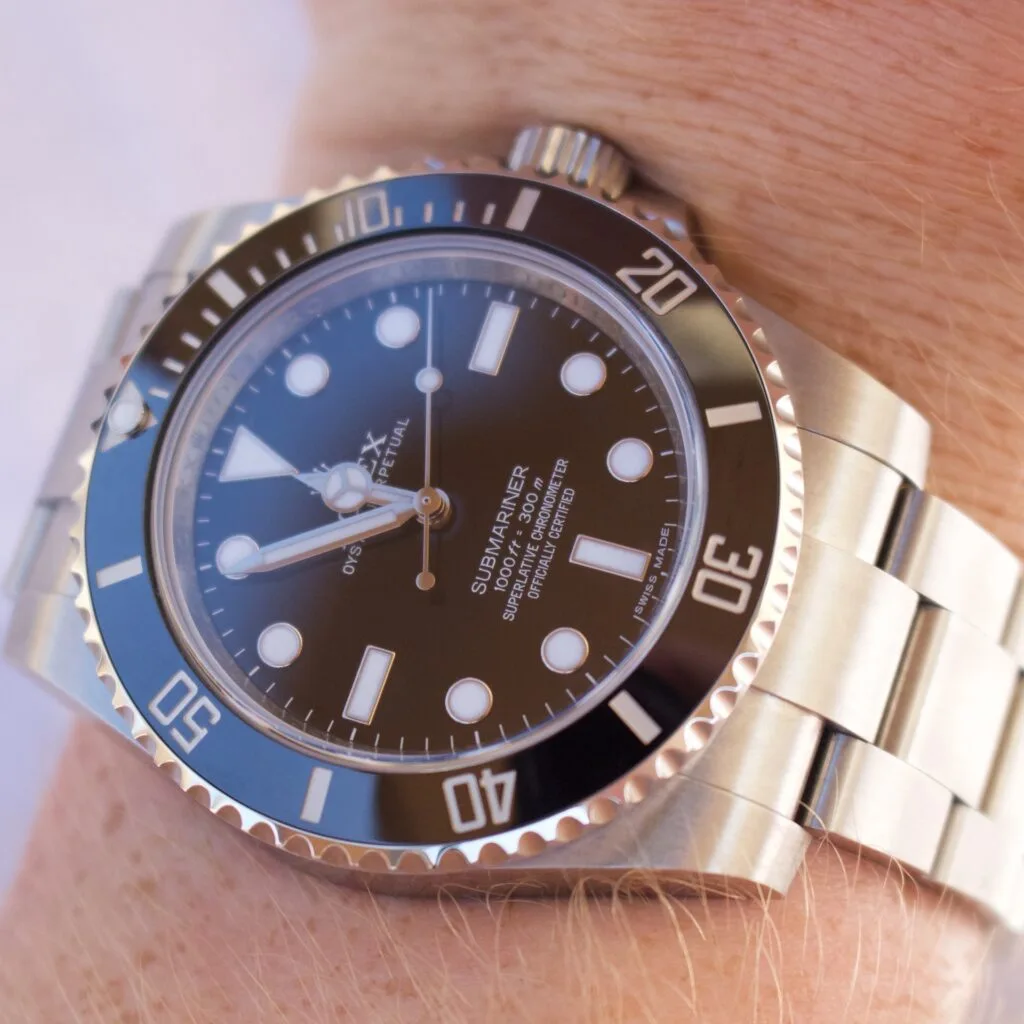
If you are asking why your Rolex keeps stopping, the answer is rarely a serious fault. Six things cause it, and the most likely one has nothing to do with a defect: the watch simply ran out of power. The examples below use the Submariner, but the same six causes apply to a Datejust, GMT-Master II, Explorer or any other automatic Rolex. Here is how to tell which applies to yours, and when it is worth a trip to a service center.
1. Insufficient Power Reserve (the Most Common Cause)
The Submariner is automatic, meaning wrist motion winds the mainspring rather than a battery. Depending on the movement inside your watch, that reserve runs out faster than owners expect. The current caliber 3235, used since the 2020 redesign, holds around 70 hours. The older caliber 3130 and 3135, used in Submariners made before 2020, hold closer to 48 hours. Leave either version sitting in a drawer over a long weekend and it will stop, which is completely normal and not a fault.
Fix: Rewind it by hand (turn the crown roughly 30 to 40 times before wearing it) or wear it for a full 8-hour stretch to bring it back to a useful reserve. If you rotate watches often, a watch winder keeps it wound between wears.
My Rolex Stops Overnight or When I Take It Off
This is power reserve again, just showing up sooner. A desk job or a quiet day on the wrist may not move the rotor enough to fill the mainspring, so the watch goes to bed with only a few hours stored and stops before morning. It is especially common on older 48-hour calibres and on a watch that has just been restarted from flat.
The test is simple: give it a full hand-wind in the morning, wear it as normal, and leave it face up overnight. If it is still running the next morning, nothing is wrong; it was simply under-wound. Our guide to why automatic watches stop overnight explains the winding maths in more detail.
My Rolex Stopped Right After Winding
First check you were actually winding it. On every Oyster case the crown screws down, and it must be unscrewed until it pops free before turning it winds the movement. Turning a crown that is still screwed down does nothing at all. Once unscrewed, wind it clockwise; you cannot overwind a modern automatic Rolex, because a slipping clutch disengages the mainspring when it is full. The hand-winding guide explains why.
If the watch runs only while you are winding or wearing it and stops within minutes of being set down, that is not a power reserve issue. It points to a worn mainspring or thickened lubricant, covered under causes 5 and 6 below, and it needs a watchmaker.
2. Magnetic Interference (Less Likely Than Most Owners Assume)
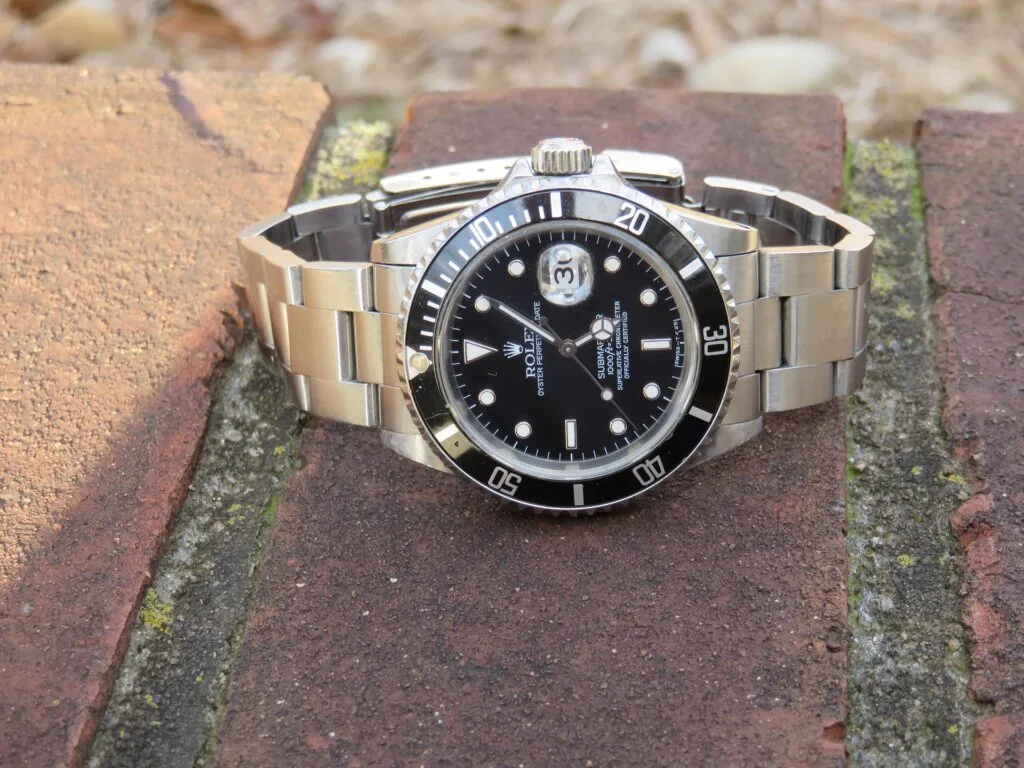
Modern Submariners are more resistant to magnetism than most watches on the market. Since the early 2000s, Rolex has fitted its movements with a Parachrom hairspring, made from a niobium-zirconium alloy that is largely unaffected by magnetic fields. This is genuinely one of the more magnet-resistant components in the watch industry, not a marketing line.
That said, no watch is completely immune. Unusually strong magnets, tablet and laptop covers with magnetic clasps, some phone cases, and speaker magnets can still affect the movement if the watch sits directly against them for a while. If your Submariner is running fast (a classic sign of a magnetized component) rather than stopping outright, magnetism is a more likely explanation than a stoppage.
Fix: Keep the watch away from magnetic clasps and speaker equipment. A watchmaker can demagnetize a movement in a few minutes if needed, it is a minor, inexpensive procedure.
3. Water Ingress From a Failed Gasket
The current Submariner is rated to 300 meters, well beyond recreational diving depth, so water getting into the case is uncommon on a well-maintained watch. The gaskets that seal the crown, case back, and crystal are rubber, and rubber degrades with age regardless of how carefully the watch is used. Many watchmakers recommend a water-resistance pressure test every year or two for a watch that swims, and a full service replaces the gaskets as standard.
Fix: If the watch has stopped after any exposure to water, or if it has gone years without a pressure test, do not open the case yourself. Get it to an authorized service center, moisture left inside will corrode the movement quickly.
4. Dust and Debris Inside the Case
On an intact Submariner with its screw-down crown properly seated, dust reaching the movement is rare, the case is essentially sealed. It becomes more likely on a watch that has had prior case-back or crystal work that was not sealed correctly, or one that is decades old and simply due for a teardown and clean.
Fix: Clean the exterior with a soft, lint-free cloth. If you suspect debris has reached the movement itself, that is a job for a watchmaker who can open the case properly, not something to address at home.
5. Natural Wear on Movement Components
Like any mechanical device, a Submariner’s gear train, mainspring, and escapement wear gradually over years of use. A worn pivot or a weakened mainspring can eventually cause intermittent stopping, even on a watch that is otherwise well cared for.
Fix: If the watch stops repeatedly despite a full wind and no magnetism or water exposure, it is likely mechanical wear, and that needs a watchmaker’s inspection rather than a home fix.
6. An Overdue Service Interval
Movements are lubricated at the factory, and that lubrication thickens and breaks down over roughly a decade of running. As it does, friction inside the movement increases, and a watch that used to run fine can start losing time, stopping intermittently, or eventually stopping altogether, even with no other issue present. This is the most overlooked cause because the watch can look and feel completely normal right up until it stops.
Fix: If it has been close to 10 years since the last full service, that is the likely culprit. A full service re-lubricates and regulates the movement and typically resolves stopping issues that don’t trace back to the five causes above. Rolex covers its recommended interval in its watch care FAQ, and roughly 10 years is the standard baseline for modern calibres.
Conclusion
Most of the time, a Rolex that stops, Submariner or otherwise, just needs winding or a bit more wrist time. If it keeps stopping after a full wind, work through the list in order: magnetism, water exposure, debris, mechanical wear, and finally, whether it’s simply due for a service. Rolex recommends a full service roughly every 10 years, and staying on that schedule prevents most of these issues before they start. If your watch is running rather than stopping, but gaining time noticeably, see our guide on why a Rolex runs fast, and for bezel-specific wear, check our guide on why Rolex bezels fade.
Related Guides
- Rolex Datejust vs Submariner movement differences: which calibre your watch runs, and its power reserve.
- Rolex crown won’t screw down properly: what to do if the crown fights you after winding.
- How a watch winder actually works: the right settings to keep a Rolex running between wears.
- Signs your movement needs a full service: when stopping is the watch asking for one.